You know you need to fix your returns process. But the real choice isn't just about which returns portal looks better. It's about whether you want a point solution that only solves returns, or a platform that optimizes your entire post-purchase experience. That's the fundamental difference between Happy Returns and AfterShip.
If you're weighing AfterShip vs Happy Returns for a high-volume returns operation, that framing is the entire decision. One is a returns management platform. The other is a returns drop-off network. They sit in different categories, and treating them as interchangeable is how operations teams end up with a tool that solves a single event instead of the whole journey.
The Short Answer: A Quick Comparison for Busy Ops Leaders
Here is the short version: AfterShip is the platform, Happy Returns is the network, and AfterShip already includes that network.
The six criteria that actually move a returns decision at 5,000 to 50,000 orders a month break down like this.
| Criteria | AfterShip | Happy Returns |
|---|---|---|
| Core Philosophy | Integrated post-purchase platform (Returns + Tracking + Shipping + AI EDD + Intelligence) | returns-only drop-off network |
| Return Methods & Flexibility | 68-carrier label pool (23 fully auto-label, 40+ direct, 21 via SSP), printerless QR returns, home pickup, return-to-store, 310,000+ global drop-offs, plus access to the Happy Returns network | about 10,000 US box-free Return Bar locations (5,000+ UPS Store), 79% of US population within 5 miles, US-only |
| Automation & Control | 50-condition rules engine (AND/OR; VIP/policy-abuser tags, order value, product type, return reason, SKU) with auto-approve/refund/store-credit/exchange/route/charge-or-waive actions, plus Return Fraud Management (Premium+) | simpler drop-off and refund configuration, no comparable merchant-side automation or fraud control |
| Data & Analytics | Cross-product insight (Retained Revenue Ratio, Return Label Costs by carrier, Returns-Reason-by-Carrier cross-tabulation, AfterShip Intelligence) | returns/drop-off data only, with no tracking or delivery-event data layer to correlate against |
| Ecosystem Integration | Native Tracking/Shipping/AI EDD in one account, plus native Shopify (incl. Shopify POS), Gorgias/Zendesk, Klaviyo, ShipBob/ShipHero RMA | third-party integrations (and Happy Returns is itself integrated into platforms like AfterShip) |
| Scalability & Global Reach | Multi-carrier breadth + 310,000+ global drop-offs + international QR carriers | a deep but US-only physical footprint |
Happy Returns excels at providing a simple, box-free physical drop-off experience. AfterShip excels at providing a fully integrated post-purchase platform that gives you control over costs, branding, and data across returns, shipping, and tracking. The key nuance: AfterShip integrates the Happy Returns network, so the real choice is platform with network access versus network alone. If you want to go deeper, AfterShip publishes a direct comparison of features and pricing.
The Real Choice: An Integrated Platform vs. A Point Solution
The strategic difference is not feature count. It is scope.
Happy Returns, the UPS-owned drop-off network, solves a single moment: the physical hand-off when a shopper returns an item. That moment matters, and the network is excellent at it. But it begins and ends at the Return Bar.
AfterShip manages the entire post-purchase journey around that moment. Before a return ever happens, AI-powered estimated delivery dates (the date an order should arrive) predict with up to 95% accuracy across at least 80% of deliveries, while most carriers predict on under 40%. Branded tracking and proactive notifications cut the inbound "where is my order" load. When a return does happen, a branded portal, a multi-carrier label pool, and returns analytics turn it into retained revenue instead of lost margin. For an operations leader measured on cost-per-return and recovered revenue, that is the difference between reporting a cost center and reporting a margin you got back.
That end-to-end flow is the actual product. A returns-only tool gives you the return event. A platform gives you the order, the delivery, the return, and the data connecting all three.
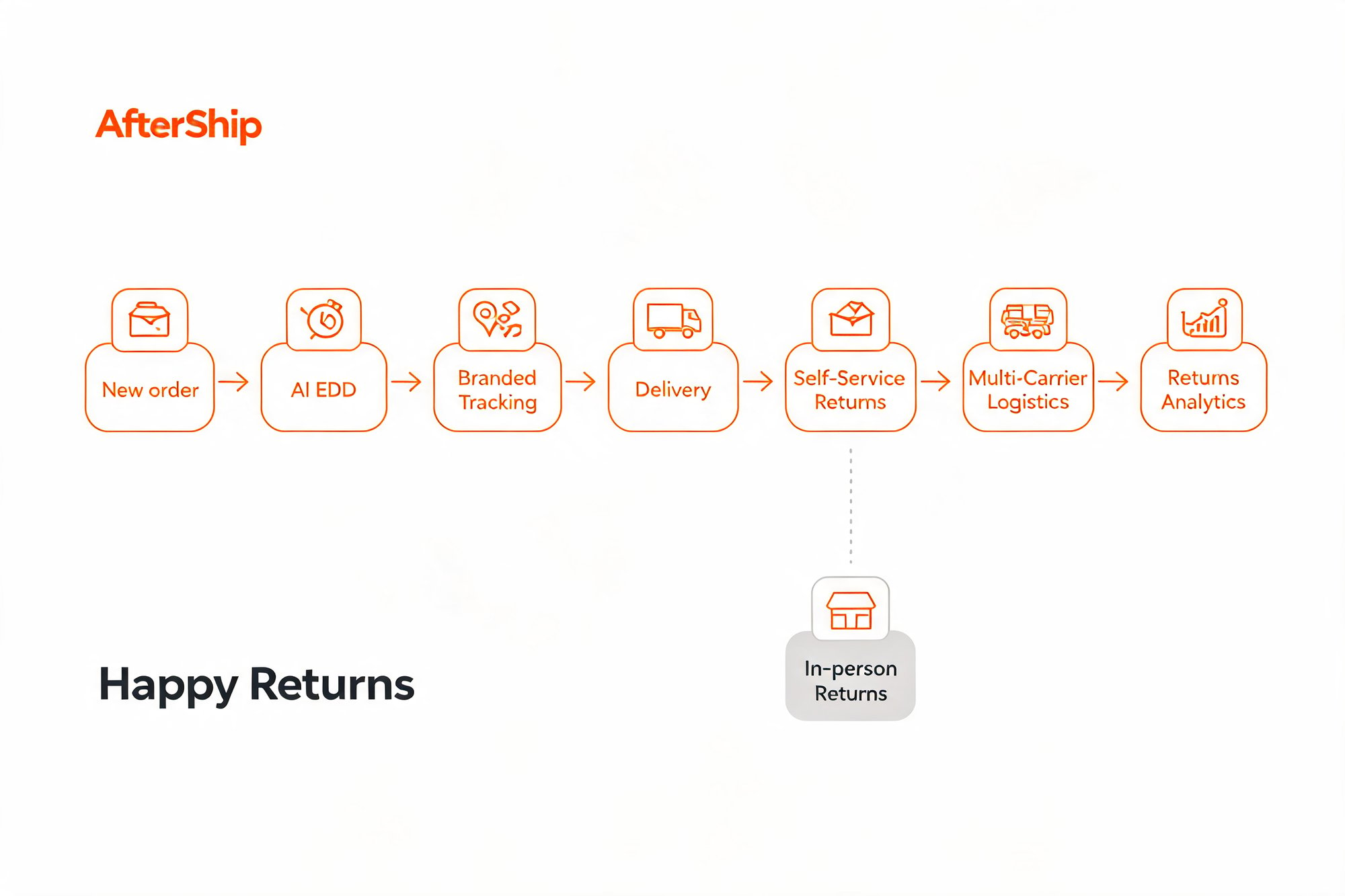
So when you compare AfterShip vs Happy Returns, you aren't picking the better returns portal. You're deciding whether returns should be a standalone tool or one connected piece of a post-purchase platform. For a scaling brand, the platform is the choice that compounds.
Feature Deep Dive: How They Stack Up on What Matters
On the features an operations leader actually evaluates, the platform-vs-point-solution split shows up in every category. Happy Returns competes hard in one of the four areas below. AfterShip competes in all four, because it treats a return as one stage in a journey that also spans shipping, tracking, and data. The four concerns that decide a returns platform at scale are carrier flexibility, automation, data, and stack fit, and AfterShip works against a 68-carrier return label pool rather than a single network.
Return Methods & Carrier Network
This is the category where Happy Returns is genuinely strong, and it is still the one where AfterShip comes out ahead by including it.
Happy Returns runs a UPS-owned network of about 10,000 box-free, label-free Return Bar locations across the US, including more than 5,000 UPS Store locations. Roughly 79% of the US population lives within five miles of one. For a US shopper, dropping off a return with no box and no printer is about as easy as it gets, and that convenience is real.
Here is the catch: that same convenience is available through AfterShip, because AfterShip Returns integrates the Happy Returns Return Bar network as one of its drop-off options. So the decision is not network versus platform. It is whether you also want everything that sits around the network.
AfterShip Returns works against a 68-carrier return label pool: 23 carriers with full auto-label support, more than 40 direct integrations, and 21 reachable through shipping service providers. Simultaneous carrier connections scale by tier, at 1, 3, 5, and 40 for Essentials, Pro, Premium, and Enterprise. On top of that, shoppers can use printerless QR-code returns, home pickup, and return-to-store, backed by access to more than 310,000 drop-off points worldwide.
Happy Returns gives you one excellent US drop-off method. AfterShip gives you that method plus every other one your customers might prefer.
Returns Portal & Automation Rules
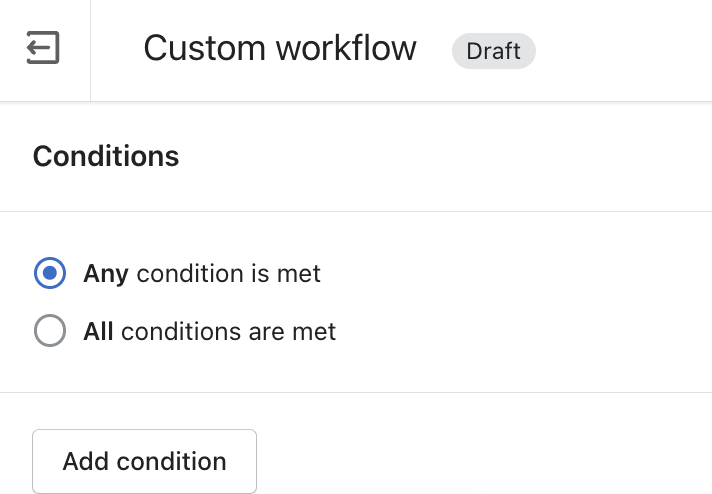
Both tools give a shopper a self-service portal. Only one gives your team an automation engine behind it.
Happy Returns provides a clean drop-off and refund flow. It handles a standard return well. The rules engine in AfterShip's returns management solution is where the real operational control lives.
You can build up to 50 conditions per rule, joined with AND/OR logic across order, product, and customer data: customer tags such as VIP or policy abuser, order value, product type, return reason, and SKU. Each rule can auto-approve, refund, issue store credit, create an exchange order, route to a specific warehouse or carrier, and charge or waive a fee.
Concretely, you can auto-approve every return from a VIP, route oversized items to the nearest warehouse, or add a store-credit bonus when the return reason is "wrong size." Auto-approve is available from the Pro tier up. Auto-refund and auto-mark-received are Premium and Enterprise. Return Fraud Management, which flags serial returners and policy abuse, is Premium and up.
Happy Returns configures a drop-off. AfterShip configures your returns policy as code.
Post-Purchase Ecosystem & Data Insights
This is the category a drop-off network structurally cannot enter.
Because AfterShip Returns shares the same shipment record as AfterShip Tracking, your return data sits next to carrier and delivery-event data. Two metrics are native to the Returns analytics dashboard with no Tracking subscription required: Retained Revenue Ratio, calculated as retained revenue divided by return value times 100, and Return Label Costs broken out by carrier. Add a Tracking subscription and you unlock a Returns-Reason-by-Carrier cross-tabulation, plus AfterShip Intelligence for carrier on-time benchmarking and lane-level reporting.
That last point is the one Happy Returns cannot answer. With no outbound shipping product, no tracking product, and no delivery-event layer, a drop-off network cannot tell you that a carrier with a high damage rate is driving your return rate. AfterShip can put that correlation in front of you.
The payoff is upstream. Aetrex, running AfterShip Tracking and Returns together, cut WISMO tickets (the "where is my order" questions) by 74%. That number lands because WISMO is consistently one of the largest categories of ecommerce support volume to begin with. A returns-only network leaves that entire upstream problem untouched.
Integrations & Tech Stack Fit
If your goal is to consolidate the stack, this is the category that settles it.
AfterShip Returns plugs into the tools your team already runs. Helpdesk: Gorgias and Zendesk. Email and SMS: Klaviyo. WMS and 3PL: ShipBob and ShipHero through a native two-way RMA, where AfterShip creates the RMA in the 3PL automatically the moment a return is approved. The Shopify integration runs deep, including Shopify POS, so in-store returns flow through the same system as online ones.
Every one of those connections is one fewer point tool to buy, integrate, and maintain. Choosing AfterShip is a consolidation move. Bolting a returns-only network onto your existing setup is a stack-sprawl move. For a team under pressure to do more without adding headcount, that distinction is the budget conversation. It is also the difference between one vendor relationship to manage and four, which is exactly the kind of simplification a two-week platform recommendation is meant to deliver.
The platform reputation backs this up. AfterShip holds a 4.7 out of 5 from 300+ reviews on G2, with Reporting and Analytics among its highest-scoring categories. That is the platform rating across the full stack, not a single product listing, which is the point: the value comes from the parts working together.
So the deep dive lands where the short answer did. Happy Returns wins one category on in-person convenience. AfterShip wins the operation, because returns, carriers, data, and the tools you already use live in one place instead of four.
Cost & ROI: A Look Beyond the Per-Label Price in 2026
Compare AfterShip vs Happy Returns on sticker price and you will be comparing the wrong number. At your volume, the published self-serve tiers are a stepping stone, not the bill.
AfterShip Returns publishes a clear ladder. Essentials is $11 a month (about $9 on annual billing) for 240 returns a year, with $0.50 per-return overage. Pro is $59 a month (about $49 annual) for 1,200 returns at $0.50 overage. Premium is $239 a month (about $199 annual) for 2,400 returns at $1.00 overage. Enterprise is custom, with the published threshold activating around 400 returns a month. Annual billing saves about 18%, and a 25% first-year discount applies when you buy two or more products together.
Here is why the ladder matters less than it looks. At 5,000 to 50,000 orders a month and the NRF's 19.3% online return rate, you generate roughly 11,500 to 115,000 returns a year. That is past every self-serve tier, which makes you an Enterprise customer by definition. Take a mid-point of about 57,750 returns a year (roughly 25,000 orders a month). On Premium with $1.00 overage, that math runs to about $58,000 a year, while a quoted Enterprise contract at that volume typically lands in the $55,000 to $95,000 range, with overage either bundled or priced at a lower per-return rate.
There is no single fixed Enterprise number to publish, so model the band and take it to AfterShip Sales for an exact quote. Factor in one more line if you want the in-person network: enabling Happy Returns drop-off through AfterShip runs about $4 to $6 per box-free QR drop-off, merchant-paid, under a separate Happy Returns contract.
The offsetting math is retained revenue. Across 1,400-plus AfterShip merchants, offering three or more resolution options correlates with more than 30% revenue retention, and steering shoppers toward an exchange for a different item drives about 12% higher upsell. A returns tool that only refunds cannot move those numbers.
The Final Verdict: Who Should Choose AfterShip vs. Happy Returns?
The verdict is not "it depends." For a high-volume DTC brand, AfterShip is the choice, and the platform-vs-point-solution split is exactly why.
AfterShip wins when you want strategic control over the whole post-purchase experience, cost control through carrier flexibility, and cross-product data you can act on. Happy Returns wins in one specific case: a US-centric brand that values the box-free in-person drop-off above everything else and is willing to run returns as a separate tool. Even then, that network is available through AfterShip anyway, so the platform rarely costs you the thing you came for.
The proof is in the outcomes. After moving to AfterShip Returns, footwear brand Marc Nolan cut time spent on returns by 97%, lifted its exchange rate from 25% to 49% (a 2x increase), and saved about $125,000 in 90 days.
“It's just so easy and effortless for me to check in on things and work with the returns portal. I don't have to worry about it anymore.”
Nikolas Callas, Director of Operations
Read their story →Choosing a returns-only solution may create data silos that prevent you from identifying and fixing the root causes of your returns.
That is the real risk of the point solution, and the reason the platform is the decision that holds up as you scale.
Frequently Asked Questions
Does AfterShip offer in-person returns like Happy Returns?
Yes. AfterShip Returns integrates the Happy Returns Return Bar network, so shoppers can choose a box-free, label-free, QR-code drop-off at any of about 10,000 US locations (including 5,000+ UPS Store locations), the same experience as going to Happy Returns directly, plus printerless QR returns with other carriers, home pickup, mail-in, and return-to-store.
Which is better for Shopify Plus brands, AfterShip or Happy Returns?
For a scaling Shopify or Shopify Plus brand, AfterShip is the stronger choice: a branded returns portal, a 50-condition automation engine, exchanges and store credit, return fraud management, and cross-product analytics, all native to Shopify including Shopify POS. Happy Returns is a US drop-off network best for brands that prize in-person convenience above platform breadth, and it is available through AfterShip anyway.
How does AfterShip's pricing compare to Happy Returns for 5,000 returns/month?
At about 60,000 returns/year you are past every AfterShip self-serve tier and into custom Enterprise pricing, indicatively $55,000-$95,000/year with overage bundled or at a lower per-return rate. Happy Returns charges a separate per-return processing fee under its own contract. The honest comparison at this scale is a full platform with network access bundled in versus a network alone, with everything else built separately.