Your international orders are taking off, but so are the headaches. You're drowning in a sea of carrier rates, customs forms, and "Where is my order?" emails. You've narrowed your choice down to AfterShip and Easyship to solve the shipping puzzle. But what if you're solving the wrong puzzle?
AfterShip vs. Easyship: The 30-Second Verdict
The honest answer in one line: if your scorecard is the price on a label, Easyship is hard to beat, and if your scorecard is repeat customers, AfterShip is the better platform to build on.
This AfterShip vs Easyship guide opens with the short version, then spends the rest of the page on the why. The table below is your 30-second head-to-head comparison.
| Criteria | AfterShip | Easyship |
|---|---|---|
| Best For | Brand-led DTC focused on LTV and retention | Cross-border-primary brands focused on per-label cost |
| Core Function | Post-purchase platform: shipping, tracking, and returns | Cross-border shipping rate and duties optimization |
| Pricing Model | Platform subscription; each product billed separately | Subscription tiers plus postage |
| Rating | 4.6 / 1,503 (AfterShip Order Tracking, Shopify App Store, September 2026) | 4.1 / 392 (Easyship, Shopify App Store, September 2026) |
Read it as a starting point, not a tie-breaker. The deciding factor sits a layer deeper than the shipping label.
When Your Only Problem Is Shipping Cost
If shipping cost is the only number on your scorecard, Easyship is a genuinely strong pick.
Easyship is built around one job, landing the cheapest accurate international label, and it does that job well. It connects to 550+ courier services across 220+ destinations and markets discounts of up to 91% off published rates. For a brand sending parcels to a dozen countries a week, that reach is a real edge.
Easyship also includes a checkout-level landed-cost engine that shows VAT, GST, and customs duty before the shopper pays, with a choice of who covers them (DDP or DDU). That engine is available on its Premier tier ($69/mo).
Where Easyship earns its keep:
- Carrier reach: 550+ courier services across 220+ destinations.
- Rate shopping: auto-selects cheapest or fastest and markets up to 91% off published rates.
- Checkout duties: a native landed-cost engine that displays taxes and duty before payment, on the Premier tier ($69/mo).
Checkout landed cost is the one capability Easyship has that AfterShip Shipping does not, and the feature table below sets out exactly where each platform lands.
That gap matters more in 2026 than it did a year ago. The US ended its $800 duty-free de minimis allowance in 2025, and the EU adds a fixed customs duty on low-value parcels in 2026. For cross-border-heavy brands, that means more parcels now carry duty that has to be accounted for somewhere in the order flow.
So for a brand whose hardest problem is a cheap, duty-accurate international label, Easyship is a sharp point solution.
Head-to-Head: Core Shipping Features
On the core shipping features, AfterShip and Easyship are closer than the marketing on either site suggests.
Here is the objective, feature-by-feature look you came for: carrier reach, rate shopping, duties, and automation, side by side.
| Feature | AfterShip | Easyship |
|---|---|---|
| Carrier Network | 130+ carriers | 550+ courier services across 220+ destinations |
| Rate Shopping | Auto-select cheapest or fastest | Auto-select cheapest or fastest; markets up to 91% off |
| International Duties | No. Customs docs, DDP/DDU, and HS codes only; no checkout landed-cost engine | Yes. Native checkout landed-cost engine (Premier $69/mo) |
| Automation Rules | Config-driven, plus SKU, product type, order tag, and ship-from (Pro and above); no routing by historical carrier performance | Config-driven by service, weight, and destination; no routing by historical carrier performance |
Two things to read off that table. Easyship wins outright on checkout duties and on raw carrier count. On automation, the engines are at rough parity, since both route by configuration attributes like service, weight, and destination, and neither one routes by a carrier's historical delivery performance today. Compare them at the same price point: AfterShip's automated shipping rules start on Pro ($69/mo), the same monthly price as Easyship's Premier tier.
AfterShip's edge is depth. Its rules add SKU, product type, order tag, and ship-from conditions on Pro and above, and the post-purchase data already lives on the same platform. The label layer is close enough that it should not decide your purchase on its own.
Why Winning DTC Brands Think Beyond the Shipping Label
The cheapest label has never made a customer come back. The experience after the buy button is what does.
Shipping is a cost center. The post-purchase experience is a profit center. The gap between those two ideas is where most DTC brands quietly leave money on the table. If Easyship is the incumbent you are trying to move off, we rank the options in the five best Easyship alternatives for scaling brands.
Think about the sequence a customer actually lives through. They click buy, and then comes the part you tend to ignore: the waiting, the tracking checks, the unboxing, and the occasional return. That stretch is the longest part of your relationship with the customer, and it decides whether a second order ever happens.
You are already feeling this. The same "where is my order" emails eating your team's day are a symptom of a post-purchase experience that stops at the carrier's door. Closing that gap is far cheaper than replacing a customer who leaves over it.
Delivery sets the tone. According to Ipsos (May 2022), 85% of online shoppers say a poor delivery experience would prevent them from ordering from a retailer again.
Retention also compounds when you give customers more ways to stay. Across AfterShip Returns' dataset of more than 1,400 merchants (2024 BFCM returns report, 2021-2024 data), retailers who enabled three or more return resolution methods saw revenue retention above 30%. That is not a deflection number. That is revenue you keep instead of refund.
So the real AfterShip vs Easyship question is not which tool prints a cheaper label. It is which platform turns the post-purchase window into repeat revenue.
Advantage AfterShip: Turn Tracking into a Marketing Channel
Your tracking page is the most-opened page you own, so stop handing it to a carrier.
A standard carrier tracking page is a dead end: a status, a map, and an exit. A branded AfterShip tracking page works like a storefront instead. It carries your branding, your delivery updates, and product recommendations that turn a routine status check into a second sale.
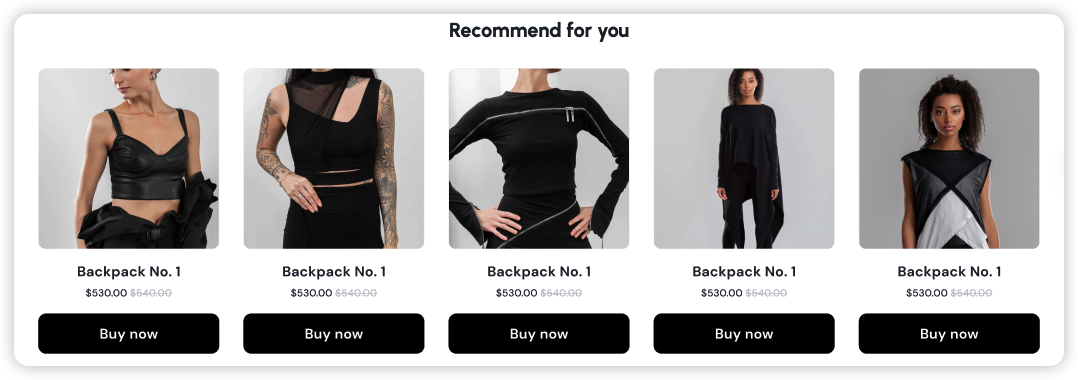
The proof is in what real brands report:
- Vivino reports a 30% boost in repeat sales from the branded tracking page, alongside a 79.5% email open rate and a 57.7% click-through rate.
- Inspire Uplift saw a 30% increase in repeat sales and a 75% reduction in WISMO (where is my order) tickets.
- Miss to Mrs Box attributes 25% of online store sales to its AfterShip tracking pages.
These are incremental-revenue numbers, not just support savings. The tracking page stops being a place customers tolerate and becomes a place they buy. And because that page feeds your branded delivery emails, every shipment turns into an owned marketing touchpoint rather than a generic carrier alert.
Merchants describe the same shift in their own words.
Tracking is not a support cost to contain. It is a marketing channel you already paid for.
Advantage AfterShip: Make Returns a Reason Customers Come Back
Handled right, a return is not a refund. It is a second chance to sell.
Most returns flows end in a refund and a lost customer. AfterShip Returns is built to keep the revenue in your store. Shoppers get a self-service portal with five resolution paths: refund to original payment, refund to store credit, a variant exchange, an exchange for other items, and bonus store credit worth more than a straight refund.
Behind that portal, custom workflows cut the manual work. You can auto-approve returns for your highest-value customers, waive fees by customer tag, and stop known bad actors with a fraud blocklist. Less ops time, better customer experience, fewer judgment calls for your team.
The retention payoff shows up in the numbers:
- Fellow retains 20%+ of revenue through exchanges and store credit, and converts 10%+ of refunds into store credit.
- Pelagic Gear reports an 18% purchase lift from its return portal and a 12% reduction in return contact tickets.
- Marc Nolan runs a 2x exchange-to-refund ratio with a 97% reduction in returns-processing time.
Read those together and a pattern shows up. An exchange kept is a sale kept, and store credit recirculates inside your business instead of walking out the door as cash.
By contrast, Easyship's returns are prepaid-label, reverse-logistics only. That gets the box back. It does not give you a structured way to turn the return into an exchange and keep the sale.
That is the whole argument in miniature. Easyship gets the parcel home. AfterShip turns the trip home into the next order.
Pricing Models: Which Platform Scales With You?
One platform prices the parcel, the other prices the platform, and that difference decides how predictable your bill is.
The AfterShip vs Easyship pricing question comes down to predictability. Easyship is not pay-per-label, despite how it is sometimes described. It is a monthly subscription plus the postage you buy on top.
- Free: up to 50 shipments a month.
- Plus: $29/mo, up to 500 shipments.
- Premier: $69/mo, up to 2,500 shipments. The checkout landed-cost engine lives on this tier.
- Scale: from $99/mo (up to $199/mo depending on market), 5,000-10,000 shipments.
Tiers as published on Easyship's pricing page, September 2026.
AfterShip Shipping prices the platform, not the parcel. The tiers are simpler and they do not change based on how far your packages travel.
- Free: $0/mo.
- Essentials: $9/mo.
- Pro: $69/mo.
- Enterprise: custom.
Annual billing saves roughly 18%. Each AfterShip product is billed separately, so you can start with Shipping and add Tracking or Returns when you need them. For a brand running 2,000 to 10,000 orders a month, running those capabilities on one platform usually beats paying for three separate point tools that never talk to each other.
That is the real pricing story. Easyship's cost moves with your international mix; AfterShip's cost moves with the capabilities you switch on. Pick the model that matches how you plan to grow, not just this month's shipment count.
The Final Verdict: Are You Buying a Tool or a Platform?
If you are buying a label printer, buy the cheapest one. If you are building a brand, buy the platform.
Look at what consolidation actually produces. Aetrex moved its tracking and returns onto AfterShip and reported a 141-point NPS increase, a 74% reduction in WISMO tickets, 86% shorter return processing, and 50% lower operational costs. Those are not soft metrics. They are the kind a CFO and a CX lead can both point to.
Aetrex is not the exception. The pattern across the market is brands leaving single-purpose point tools and consolidating their post-purchase stack onto one platform. Every disconnected tool is another integration to maintain, another invoice, and another data silo between you and your customer. Consolidation is not just tidier. It is the difference between reacting to the post-purchase experience and actually running it.
Choose Easyship if:
- More than 40% of your orders ship internationally, across multiple regions.
- You are at startup volume, under 100 orders a month, and the free tier covers you.
- You only need shipping, with no plans to add returns, branded tracking, or AI delivery estimates.
Choose AfterShip if:
- Your KPI is customer lifetime value, not cost per label.
- You want to deflect WISMO tickets and own the delivery experience end to end.
- Returns-driven retention matters, meaning exchanges and store credit over straight refunds.
- A branded post-purchase experience is part of how you compete.
For a brand that cares about the second order, the answer is the platform, not the label printer.
Proactive shipment tracking that delights your customers, reduces WISMO tickets, and optimizes your delivery performance.
Book a demoFrequently Asked Questions
The questions buyers ask us most, answered straight.
Is AfterShip or Easyship better for Shopify?
Depends on the goal. Easyship is better for cross-border per-label cost and checkout duties; AfterShip is better for branded tracking, returns-driven retention, and customer LTV on one platform.
Does running AfterShip alongside Easyship give me duties at checkout?
No. Checkout landed cost comes from Easyship's own engine on its Premier tier ($69/mo). AfterShip Shipping covers customs documentation, DDP/DDU, and HS codes, and pairs with AfterShip Tracking and Returns for the rest of the post-purchase experience.
Can I use AfterShip just for tracking?
Yes. Each product is billed separately, and Tracking can be bought standalone. You can add Shipping or Returns later without changing your tracking setup.
How do AfterShip and Easyship handle returns?
Easyship returns are prepaid-label, reverse-logistics only. AfterShip Returns is a self-service, exchange-first retention portal with five resolution methods and automation workflows, so a return can become an exchange instead of a refund.