Your brand has scaled past Shopify Shipping, and now you're staring at two names: ShipStation and AfterShip. On the surface, they look similar. But they answer two fundamentally different questions. One asks: "What's the cheapest way to print a label?" The other asks: "How do we turn the touchpoints after checkout into our next best marketing channel?" In 2026, which question will determine if your brand thrives?
That's why this aftership vs shipstation comparison isn't a feature scorecard. It's a strategic decision between a logistics tool and a platform built around a unified customer experience, and the stakes are measurable.
Here's what's on the table. A brand moving off a basic shipping or native-platform tool should expect a 25-50% reduction in "Where is my order?" (WISMO) tickets. Industry CX reporting puts the baseline at 20-30% from proactive notifications alone, and AfterShip customers have published outcomes ranging from a 50% reduction (Vivino) to 54% (Mous) and 71% year over year (StackCommerce). That's not a rounding error. For a support team drowning in shipping inquiries, it's the difference between reactive firefighting and a team that works on retention.

The Short Answer: Who Should Choose AfterShip vs. ShipStation?
If you only read one section, read this one.
Choose ShipStation if:
- Your primary goal is low-cost label printing across multiple sales channels
- Your order volume is low (under 500 orders per month)
- Post-purchase branding is not a priority right now
ShipStation Standard ($29.99/mo) also includes a branded tracking page and a branded returns portal. It's a real entry point, not a stub.
Choose AfterShip if:
- You're a scaling DTC brand focused on lifetime value, not just unit shipping cost
- Reducing WISMO ticket volume is a key goal for your support team
- You want returns to become a retention moment, with exchange-first flows and bonus store credit
- You want the tracking page to work as a revenue surface, with AI product recommendations driving repeat purchases
The pattern is simple. ShipStation is built around the cost of moving a package. AfterShip is built around the value of the customer who's waiting for it.
Where ShipStation Shines (And Where It Hits a Wall)
Credit where it's due: ShipStation is often the right first step up from native platform shipping. It runs a proven multi-channel fulfillment cockpit with unlimited store connections, deep carrier discounts, and batch label generation across 200+ carriers (250+ via API). It also ships a branded returns portal, so the "labels only" criticism is out of date.
For a warehouse team whose job is getting boxes out the door cheaply, that's a strong toolkit.
The wall appears when you stop thinking like a shipping department and start thinking like a brand. ShipStation's tracking page is a status-and-branding surface; there is no product-recommendation or upsell engine on it. Its shipment notifications are carrier-reported status emails, with opt-in SMS available to shoppers; check ShipStation's own pages for the current trigger list and regional coverage before you plan around them. The same applies to its returns portal, where supported countries and label eligibility are set by ShipStation. There is no AI-predicted delivery date, and no pre-purchase delivery estimate on your product pages.
In short, ShipStation is designed around the warehouse user, not the end customer.
One honest caveat before we go deeper: AfterShip is not the cheapest option for a brand shipping under roughly 500 orders a month. A dedicated post-purchase platform, with AI-predicted delivery dates, a revenue-generating branded tracking page, and exchange-first returns, costs more than a single shipping subscription. Below a few hundred orders a month, the WISMO and retained-revenue savings may not yet outweigh the spend. AfterShip is a strategic investment that starts delivering meaningful ROI as order volume and complexity grow. That's exactly why this aftership vs shipstation verdict is written for a brand that is scaling, not just starting.
Feature Deep Dive: It's Not About Shipping, It's About Experience
A useful aftership vs shipstation comparison doesn't ask which platform has more features. It asks which capabilities matter for scaling a brand, not just running a shipping department. The table below compares both platforms on the six criteria that move retention, support load, and lifetime value. One scoping note: carrier counts are per product and should never be merged. AfterShip Tracking reads status from 1,700+ carriers, AfterShip Returns draws return labels from a 70-carrier pool, and AfterShip Shipping generates labels across 130+ carriers, while ShipStation supports 200+ carriers (250+ via API).
| Criteria | AfterShip | ShipStation |
|---|---|---|
| Branded Customer Experience (Tracking & Notifications) | Branded tracking page with AI product recommendations (3.2 views/order, up to 65% email CTR); notifications across 7 key statuses and ~40 sub-statuses; Email + SMS; 16 Klaviyo flow triggers (Premium) | Branded tracking page (status + branding, no recommendation or upsell engine); carrier-reported status emails; customer-opt-in SMS |
| Returns Automation & Experience | Exchange-first; bonus store credit; Return Fraud Management (Premium); Return Care (Premium); conditional routing; 70-carrier label pool + 300K+ drop-off points; any order | Branded returns portal (RMAs, auto-approval, SKU exchanges, returns analytics); supported countries and label eligibility per ShipStation's returns page |
| WISMO Reduction & Proactive Comms | Proactive, plus AI-EDD-predicted delay alerts before carrier report-back; named outcomes: Mous -54%, Vivino -50%, StackCommerce -71% YoY, Inspire Uplift -75%, Aetrex -74% tickets | Carrier-report-back status notifications |
| Analytics & Post-Purchase Insights | Shipment and delivery performance, AI-EDD on-time rate, notification engagement, carrier performance comparison, and returns-reason analytics on one data layer | Returns analytics + shipping reporting |
| Shipping Rate Shopping & Label Printing | AfterShip Shipping: multi-carrier rate shopping, 130+ label carriers, connected to the post-purchase data layer | Established fulfillment cockpit, deep carrier discounts, 200+ carriers (250+ via API) |
| Scalability for Growing Brands (API, Integrations) | API & webhooks on Premium and up; native Klaviyo, Attentive, Omnisend, Gorgias, Zendesk; API-connected 3PL/WMS/headless; Tracking reads 1,700+ carriers; go-live in days for basics, 1-2 weeks for a fully branded multi-product setup | API gated to Standard and up |
The verdict from the table: ShipStation wins the row about moving boxes; AfterShip wins the five rows about keeping customers. The three rounds below show why.
Round 1: Customer Experience & Tracking
Let's be precise about the concession. ShipStation's branded tracking page is real, available on its Standard tier and up. If the bar is "my logo on a status page," both platforms clear it.
The gap is what the page does next. AfterShip's branded tracking page carries AI product recommendations, segmentable and powered by AfterShip Personalization or Nosto AI, on the page itself and inside shipment emails. Shoppers check that page an average of 3.2 times per order, and notification-email click-through rates reach as high as 65%. Every one of those visits is a marketing impression you already paid for. On Magento the same tracking page question is covered in the Magento 2 tracking comparison.
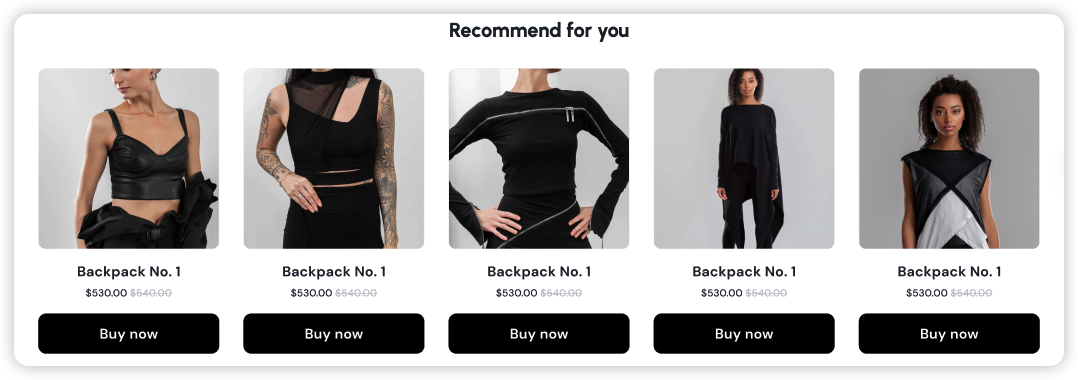
The results are attributable, brand by brand. Vivino lifted repeat sales by up to 30%. Miss To Mrs Box attributes 25% of its sales to its tracking pages, with a 6.5% click-through rate on the product recommendations shown there. Unitymob grew GMV by more than 50% from AI recommendations in email.
Layer on proactive notifications across Email and SMS, plus an AI-predicted estimated delivery date, and the WISMO math changes. Customers who know where their order is, and when it will arrive, don't open tickets. A generic ShipStation tracking link reports status; it cannot recover a delayed-order conversation or sell the next product.
Round 2: Returns Management & Retention
Start with the concession, because it's earned. ShipStation's returns portal handles branded returns on a controlled URL, issues unique RMA numbers, auto-approves on delivery or carrier scan, applies SKU-based exchange rules, and ships with returns analytics.
The depth line sits in retention mechanics and reach. AfterShip Returns routes requests conditionally by return reason, item condition, and customer or order attributes, with advanced workflows on Premium. It defaults to exchange-first retention: variant swaps and any-item "shop now" exchanges that keep revenue in the store. Bonus store credit tilts shoppers away from refunds, Return Fraud Management (Premium) screens abusive patterns, and Return Care (Premium) lets shoppers buy free-return coverage themselves.
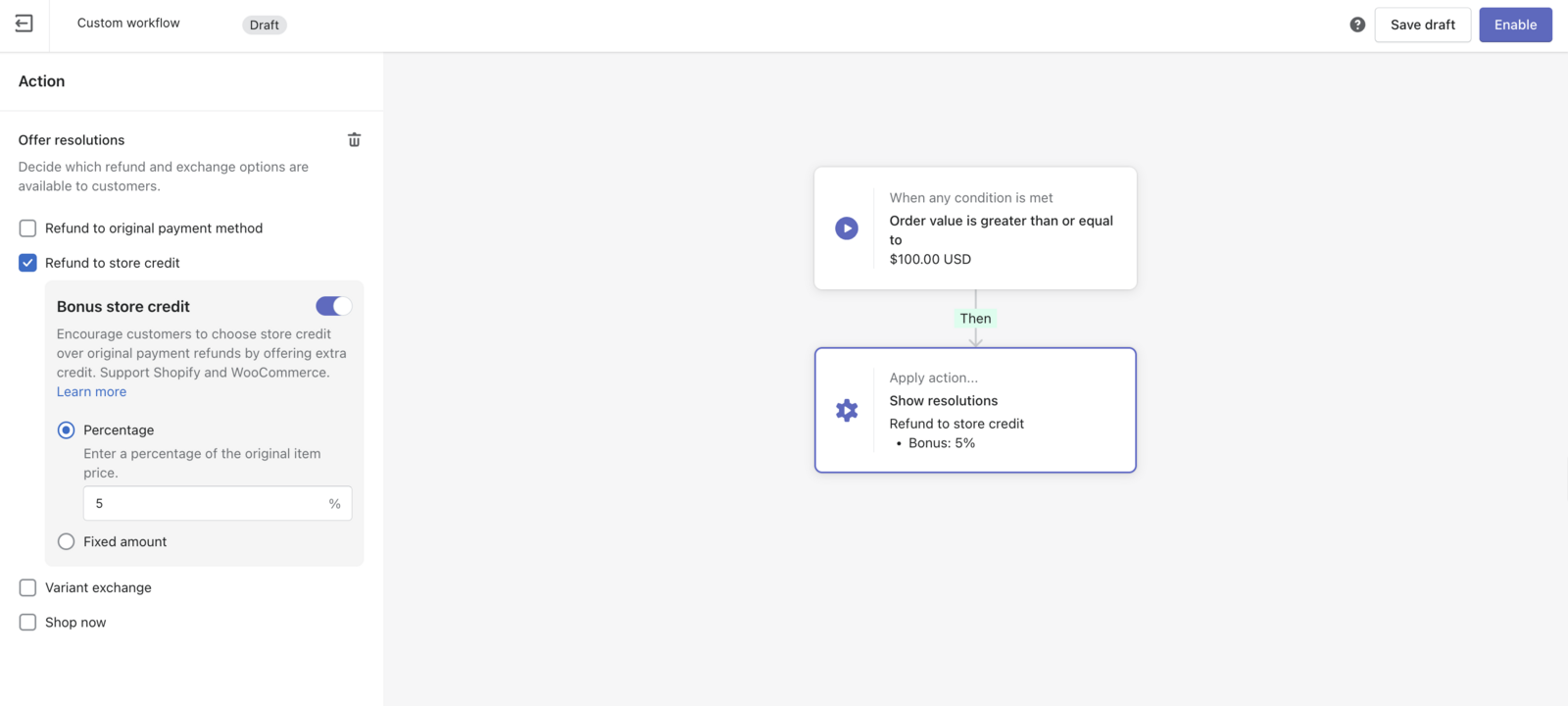
Reach is the other half. AfterShip's reverse logistics draws on a 70-carrier label pool with more than 300,000 global drop-off points, and it processes returns for any order, wherever it was created. ShipStation's Returns & Exchanges works within the supported countries and label eligibility rules published on its own returns page. AfterShip's coverage extends well beyond a US/Canada footprint, though its center of gravity remains North American DTC brands.
One platform prints a return label. The other runs a retention play on every return request.
Round 3: Shipping & Label Generation
Both platforms print labels, so let's keep this round honest. ShipStation is strong here: a fulfillment cockpit refined over years of multi-channel selling, deep carrier discounts, and the 200+ carrier scope (250+ via API) covered earlier. If label generation were the whole job, this article would be shorter.
AfterShip Shipping takes a different position. It combines multi-carrier rate shopping across its own 130+ label carriers with the data already flowing through the rest of the AfterShip suite: the same order records that drive tracking pages, notifications, and return flows. Your shipping decisions and your post-purchase experience run on one connected platform instead of a standalone tool plus duct tape.
That's the deep-dive picture. ShipStation is excellent at the job it was built for. AfterShip is built for the job that determines whether a scaling DTC brand keeps the customer it just shipped to.
Pricing & ROI: The Real Cost of a "Cheaper" Solution
Comparing monthly fees here is comparing two different pricing shapes built for two different jobs.
ShipStation is one subscription that scales by shipment volume and bundles fulfillment, a branded tracking page, and a returns portal. On ShipStation's pricing page, Starter runs $14.99/mo with branded tracking, branded returns, and API access all locked. Standard at $29.99/mo unlocks all three. Premium sits at $349.99/mo.
AfterShip prices each product separately, because each one is a full product. "One platform" means one login and one shared data model, not one invoice. To keep the numbers honest, the AfterShip prices below are the Shopify App Store view: Tracking is Free at $0 for 50 shipments a month, Essentials is $11/mo for 100, and Premium is $70/mo for 500. The aftership.com direct ladder is a separate rate card with its own quotas (Essentials $29/mo, Premium $59/mo), so read the ladder you will actually buy on and compare like for like.
Now run the comparison the way your CFO will. Take a Shopify DTC brand at roughly 1,500 orders a month with a 6.5% return rate, about 100 returns a month. Both vendors price by volume, so the honest exercise is to price each platform at your own counts rather than at the entry-tier sticker. On ShipStation, that means the Standard band that actually covers 1,500 shipments a month, not the starting price. On AfterShip, it means a Tracking plan sized to 1,500 shipments a month plus AfterShip Returns Premium at $99/mo, whose 1,200 returns a year fit this brand's volume. Price both rate cards at your real volume before you compare.
So yes, a Tracking + Returns bundle is a bigger line item than a single shipping subscription. The question is what the difference buys. WISMO makes up 30-50% of DTC support contacts (Gorgias 2024), and proactive notifications alone deflect 20-30% of those tickets (industry CX reporting via Ringly). For our 1,500-order brand, even a conservative deflection rate takes a real bite out of the support queue, before counting a single tracking-page sale or saved exchange. These deflection figures are industry benchmarks and published customer outcomes, not an AfterShip guarantee.
Past a few hundred orders a month, the "cheaper" solution is the one that costs you more.
The Final Verdict for 2026: Why Scaling Brands Choose AfterShip
ShipStation is a good tool for a business that ships products. AfterShip is the essential platform for a brand that builds relationships.
The proof comes from brands that made this exact move from shipping-first tooling to a dedicated post-purchase platform. Aetrex, a scaling DTC brand running AfterShip Tracking and Returns together across 120,000+ annual packages, cut return processing time by 86%, support tickets by 74%, and operating costs by 50%, while lifting NPS by 141 points. Marc Nolan, a Shopify brand on AfterShip Returns, took its returns workload from roughly 35 hours a week to about one hour, reported $125k saved in the last 90 days, and now converts exchanges at twice the rate of refunds. Mejuri runs the full stack, Tracking, Returns, AI-predicted delivery dates, and Warranty, and deflected 2,500+ WISMO inquiries in a single peak holiday week.
None of these brands bought a cheaper label. They bought back their support team's time and their customers' next purchase.
Proactive shipment tracking that delights your customers, reduces WISMO tickets, and optimizes your delivery performance.
Book a demoThat's the aftership vs shipstation verdict for 2026. If your only KPI is the unit cost of a label, ShipStation remains a sensible choice. But if you're a scaling DTC brand where lifetime value and brand perception decide who wins, the post-purchase journey is your next growth channel, and AfterShip is the platform built to run it. Start with Tracking and Returns together, put your tracking page to work, and turn your next thousand deliveries into your most profitable marketing channel.