You have been asked to raise lifetime value. You own a retention budget line, and LoyaltyLion, Smile.io and Yotpo Loyalty are on your shortlist. Then you open LoyaltyLion's pricing page to build the business case, and at your order volume there is no price on it.
That is the first honest answer to "is this where to spend?" You cannot tell yet.
The second answer is that the question has a sequence hidden inside it, and the sequence is what this article settles. Not which tool wins. What has to be true before a points program pays back at all.
One thing to name before anything else, because it shapes every internal conversation you are about to have. Weighing LoyaltyLion vs referral tools keeps the money inside your budget line. The argument this article ends up making does not. It points at delivery and returns, which your company almost certainly files under operations, and which you do not own. That is a budget transfer, not a software purchase, and it is a harder thing to carry into a VP's office. You should want evidence before you try it.
So read the next section as a straight survey of the loyalty market, because that is what it is. The pivot comes after it, and it is worth nothing if the survey is not honest first.
LoyaltyLion vs the field, the 30-second answer
Three names dominate the shortlist, and they are built for different jobs.
- LoyaltyLion is for tiered VIP programs, where status levels and escalating rewards are the point.
- Smile.io is for simple Shopify setups that need points and referrals running quickly.
- Yotpo Loyalty is for brands consolidating a stack, since loyalty sits alongside reviews and SMS in one account.
- Referral tools like ReferralCandy work on a different mechanic. They pay to acquire a new customer through an existing one, rather than rewarding the existing one for coming back.
Full disclosure, since you will find it in one search anyway: AfterShip sells a referral product too, it sits in the Marketing product group, and it is not what this article is about.
Now the fact that answers your literal question. LoyaltyLion's free plan stops at 400 orders a month. Classic is $199 a month and covers 500 orders. Above that, Advanced and Plus are quote-only, with Plus described for brands over 10,000 orders.
At 5,000 to 50,000 orders a month, you are 10 to 100 times past the last price LoyaltyLion publishes.
That is unusual for the category. Smile.io, Yotpo, BON, Joy, Growave and Rivo all publish either a ceiling tier or a per-order overage rate, so you can model your own cost before you ever talk to a salesperson. BON Loyalty runs $129 for unlimited monthly orders, which is roughly where the category floor sits. LoyaltyLion is the only vendor in the set with no published price above its entry tier.
Ratings do not resolve it either. LoyaltyLion carries 4.6/5 across 473 Shopify reviews, Smile.io 4.9/5 across 4,186, and Yotpo Loyalty 4.8/5 across 894. All strong. None of them tells you what you will pay.
The real question: is a points program the right first investment?
Start from what that pricing wall actually costs you. You cannot size the investment, which means you cannot compare it to anything else you might do with the same money.
And the comparison, if you could run it, would have to clear a low base rate. Enrolment and engagement are different numbers, and the gap between them is wide.
Across industries, the average consumer enrolls in eight loyalty programs, yet actively participates in only five. That is Deloitte, published 12 January 2026, from a survey of 5,564 US adults.
Three programs per shopper that exist on paper and do nothing else. Yours has to beat that base rate before its cost comes back, and no points mechanic guarantees it will.
That is not an argument that the category fails. It works, and pretending otherwise would be dishonest. There are plenty of ways to build customer loyalty, and a points program is one of them.
Antavo's Global Customer Loyalty Report 2026 reports that "92.7% of programme owners reported a positive return, with an average ROI of 5.3X." Read it with its provenance attached: Antavo sells loyalty software, the study is vendor-funded, and the figure is self-reported by the people who bought the programs. It remains the strongest available evidence that a well-run program pays.
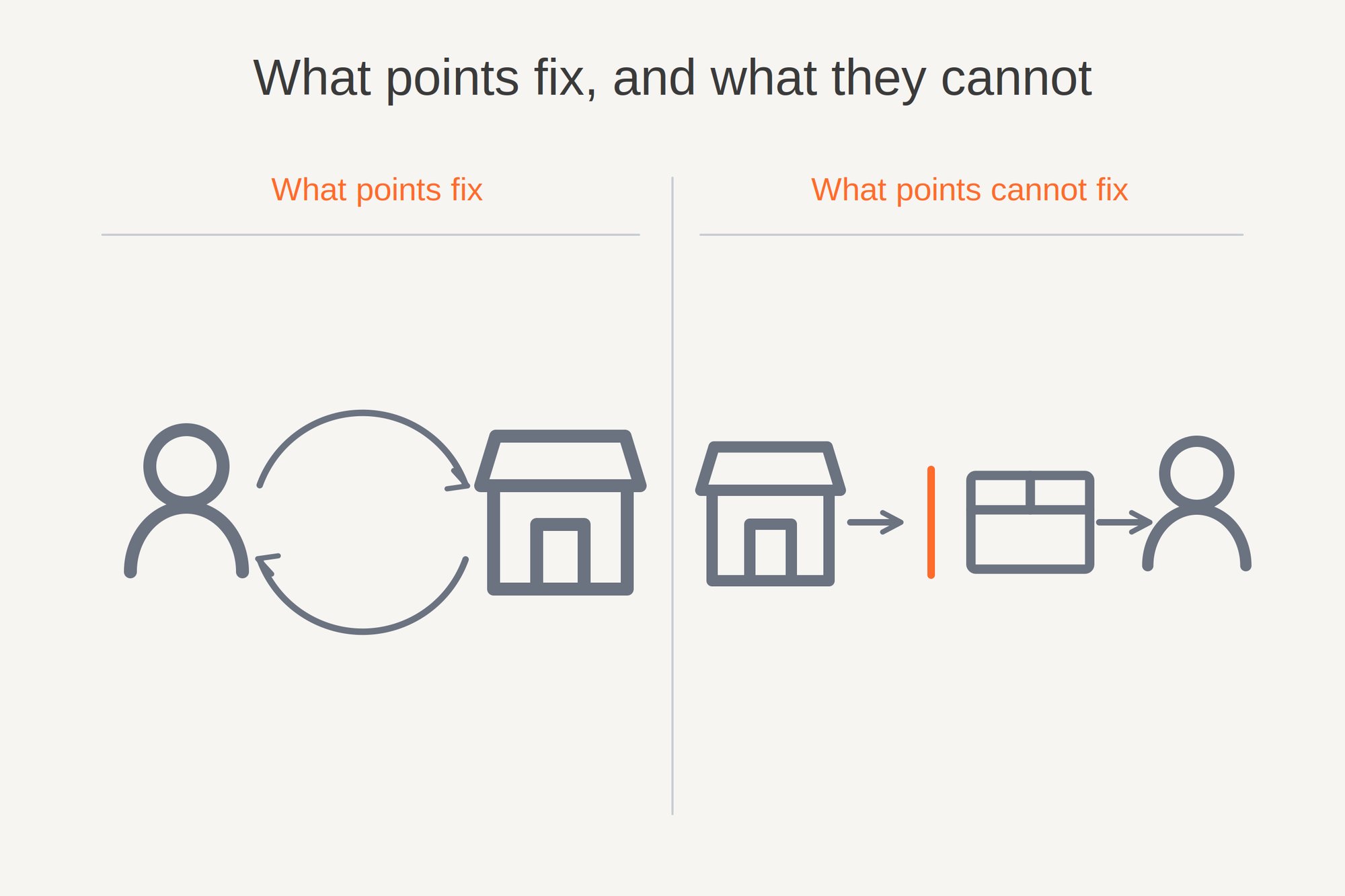
So the claim here is narrow, and it is about order of operations. A points program compounds on customers you still have. If your customers are leaving for reasons a points balance cannot reach, the program inherits a shrinking base, and the ROI of customer loyalty programs stops resembling Antavo's average and starts resembling your churn rate.
Which leaves one question you can answer before spending anything: where is your lifetime value actually going?
Where lifetime value actually leaks
There are two versions of the brand you might be. They look near identical on a churn dashboard, and they need opposite things.
The first brand loses customers to the experience after checkout. People buy, the parcel runs late or the tracking goes quiet, and they do not come back. The symptoms:
- WISMO tickets, meaning "where is my order", spike whenever a carrier has a bad week, and your CX queue is reactive by default.
- Repeat rate is healthy among customers whose orders arrived on time and poor among those whose did not, and nobody has ever cut the data that way.
- Your returns process is a form or an email address, and refunds take days.
- Negative reviews mention delivery and returns more often than they mention the product.
This is not a rare failure mode. Descartes and SAPIO Research, surveying 8,000 consumers in 2025, found that 66% of consumers report experiencing delivery problems. Baymard Institute's 2024 Order Tracking and Returns UX Benchmark is blunter about the back half of the journey: the order returns experience is critical for customer retention, yet 54% of sites have a returns interface with substantial UX issues. On Magento the tracking and returns side is covered in order tracking and returns on Magento 2.
LoyaltyLion's own 2026 consumer research points the same way, reporting that 46% say fast delivery times make them repeat purchase.
The second brand loses customers to indifference. Nothing goes wrong. The order arrives, the return is painless, and eight weeks later the customer has simply forgotten the brand exists. The symptoms:
- Delivery complaints are rare and returns rarely escalate into tickets.
- Repeat purchases cluster tightly around your own promotional sends and go quiet between them.
- Customers who do return buy the same single item, with no widening of the basket.
- You cannot name a reason for a second visit that is not a discount.
The second brand has a loyalty-program problem. Points, tiers and status are built precisely for it, and a tiered program is a reasonable place for that brand to start.
Most brands at 5,000 to 50,000 orders a month are the first brand and assume they are the second. The tell is whether you can state, from data rather than instinct, what your repeat rate looks like among customers whose last order arrived late. If you cannot, that is the number to pull before you sign anything.
What AfterShip Tracking does for the first kind of leak
If you are the first brand, what you are buying is the removal of the reasons a customer stopped trusting you between checkout and the doorstep.
Three capabilities carry most of that work, and none of them is a loyalty mechanic.
The first is owning the wait. The days between purchase and delivery generate the highest-intent traffic a brand gets, and by default it goes to a carrier's website. A branded tracking page keeps it on a page you control, and there is no shortage of ideas for what a brand can do with that attention. On paid AfterShip Tracking plans that page carries marketing assets and product recommendations instead of a bare status bar.
The second is reaching the customer before the customer reaches you. Proactive delivery updates deliver a delay while it is still information. Once the shopper has to go looking, the same delay arrives as a complaint, and it arrives in your support queue.
The third is making the promise accurate to begin with. AI EDD predicts delivery dates with up to 95% accuracy across at least 80% of deliveries, and an accurate date is the thing a late parcel actually breaks. A customer who was told Thursday and received Friday is mildly inconvenienced. A customer who was told Tuesday and received Friday has been misled by you, whatever the carrier did.
eBay is the clearest read on what that accuracy is worth at scale. Working with AfterShip, eBay recorded a 10% improvement in EDD accuracy in 2024, and surfaced more than 200,000 tracking numbers every month that had previously gone unseen. Mous, running the same tracking stack, cut WISMO tickets by 54%.
Those are operational numbers, not retention numbers, and the distinction matters when you build the case. AfterShip can show you what moves in accuracy and ticket volume. The link from there to repeat purchase is the one the research already on this page establishes, and it is the reason the delivery-driven leak is worth closing before you fund anything that assumes the customer comes back on their own.
What AfterShip Returns does for the second half of it
A return request is the moment you find out whether you keep the customer you already paid to acquire. They have decided this particular item is wrong. They have not yet decided anything about you.
Most sites lose them right there, which is what the Baymard benchmark cited above measures. The interface is a contact form, a policy page, or an email address that answers in two days.
Two things change that, and both are experienced by the shopper rather than configured by you.
The first is a self-service portal. The customer starts the return themselves, picks a resolution, gets a label, and watches the status without opening a ticket. Nobody has to be at a desk for the process to move.
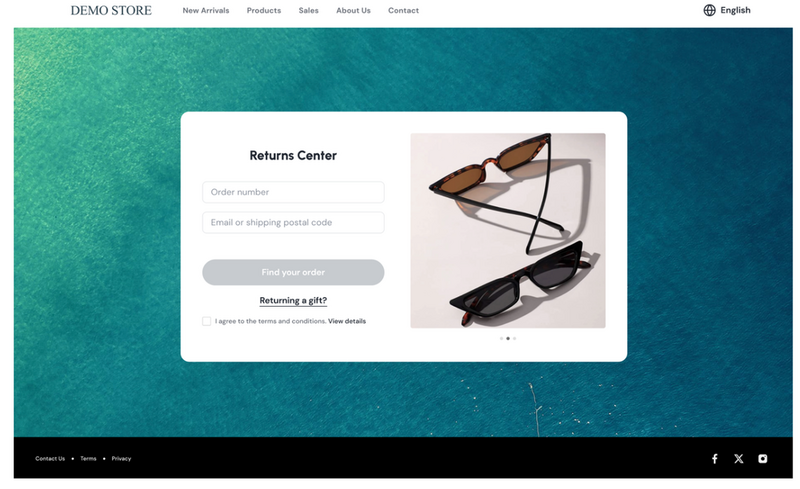
The second is an automated rules engine. Approvals, routing and refund triggers run on conditions you set once, which is what turns a two-day wait into a same-hour decision. The customer reads that speed as competence, and competence is what they were re-evaluating.
Fellow, a Shopify merchant, published what that combination did. In its February 2024 customer story, average return resolution time fell from 14.46 days in July 2023 to 7.52 days inside six months, roughly halving the time it took to close a return from start to finish.
Notice what neither of these is. Neither one gives the customer a reason to come back. They remove the reasons not to, which is the job in front of you if the diagnostic put you in the first group. The reward that earns the next order can be added afterwards, and it will be worth more once it is landing on customers who were not going to leave anyway.
So when does LoyaltyLion make sense?
When the leak is closed.
A points program layered on a post-purchase experience that already works does exactly what it was designed to do. It gives a satisfied customer a reason to come back sooner and to spend more when they do. Layered on an experience that is losing people, it spends budget rewarding customers who are leaving for reasons it cannot see.
That sequence is built into the products themselves, and the two are already integrated.
When a customer selects "Exchange for other items" on a first return, AfterShip Returns awards loyalty points for that choice. It syncs both the original and the exchange order data across to LoyaltyLion, and it applies a loyaltylion.enrolled tag to the customer record, which lets you route enrolled customers to free return shipping.
Five things have to be true for that to run. You are on AfterShip Returns Premium or Enterprise, you are on Shopify, you hold an active LoyaltyLion account with the enhancement features, LoyaltyLion is connected to the same Shopify store, and the customer is enrolled in your loyalty program.
There is a lower-cost route into the same setup. Return Care gives a qualifying merchant the Premium feature set, and with it the Premium-gated integrations including LoyaltyLion, at no returns-platform subscription cost. It carries its own conditions. Return Care is Shopify only. It is US-first, with Australia expanding and the UK validating. It runs on a consumer-funded revenue-share model in which shoppers pay a small fee at checkout, so it is a program a qualifying merchant opts into rather than a free upgrade for any store. The LoyaltyLion subscription stays separate and stays paid, and the five prerequisites above still apply.
Splash Wines, a brand running AfterShip Tracking, cut returns by 15% during a peak season. Put that alongside the exchange mechanism above and you can see the shape of the compounding: fewer returns to handle, and the ones that do happen routed toward an exchange that earns the customer points.
One honest gap, and it is worth stating because no competing article can fill it either. There is no published case study, from any vendor on either side, pairing a named brand running AfterShip with a dedicated loyalty program and a quantified retention result. Nobody can show you that number yet.
The 2026 verdict: fix post-purchase first, layer on points later
For a brand at this volume, the first retention dollar goes to the leak. For most brands at that volume the leak is in delivery and returns, and the diagnostic earlier in this article is how you find out whether yours is one of them.
Now the acknowledgment this article owes you. AfterShip is not a points, tiers and VIP rewards platform, and a brand whose post-purchase experience is already strong is right to go and look at one. Loyalty and referral tools are a real category with real returns, and a category AfterShip participates in as well. Their job is acceleration. Acceleration applied to a base that is draining compounds nothing.
Which is why the budget-transfer conversation from the top of this article is worth having. You are not being asked to abandon the retention line. You are being asked to spend the first part of it where the customers are actually being lost, so that the second part has something to compound on.
Close the leak first. Make the delivery date one you can keep, make the return something the customer can finish without you, and every dollar you put into points afterwards lands on a base that is no longer draining. AfterShip Tracking and AfterShip Returns are what that first half looks like.
Frequently Asked Questions
Where should I put my first retention dollar?
Into whichever leak your own data shows. If repeat rate drops among customers whose orders arrived late or who went through a return, that is a post-purchase problem and a points program cannot reach it. If delivery and returns are already clean and customers simply stop coming back, that is a loyalty-program problem and a tiered program is the right first spend.
Do I need to choose between a loyalty program and a post-purchase platform?
No. The question is which comes first. A loyalty program rewards customers you still have, so it pays back faster once the experience that loses them has been repaired. Most brands at 5,000 to 50,000 orders a month get more from sequencing the two than from picking one.
How do I measure the return on a better post-purchase experience?
Use operational metrics you already own, then connect them to repeat purchase. Track delivery-date accuracy, WISMO ticket volume and cost per ticket, return processing time, and the share of returns resolved as exchanges rather than refunds. Then segment repeat purchase rate by whether a customer's last order arrived on time. That segmentation is the number most retention teams have never pulled, and it is the one a VP will ask about.
What does it cost to run AfterShip Returns and LoyaltyLion together?
The integration requires AfterShip Returns Premium or Enterprise. AfterShip prices Returns by return volume rather than as a flat plan fee. Essentials covers under 100 returns a month and starts at $16 a month billed annually, with $0.50 per return above the included volume. Premium covers 100 to 400 returns a month and starts at $99 a month billed annually, with $1.00 per return above it. Billing monthly rather than annually removes an 18% discount. Above 400 returns a month the plan is Enterprise and the price is quoted, so a brand at 5,000 to 50,000 orders a month should expect a quote on both sides of this stack. Qualifying merchants can reach the Premium feature set through Return Care, which is Shopify only, US-first with Australia expanding and the UK validating, and runs on a consumer-funded revenue-share model in which shoppers pay a small fee at checkout, and that fee is what replaces the platform subscription. The LoyaltyLion subscription is separate and still paid. The difference is what each vendor puts in the open: AfterShip publishes its volume bands, its entry prices and its per-return overage rates up to the Enterprise threshold, while LoyaltyLion publishes no price at all above 500 orders a month.