The renewal notice is in. Customer service spends its day answering order-status questions, marketing wants the post-checkout experience to look like the brand, and finance still cannot see which carrier earns its rate.
Your brand has outgrown a tool whose job ends when the label prints. The real gap sits between four disconnected systems and one shared data layer. This guide ranks five ShipTheory alternatives on how well each one closes that gap, for UK and EU brands shipping 1,000 to 50,000 orders a month on Shopify or Magento.
Are You Replacing a Tool or Upgrading an Operation?
A shipping tool has a clear job: take the order, pick a service, send the customs data and print the label. That is the scope of the category.
The work that follows the label is where your team spends its hours. Someone keeps the shopper informed while the parcel moves. Someone handles the return when it comes back. Someone works out which carrier actually delivers on time on the lane from your warehouse into France or Germany.
That work runs on the same data as the label, or it runs on separate systems that each hold one piece of the shipment. The second setup has a cost that grows with every order:
- Four logins: shipping, tracking, returns and the helpdesk.
- Four exports, stitched together in a spreadsheet whenever finance asks a question.
- No single view of one shipment from label to refund.
At 1,000 orders a month that friction is an annoyance. At 50,000 it becomes headcount.
Search "ShipTheory competitors UK" and most comparisons you find stop at labels and rates. The better question is whether one order can travel from label to refund on one record.
The Three Things a Label Tool Cannot Join Up
Three joins decide whether your stack behaves like one operation. Each one is about architecture, so you can test it in any demo, whichever platform is on the screen. Ask to see one real order move from label to tracking page to return without anyone switching screens.
- Order status lives somewhere else. A shopper asks where the parcel is, and the answer sits in the carrier's system, outside the merchant's view. Your agent opens a carrier portal, copies the latest scan and pastes it into a reply. Each of those contacts is time your team did not plan for, and the volume climbs with every delay. In Eurostat's 2025 EU survey, delivery running slower than expected was the most common problem online shoppers reported, at 20%.
- Returns run as a separate workflow. A return arrives as an email or a portal login with no link to the outbound shipment, the return reason or the customer's order history. Someone matches it by hand before a refund or exchange can move. The pattern that would tell you why a product keeps coming back is split across two systems.
- Carrier choice is made on price alone. Rate shopping without delivery-outcome data picks the cheapest service on the screen, which may not be the service that arrives on time on that lane. The cost of a late or failed delivery then lands on customer service, days after the label decision was made. Ofcom's 2025 survey of UK parcel recipients found that more than two thirds had experienced a delivery issue in the previous six months. For a UK brand shipping into the EU, the same choice also shapes how customs paperwork and duties reach the shopper.
A platform that closes all three joins lets each decision draw on the others. The label feeds the tracking page, delivery history informs the next carrier choice, and every return links back to the order it came from.
The 5 Best ShipTheory Alternatives for UK & EU Brands in 2026
The five ShipTheory alternatives ranked here are AfterShip, ShipStation, Zenstores, Shippo and Starshipit. Each of these alternatives to ShipTheory faces one test: how well it closes the three joins above for a UK or EU brand. Every capability below names its product and plan, and every price carries its currency and billing terms.
1. AfterShip: Shipping, Tracking and Returns on One Data Layer
If order status, returns and carrier data each live in a different system, your team becomes the integration layer. Every order-status contact, unmatched return and carrier review turns into someone copying data from one screen to another.
AfterShip unifies shipping, tracking, and returns on one platform. In practice that means three subscriptions on one account: AfterShip Shipping, AfterShip Tracking and AfterShip Returns, each billed separately. One platform here means one vendor, one account and one data layer, so a label, its tracking events and its return sit on the same record. It does not mean one invoice.
Mous, the London phone-case brand, shows what that joined record does for customer service. With AfterShip Tracking, Mous reports a 54% reduction in WISMO (where-is-my-order) tickets, with its contact rate falling from 12.9% to 5.9%.

“AfterShip allowed us to set up KPI dashboards to see how well everything is going and troubleshoot before it becomes a problem.”
Rosie Jennings, Head of Logistics
Read their story →The wider AfterShip suite covers shipping, tracking, returns, and warranty. The three products below are the ones a ShipTheory replacement touches, taken one join at a time.
Ship with AfterShip Shipping
For a UK brand, the first test is whether your carriers work on your terms. AfterShip Shipping lets you connect your own carrier accounts and generate labels across the major UK carriers, including DPD UK, EVRi and Parcelforce, with real-time rates where the carrier connection supports them.
For shipping software UK-based teams use every day, five controls do most of the work, and AfterShip Shipping covers each one:
- Royal Mail: supported for eligible AfterShip Shipping accounts and enabled with the AfterShip team.
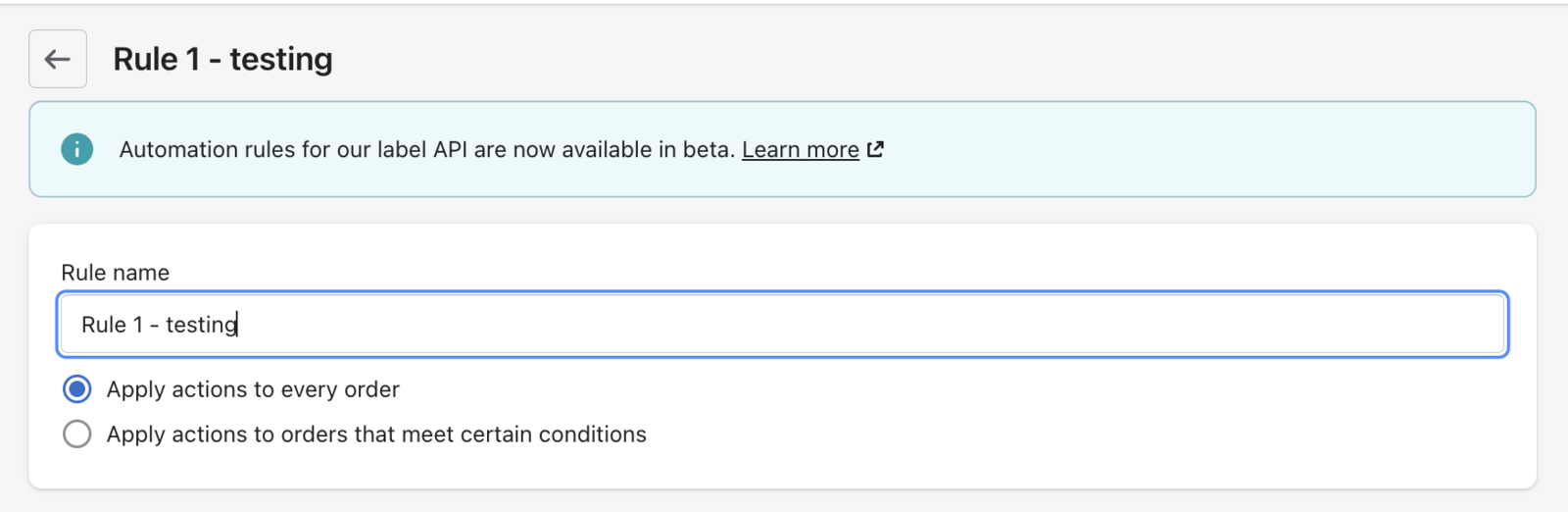
- Destination routing: automation rules on the Pro and Enterprise plans (up to 10 rules below Enterprise) branch on destination country and postcode, so each lane goes to the right carrier or service.
- Ship-from locations: multiple locations on all plans, with a rule action that sets the origin for each order.
- Smart Carrier Recommendation: available on all plans and off by default, it excludes services with a high exception rate for the shipment's origin and destination, using AfterShip's own tracking data.
- Discounted labels: available via AfterShip's Easyship integration, billed through Easyship.
Smart Carrier Recommendation is where the data layer reaches the label. The carrier choice draws on how each service has actually performed on that lane.
Close the Order-Status Gap with AfterShip Tracking
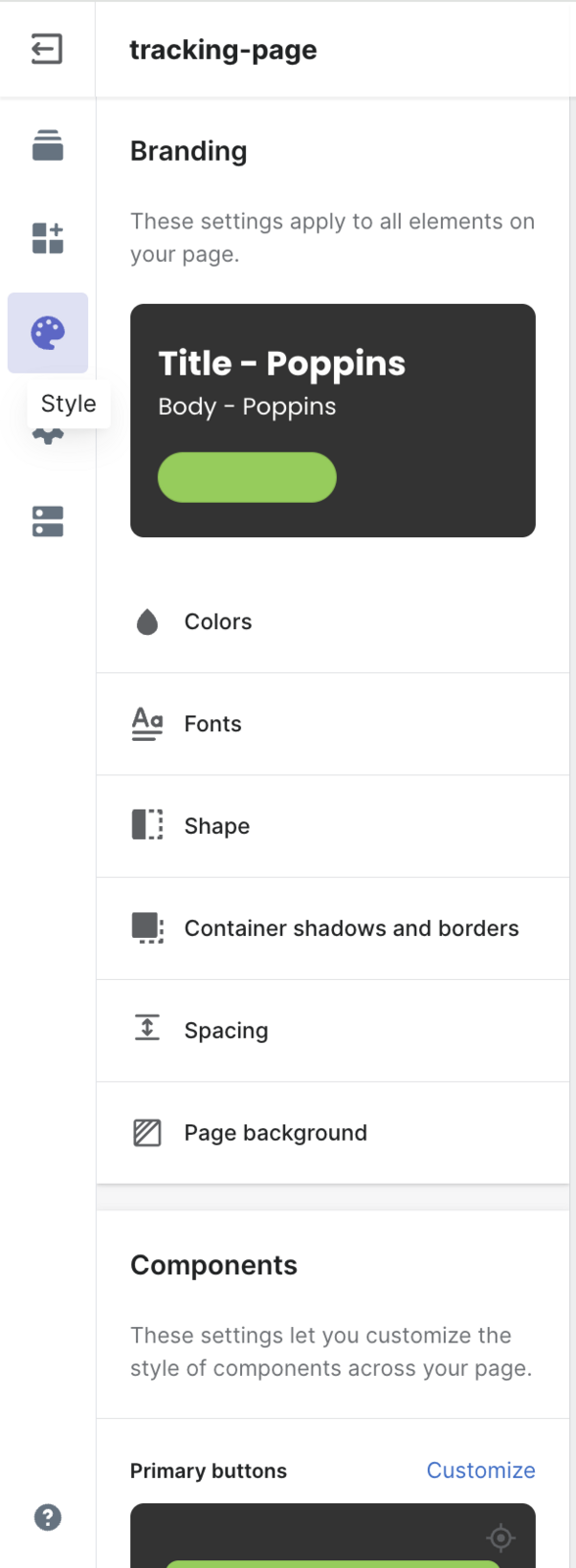
Order status is the join shoppers feel first. AfterShip provides a branded tracking page to reduce WISMO tickets. The page carries your brand, and AfterShip Tracking sends proactive email and SMS notifications as the parcel moves, so the answer reaches the shopper before the question reaches your team. For a UK brand using several carriers, shoppers see one branded page and one set of notifications, whichever carrier holds the parcel.
If you want to build a branded tracking experience, this page is the surface you design. Behind it, the AfterShip Tracking product page lists 1,900+ carriers in one integration. AfterShip is also an official member of the UPU Consultative Committee, and no other platform in this comparison appears on that roster.
One boundary to plan for: a label created in AfterShip Shipping syncs into AfterShip Tracking when an active Tracking subscription exists, and that shipment counts against your Tracking quota.
Turn Returns into an Operation with AfterShip Returns
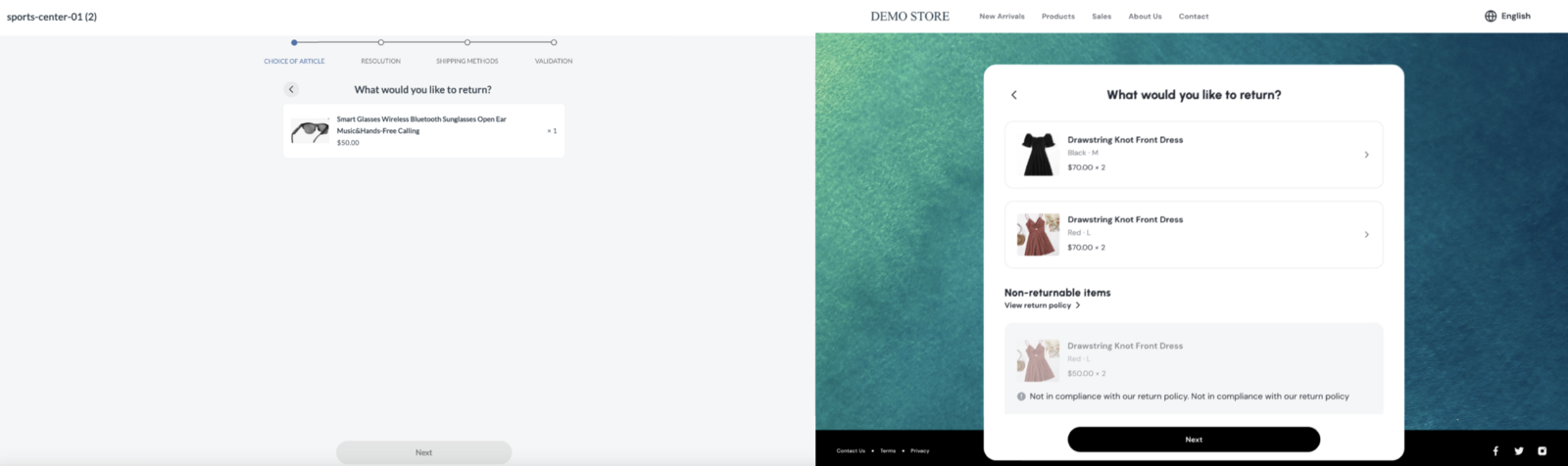
Returns are where a UK or EU shopper meets your operation directly. AfterShip Returns supports QR-code returns with Evri, Royal Mail, InPost and DPD UK. QR-code returns are included on every AfterShip Returns plan: Evri across all services, Royal Mail on Tracked 24 and Tracked 48, InPost across all services and DPD UK on Parcel Return To Shop.
Across the EU, GLS, PostNL, Poste Italiane and Arvato are supported, and a PDF label generates alongside each QR code for shoppers who prefer to print. The routing controls sit underneath:
- Return zones: set by country or region, each with its own routing rules and return methods (all plans).
- Auto-approval: configured per zone and per shipping method (Essentials and up).
- Eligibility controls: allowlists and blocklists by customer email, order tag, product, SKU or product type (Essentials and up).
- Carriers: your own accounts, or Easyship's pre-negotiated rates.
Because each return starts from the original order record, the return reason, the outbound shipment and the customer's history arrive with it.
Verdict: When to Choose AfterShip
Choose AfterShip when your shipping tool is one of four systems and you want the label, the tracking page, the return and the data behind them on one account. AfterShip Shipping is not the cheapest per-label option for a micro-business, and its automation rules begin on Pro rather than the entry tier. If you ship a handful of parcels a month and cost per label is your only concern, an entry pay-as-you-go tool can look cheaper on day one, though for a UK brand that often means US-dollar billing and bringing your own carrier accounts. As soon as branded tracking and returns matter, the per-app economics of a stitched stack overtake a single platform. For a brand shipping 1,000 orders a month or more, AfterShip adds routing rules, carrier recommendations from delivery data and per-zone returns controls that all run on the same record.
2. ShipStation: One UK Subscription Covering Labels, Tracking and Returns
If you want a single UK subscription for labels, tracking and returns, billed in pounds, start by matching your monthly shipment count to a published band. ShipStation runs a UK site with GBP pricing and publishes bands from 50 to 100,000 shipments a month.
Its Standard plan is GBP 190 a month at the 5,000-shipment band on monthly billing, and it includes:
- a Returns Portal and RMA workflows
- a branded tracking page and branded notification emails
- a customised rate shopper
On carriers, ShipStation's UK site says you can "purchase labels from all the UK's major carriers like Royal Mail, Evri, UPS and DPD, no carrier contract needed". For brands weighing the two directly, AfterShip has published a deep dive into AfterShip vs. ShipStation.
Choose ShipStation when a single UK subscription covering labels, tracking and returns matters more than the depth of the data underneath.
3. Zenstores: UK-Built Dispatch with Product-Level Customs
If most of your time goes on UK dispatch and customs paperwork, look first at where the tool keeps its customs data. Zenstores is operated by Mechfeed Ltd in Bristol and prices in GBP, with a plan fee plus a per-shipment fee:
- Essential: GBP 79 a month on annual billing, plus GBP 0.07 a shipment.
- Zenstores tier: GBP 159 a month on annual billing, plus GBP 0.04 a shipment. Shipping rules and the automation builder start on this tier.
Customs data is stored at product level and submitted electronically, and the commercial invoice and customs document print together. Tracking updates are sent back to the sales channel.
On returns, the Zenstores documentation shows a merchant-side flow: the merchant marks an order as a return in the order list.
Choose Zenstores for UK-first dispatch and customs automation where the shopper-facing side stays with another system.
4. Shippo: US-Rooted, Own-Carrier-Account Model
If you already hold UK carrier contracts and your developers prefer to build against an API, check the billing currency before anything else. Shippo bills in USD, with your bank setting the exchange rate and possibly adding a foreign transaction fee.
Shippo's discounted carrier rates apply to US accounts, so a UK merchant connects their own Royal Mail, DPD UK or Evri account, with Royal Mail enabled by Shippo support. The rest of the setup:
- branded tracking pages and notification emails on the Pro plan
- automations on every plan
- USD 0.08 per label beyond 10,000 labels a month
Both platforms let you connect your own carrier accounts. Shippo prices in per-plan tiers with a free Starter level and per-label pricing beyond plan allowances, and AfterShip Shipping publishes subscription tiers with a free plan of 10 labels a month and a 7-day trial.
Choose Shippo when you already hold UK carrier contracts and want an API-first tool, accepting USD billing.
5. Starshipit: Modular, with Post-Purchase Sold as Add-Ons
If you want a rules-led shipping tool and prefer to add post-purchase features one module at a time, price the modules alongside the base plan. Starshipit runs a UK site with GBP pricing, and its published ladder runs to 10,000 labels a month, with custom pricing above that.
- Automation rules: 3 on the Starter tiers, 5 on the Professional tiers, unlimited from Enterprise.
- Tracking: advanced branded tracking pages and notifications from Professional.
- Returns: a branded returns portal at GBP 10 a month below Enterprise, and included at Enterprise.
- Duties and taxes at checkout: from GBP 42 a month plus 10% of landed cost, billed annually.
Choose Starshipit when a rules-led shipping tool with optional post-purchase modules fits, and the add-on economics are acceptable.
Comparison Table: ShipTheory Alternatives at a Glance
Customs is the row where UK and EU requirements differ most, so here are the rules the table is read against. Royal Mail's customs guidance states: "From 1 June 2026 all Royal Mail and Parcelforce postal shipments require the use of a CN23 customs declaration only. The CN22 form will no longer be used or available for selection, except in cases where combined labels are selected, where CN22 will still apply."
For the EU, the European Commission applies a temporary EUR 3 customs duty per item on low-value consignments up to EUR 150 imported from outside the EU, from 1 July 2026. Separately, European Commission IOSS guidance sets out a simplified system to declare and pay VAT on consignments not exceeding EUR 150. In Great Britain, GOV.UK guidance says consignments of GBP 135 or less sold directly to customers carry UK supply VAT at the point of sale.
The same rules apply to any multi-carrier shipping software EU-bound parcels pass through. AfterShip Shipping is AfterShip's comprehensive multi-carrier shipping software for labels, rates and destination routing rules.
| Criteria | AfterShip | ShipStation | Zenstores | Shippo | Starshipit |
|---|---|---|---|---|---|
| UK carriers | Own UK carrier accounts; Royal Mail enabled with the AfterShip team | Royal Mail, Evri, UPS, DPD labels | Royal Mail, DPD, EVRi, Parcelforce, others | Own accounts; Royal Mail enabled by support | Own carrier accounts; DPD UK native |
| EU customs and duties | Incoterm and IOSS/VAT on customs record; destination routing rules | Customs paperwork and prepaid duties advertised | Product-level customs data, submitted electronically | Customs forms and commercial invoices | Duties at checkout as paid module |
| Post-purchase: tracking, notifications, returns | Separate Tracking and Returns subscriptions; QR returns on all plans | Branded tracking, emails, Returns Portal from Standard | Tracking to channel; returns in order list | Branded tracking and emails on Pro | Branded tracking from Professional; returns portal add-on |
| Automation rules and plan gate | Pro and Enterprise; up to 10 rules below Enterprise | Unlimited rule types from Standard | Shipping rules from the Zenstores tier | Automations included on every plan | 3 Starter, 5 Professional, unlimited Enterprise |
| Pricing and ceiling | USD tiers, three subscriptions; Tracking Custom at 20,000 monthly | GBP bands to 100,000 shipments monthly | GBP plan fee plus per-shipment fee | USD 0.08 per label beyond 10,000 monthly | GBP ladder to 10,000 labels monthly |
| Who it is for | Brands wanting labels, tracking, returns and data on one account | One UK subscription for labels, tracking, returns | UK-first dispatch and customs automation | Existing UK carrier contracts, API-first, USD billing | Rules-led shipping with optional post-purchase modules |
AfterShip prices each product in USD on aftership.com, with monthly or annual billing, as three separate subscriptions: AfterShip Shipping, AfterShip Tracking and AfterShip Returns. Shipping sits outside the bundle discount, Tracking moves to Custom pricing at 20,000 orders a month with seats charged separately from USD 10 per member a month billed annually, and Returns is priced on returns rather than orders, with the published slider running to 12,000 returns a year.
How to Make the Switch in Three Steps
Test the joins before you sign, using your own orders:
- Map what breaks today. List every system a single order touches from label to refund, and mark each point where a person re-keys data. That list is your baseline.
- Pilot the join, not the feature. Connect the store and create labels, then check that the shipment appears in tracking and that a return routes to the right location without manual work. Run it on one domestic lane and one EU destination.
- Price it properly. Price each subscription at your own volume, with the billing mode and the channel stated. AfterShip Returns is priced on returns, so use your annual return count for that line.
Final Verdict: Choose the Layer, Not the Label
AfterShip is the option here built to run shipping, tracking and returns on one account and one data layer, each billed separately.
Choose AfterShip if:
- your label, tracking page and return need to sit on one record, so each return arrives with its outbound shipment and order history
- you want carrier choice informed by delivery outcomes through Smart Carrier Recommendation on AfterShip Shipping
- your shoppers return with Evri, Royal Mail, InPost or DPD UK, and you want QR-code returns on every AfterShip Returns plan
- you sell into several EU countries and need returns routed per zone with eligibility controls
- you want one branded tracking page and one set of notifications, whichever carrier holds the parcel
Choose one of the alternatives if:
- ShipStation: you want one UK subscription in GBP covering labels, tracking and returns
- Zenstores: your priority is UK-first dispatch with product-level customs data, and the shopper-facing side stays elsewhere
- Shippo: you already hold UK carrier contracts, want an API-first tool and accept USD billing
- Starshipit: you want a rules-led tool and prefer to add post-purchase modules one at a time
Mostly in the first list? Start with AfterShip Shipping and add Tracking and Returns.
Simplify shipping and order fulfillment across Shopify, TikTok Shop, and your carrier network.
Book a demoFrequently Asked Questions
Is AfterShip a good ShipTheory alternative?
Yes, for UK and EU brands that want shipping, tracking and returns on one account and one data layer. AfterShip Shipping handles labels and routing rules, AfterShip Tracking the branded tracking page and notifications, and AfterShip Returns QR-code returns across UK and EU carriers, each as a separate subscription.
Which shipping software handles Royal Mail for UK brands?
Several platforms here handle Royal Mail, on different terms. ShipStation sells Royal Mail labels without your own Royal Mail contract, Zenstores lists Royal Mail among its UK carriers, and Shippo enables it on your own account via support. On AfterShip Shipping, Royal Mail is supported for eligible accounts and enabled with the AfterShip team, and AfterShip Returns adds Royal Mail QR-code returns.
How do these tools handle EU customs after Brexit?
Each produces customs data its own way: Zenstores at product level, submitted electronically; Shippo as customs forms and commercial invoices; ShipStation through advertised customs paperwork and prepaid duties; Starshipit through a paid duties-at-checkout module. AfterShip Shipping lets you declare DDP or DDU on the customs declaration and set up IOSS/VAT for DDP shipments, and its automation rules route orders to the right carrier or service by destination country and postcode.
What does AfterShip cost for shipping, tracking and returns?
AfterShip Shipping, AfterShip Tracking and AfterShip Returns are three separate subscriptions, each with its own published tiers on aftership.com. Price each one at your own volume and billing mode, and count returns rather than orders for AfterShip Returns.
Which alternative is best above 20,000 orders a month?
Above roughly 20,000 orders a month, published pricing runs out for most of this field. ShipTheory's published plans stop at 20,000 shipments a month and Starshipit's at 10,000 labels, while ShipStation publishes a band at 50,000. At that volume, AfterShip Tracking moves to Custom pricing and Returns is priced on returns, so AfterShip quotes your actual lanes and return volume on one account.