Why a Narvar renewal is worth re-opening
Sixty days before a renewal is the only point in a contract year when you have leverage. Most teams spend it comparing tracking pages. The more useful question is what you are actually paying for, which parts of it are separate line items, and what it costs you to leave.
Start by being fair to the incumbent. Narvar defined this category and still leads it at the top of the market. It publishes eight product lines (Promise, Secure, Track, Shield, Notify, Assist, Narvar Agentic and IRIS), 1,500+ global brands, 2B packages a year and 1,000+ carriers, plus a self-serve track page editor and notifications across email, SMS, WhatsApp and Line. Anyone shopping Narvar alternatives on the assumption that Narvar is a thin status page has not read the product nav.
So the wedge is not missing capability. It is that the capability arrives as separately sold products against no published price at all.
Narvar publishes no pricing, so a renewal quote cannot be benchmarked against a list price. You cannot tell whether it is fair, average, or a premium on what a comparable brand pays. That gap gets expensive as contact volume climbs: Gartner figures reported in June 2024 put the cost of resolving a customer contact at a starting point of $9.10 for a single-channel journey, rising to $26.04 for a three-channel one. Order status is one of the highest-volume contact types in ecommerce, so it is a material annual line either way. The renewal question is whether you can see what you are paying to manage it.
The four questions that decide this renewal
Fix the frame before anyone is named. All four are answerable from public evidence for every platform here, which is the point: you can run this yourself, on any shortlist, without booking a call.
- What does the published price include, and what is a separate line item? The renewal question. A readable ladder lets you model your own volume before you talk to anyone.
- What can you operate without opening a vendor ticket? Tracking page copy, notification logic and plan changes are things your team touches monthly.
- What happens to your data if you leave? Import and export paths are published or they are not. Check before you sign.
- What still fits when you add a market, a carrier or a second storefront? Most post-purchase tracking platforms look identical at your current volume, and stop looking identical at twice it.
Independent ratings are a useful fifth read, if you weigh the denominator as hard as the score.
| Platform | G2 rating, captured 18 August 2026 | Reviews |
|---|---|---|
| Narvar | 4.3 / 5 | 182 |
| parcelLab | 4.6 / 5 | 280 |
| Malomo (now part of Redo) | 4.0 / 5 | 1 |
| Route | 4.5 / 5 | 114 |
| AfterShip | 4.7 / 5 | 311 |
A score built on one review tells you nothing about a platform.
Three kinds of Narvar alternative
Sort the market by how capability is packaged and operated. Company size is the wrong axis, and so is vendor age.
The incumbent suite you buy module by module. Narvar and parcelLab both sell broad capability through a sales-led motion with no published price. You get depth, and a procurement process every time you want more of it.
The point tool inside someone else's platform. Malomo, now part of Redo, does tracking well and publishes a real plan ladder, which is genuinely rare here. What changed in 2026 is who owns the roadmap.
The shopper-funded network. Route charges the merchant no software fee at all and makes its money from the shopper instead. That has consequences, and they show up in the customer experience rather than on your invoice.
If you want the ranked version of this market, we have five tracking apps ranked side by side elsewhere. This guide is deliberately not that. At a renewal you are choosing which of these four commercial models to sit inside for the next two years, and that answer follows your brand shape rather than a feature scorecard.
Against those three sits the single-vendor suite: AfterShip, running tracking, returns and shipping on one platform and one data layer, each with a plan ladder you can read before you speak to anyone.
AfterShip: one platform, one published ladder
Follow a single shopper through it, because that is where the packaging question stops being abstract.
They check their order on a tracking page carrying your brand, not a carrier's. The delivery date they see is AI-modelled rather than copied from the carrier's own estimate, on Premium and above; every plan shows a carrier-based date. The item is wrong, so they open a return from that same page, and the label generates against the cost rules you set. Tracking, returns and shipping run as one complete post-purchase suite on one data layer, so none of that hands off between vendors.
Then the part that decides a renewal. AfterShip publishes a plan ladder you can read against your own volume before you speak to anybody, and Narvar publishes none. That is the whole comparison at the commercial level, and it is checkable in a browser tab in under a minute.
On coverage, AfterShip lists 1,700+ carriers on its tracking page.
Proof is where this gets interesting. Narvar's customer-care page advertises 60% fewer WISMO contacts and up to 80% fewer order-status calls, with no named customer, no sample size and no date attached to either figure. Set that against Mous, who cut order-status contacts from 12.9% of orders to 5.9% on AfterShip Tracking. Named, dated, attributed to one product, with a denominator you can check. StackCommerce, Inspire Uplift and Vivino publish contact reductions of 71%, 75% and 50% on the same product.
A named brand with a measured before-and-after is worth more at a VP meeting than a larger anonymous percentage, and you should say so out loud when the anonymous one comes back at you.
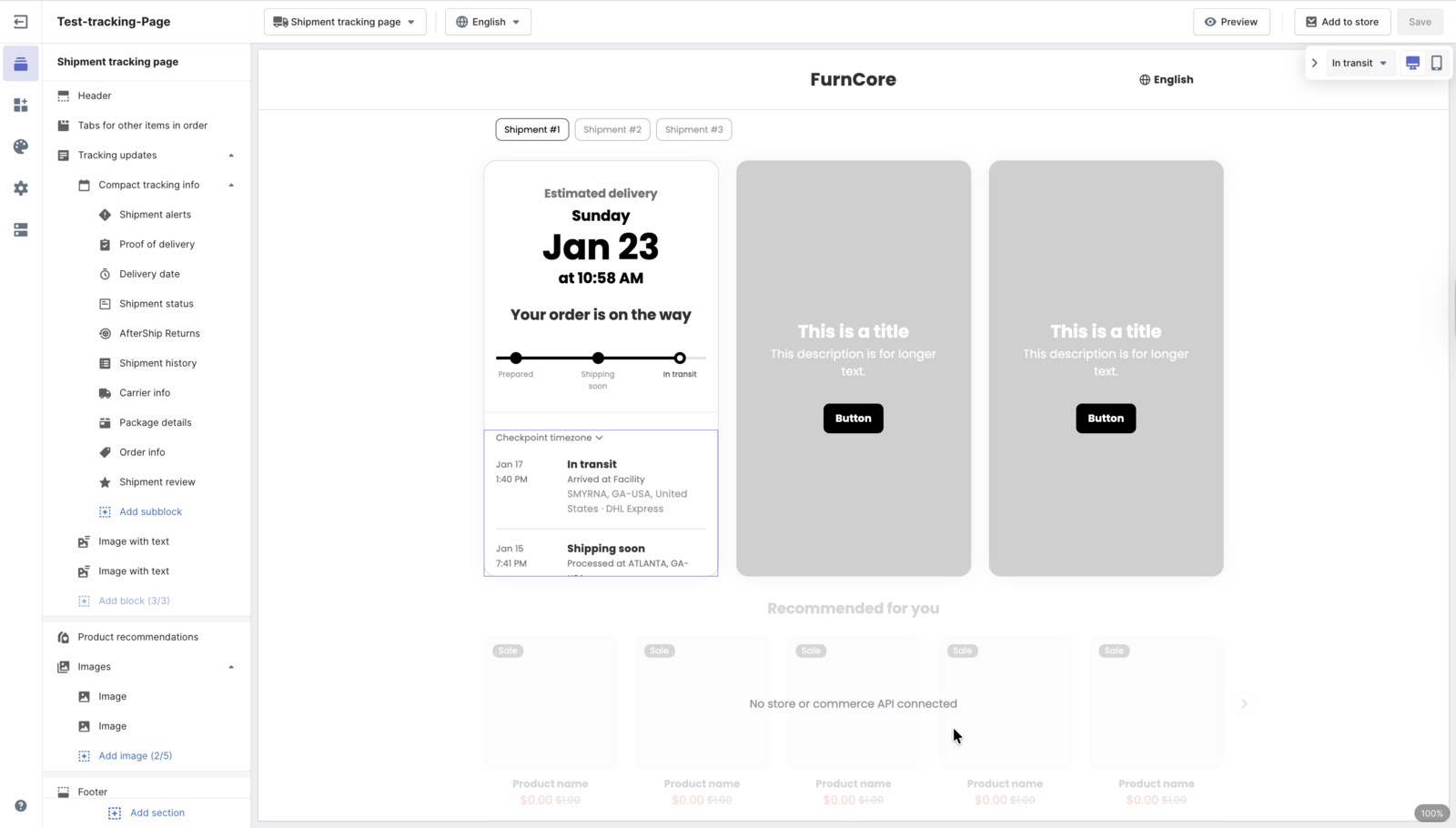
We have written at length about building the best branded tracking page, and about a broader look at the mid-market post-purchase stack, so this guide will not re-run either argument. At a renewal, the ladder matters more than the feature list, and AfterShip publishes one you can read against your own volume before you speak to anyone.
The specialists, and who each one actually fits
Each of the three below is a reasonable answer for some brand. None of them is a reasonable answer for every brand, and the difference is usually structural rather than technical.
parcelLab
parcelLab is a serious enterprise communications platform, reporting 1,000+ customers and 200+ employees on its own counters. It publishes a carrier directory you can filter by shipping country, so you can confirm your actual lanes are covered before you sign rather than after. It also advertises onboarding in two weeks to thirty days with no heavy development work.
For a brand whose complexity is genuinely European and multi-region, that is a stronger starting point than a self-serve install, and it is fair to say so.
What you give up in exchange is the ability to price the thing at all. parcelLab publishes no rate card, so every evaluation opens with a sales conversation and closes with a quote you cannot benchmark against anything. If you have shortlisted it, we have a head-to-head comparison with parcelLab that goes deeper. For a mid-market team without a procurement function, AfterShip gets you to a number on day one and to a filterable carrier check on the same afternoon.
Malomo
Malomo, now part of Redo following its acquisition in January 2026, publishes a real plan ladder tied to shipment volume. In a category where two of the five platforms here publish nothing at all, that deserves credit.
Two things a buyer needs before shortlisting it. Its 2,000-carrier figure is an advertised claim, and it resolves to roughly 80 carriers included in the plan, with the extended network billed separately and sitting outside plan capacity. Separately, Redo now sells its own order tracking at a per-order rate on a page that does not name Malomo, which is worth understanding before you model two years of cost.
Malomo also works well for teams running post-purchase inside Klaviyo. So does AfterShip. The useful comparison there is event depth: how many distinct post-purchase events a platform can hand Klaviyo, and how much of the message you can build before you leave the platform. AfterShip carries that depth on the same platform as the tracking page and the returns portal, so the flow and the branded surface get configured in one place rather than two.
Route
Route charges the merchant no software fee whatsoever, which is a genuinely different commercial model and not a discount.
The trade-off is structural. Route's consumer app parses a shopper's email to track orders across every store they buy from, "even Amazon" in Route's own words, so the post-purchase attention you paid to earn moves into Route's app rather than staying on your domain. Route also states that a gross merchandise value minimum may apply without publishing the figure, so confirm your eligibility before you spend evaluation time on it.
If owning the post-delivery moment is part of why you are running a tracking page at all, that is the question to settle first. AfterShip keeps that attention on a surface carrying your brand and your product recommendations, on a plan you can price before you buy.
Head-to-head on the four questions
Here are all five platforms against the frame set out at the top, so you can take one page into the VP meeting. Ratings are deliberately absent: they were covered earlier, and a rating is not one of the four questions.
| The four questions | Narvar | parcelLab | Malomo (now part of Redo) | Route | AfterShip |
|---|---|---|---|---|---|
| What the published price includes | No pricing published | No pricing published, pricing URL returns a 404 | Lite $49/mo at 1,000 shipments, Starter $189/mo at 4,000, Growth from $400/mo | No merchant fee. Shopper-funded, shopper price not published | Plan ladder published on aftership.com: Essentials from $29/month and Premium from $59/month, each including 6,000 shipments a year, with per-shipment overage published and a volume slider running 1,200 to 300,000+. Enterprise is quote-based |
| What still fits when you add a market or a carrier | Not published | A filterable directory you can check by shipping country before you sign | Roughly 80 carriers included in plan; the extended network is billed separately and does not count toward plan capacity | Not published | Carrier access is not tier-gated; the same carrier integration is listed on every plan |
| What you can run without a vendor ticket | Self-serve track page editor advertised | Self-installable Shopify modules, 'no heavy dev lift needed' | Self-serve, published ladder | App install, self-serve | Self-serve plan changes and tracking page editing |
| What happens to your data if you leave | Developer documentation sits behind a sign-in. developer.narvar.com returns a 302 redirect to an SSO login, so a prospective buyer cannot review data portability before signing | docs.parcellab.com is public; its data-integration page describes API, SFTP and email BCC as inbound methods and documents no bulk merchant export | docs.gomalomo.com is public and documents Retrieve an Order, Retrieve a List of Orders and Retrieve a List of Order Events, with pagination and full shipment history | CSV export in the Merchant Portal's Finance tab, scoped to weekly billing periods and protection premiums. The dedicated order-data export article has been retired and redirects to a general help page | CSV export of tracked shipments to the account owner; advanced bulk export and custom field selection from Premium up |
Two of the five publish no price at all, and a third publishes only what the merchant pays, not what the shopper does. At a renewal that is the row that decides the shortlist. Malomo and AfterShip are the two you can model against your own volume tonight. Retailers weighing a full suite rather than a point tool get that modelled in the mid-size retailer view of Narvar against Oracle CX.
What switching actually involves
Nobody publishes this part, which is why it is the question your VP will actually ask.
Getting data in runs on any AfterShip plan, by store connection, CSV upload, manual entry or API. Getting it out is documented too: a CSV of your tracked shipments goes to the account owner, with advanced bulk export and custom field selection from Premium up. That is the whole answer, and you can verify it in the help centre rather than taking it from a rep.
The honest part. Hands-on migration with a dedicated Solutions Architect is something AfterShip offers brands coming off another platform, but the plan level it comes with is not stated publicly. If white-glove migration is a requirement rather than a nice-to-have, make it an explicit line item in the quote conversation and get the answer in writing.
That is a small ask compared with the alternative, which is discovering your exit terms at the point you want to use them. AfterShip documents both directions in public, which is what makes this question answerable before you sign rather than after.
The verdict
For a mid-market DTC brand at a Narvar renewal, AfterShip is the strongest alternative in 2026. The argument is transparency rather than price: you can price it, run it and leave it without a sales call. AfterShip publishes a plan ladder you can read against your own volume, runs tracking, returns and shipping on one platform and one data layer, each with a published ladder, and documents how to get your data in and out on any plan.
parcelLab is the right call if you are running complex multi-region operations and have the appetite for a procurement process. Malomo suits a team living inside Klaviyo that wants a published price, provided you are comfortable that its roadmap now belongs to Redo. Route is a deliberate strategic choice for a brand that wants shopper-funded protection and accepts that its consumer app follows the shopper to other stores.
And if your Narvar quote comes back close and you are deep into several of their modules, defending the incumbent is a legitimate answer. Just make them show you the line items.
Whichever way you go, walk in with the four questions rather than a feature grid. If you want the AfterShip side of it in more depth, we publish a detailed breakdown of features and pricing against Narvar that goes criterion by criterion. AfterShip answers all four questions from a public page, which is the least a platform should offer a buyer at renewal.
Proactive shipment tracking that keeps customers informed, reduces WISMO tickets, and improves your delivery performance.
See the plan ladderNarvar alternatives: frequently asked questions
What is the difference between Narvar and parcelLab?
Neither publishes a rate card, so both evaluations begin with a quote you cannot benchmark. The difference is shape. Narvar sells eight separate product lines, so capability you assume is included often arrives as its own line item. parcelLab is built around enterprise customer communications and publishes a carrier directory you can filter by shipping country, which suits multi-region European operations. Neither publishes a plan ladder you can model against your own volume before speaking to anyone. AfterShip does.
Is Malomo still available now that Redo owns it?
Yes. Malomo still sells branded order tracking with a published plan ladder tied to shipment volume, and it remains listed on the Shopify App Store. The January 2026 acquisition changed who owns the roadmap: Malomo is now Redo's tracking arm, and Redo separately sells its own order tracking at a per-order rate on a page that does not mention Malomo. Before committing, confirm which of the two you are buying, and how the extended carrier network is billed, since it is charged separately from the plan.
How long does it take to switch post-purchase platforms?
Public data is thinner than vendors imply, and it comes from two different G2 modules that should never be subtracted from one another. Under Time to Implement, Narvar and parcelLab are each published at 3 months, with no sample size disclosed for either. Under the separate Implementation Time module, AfterShip is published at 1 month across 311 reviews and Route at 1 month across 114. Treat the undisclosed samples with caution, and ask any shortlisted vendor for a named reference who migrated at your order volume.
Is AfterShip a good Narvar alternative for Shopify Plus?
Yes. AfterShip is Built for Shopify certified, which is Shopify's highest app tier, and it runs tracking, returns and shipping as one complete post-purchase suite on one platform and one data layer, with a published plan ladder for each, rather than as separately quoted product lines. For a Plus brand at renewal, the decisive part is that you can read the plan ladder against your own volume, change plans yourself, edit the tracking page without a vendor ticket, and export your tracked shipments to the account owner.