You are evaluating Shipium alternatives because high-volume parcel shipping is expensive and hard to control. Shipping orchestration solves the label and the promise date. What it does not solve is the return journey and the warranty claim, which sit in separate systems and carry their own cost. This article compares five alternatives on how much of the post-purchase journey each one actually covers.
Shipium orchestrates multi-carrier parcel shipping and sells tracking, delivery promise dates and shipping analytics alongside it. The five Shipium competitors below are compared on six criteria, including how many of the four post-purchase stages each one ships as its own product.
Where shipping orchestration stops
Your parcel spend is visible. Everything downstream of the doorstep is not.
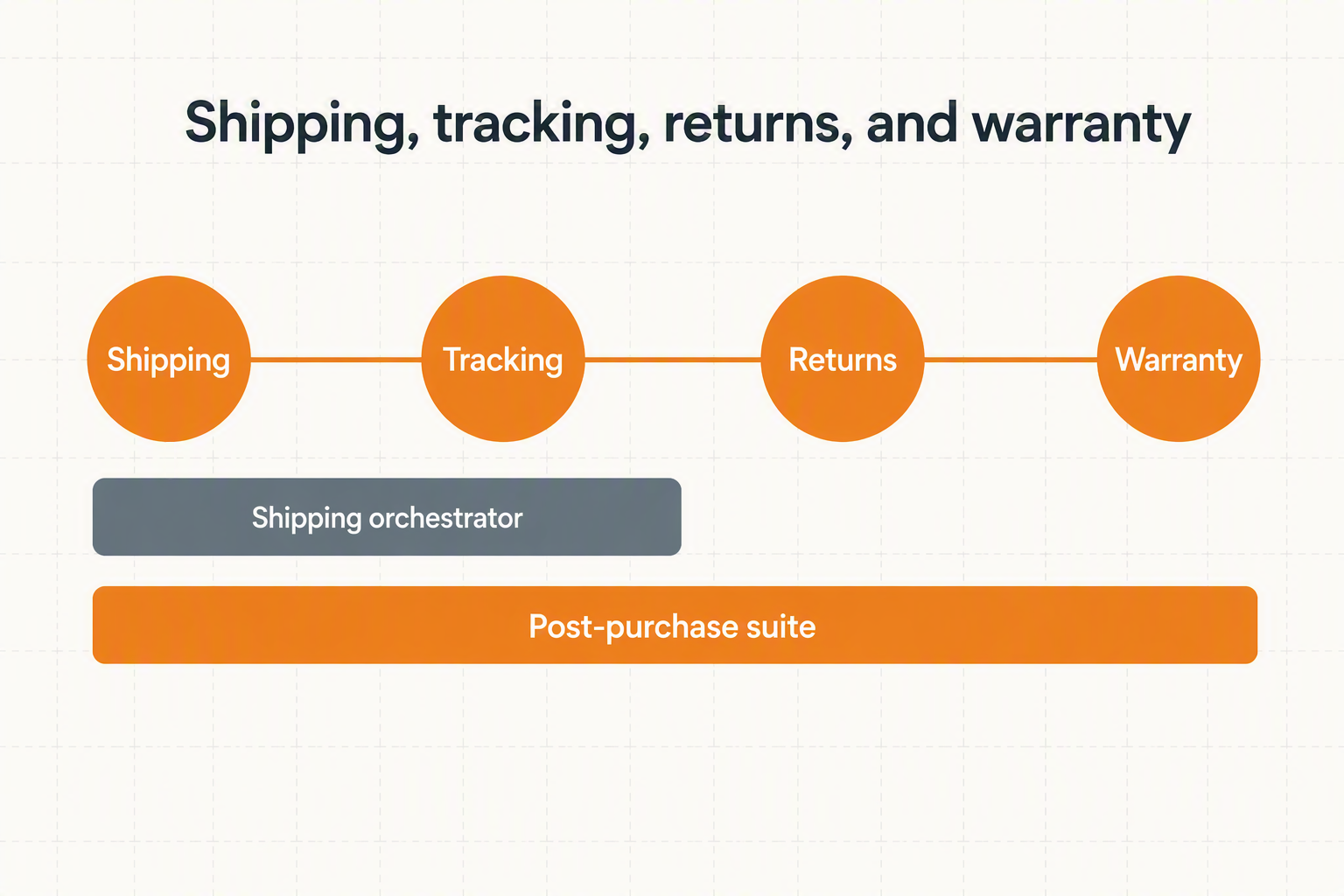
The four stages of the post-purchase journey are shipping, tracking, returns, and warranty. A shipping orchestrator covers the first two. The cost your finance team eventually asks about sits in the other two.
Three places it shows up:
- Data silos between shipping and CX. Your WMS knows what shipped, the carrier feed knows where it is, and the agent on the ticket reconciles both by hand.
- Exception handling after delivery. A parcel marked delivered that the customer never received stops being a shipping problem, and the shipping stack stops following it.
- The returns process. The return leg, the RMA, and the warranty claim each run in a separate system, often from a separate vendor.
None of this appears on a per-label rate card. It shows up in headcount, in ticket volume, and in the contracts your team renews.
How we evaluated Shipium competitors
These criteria are written for teams buying enterprise shipping software or 3PL shipping software, not for SMB shippers. For the broader market view, there is a comprehensive shipping software ranking.
Six criteria:
- Multi-carrier network and API, parcel, and LTL or freight where the vendor publishes it
- Post-purchase stages shipped natively, of four: shipping, tracking, returns, and warranty
- Multi-warehouse and multi-tenant logic
- Automation and rules depth
- White-label and branded shopper experience
- Enterprise support, SLA and security certification
Criterion 2 is scored as a count. How many of the four stages does the vendor ship as its own product? Each vendor's own pages show what it sells, so you can check ours against theirs before the RFP goes out.
The top 5 Shipium alternatives for enterprise scale
Five vendors, and five different shapes of product. AfterShip is the complete post-purchase suite. EasyPost is the API-first option, sold as a developer product. ShipStation is the mid-market fulfillment platform. Pitney Bowes is the shipping-software incumbent. Descartes is the enterprise TMS and logistics suite, with parcel handled by named sub-brands.
1. AfterShip: the complete post-purchase platform
Who it's for: enterprise and 3PL operations leaders who need the stages after delivery to sit on the same platform as the label.
On AfterShip Tracking, Mous recorded an 82% decrease in shipping transit times via logistical insights and a 54% reduction in WISMO tickets.

“AfterShip allowed us to set up KPI dashboards to see how well everything is going and troubleshoot before it becomes a problem.”
Rosie Jennings, Head of Logistics
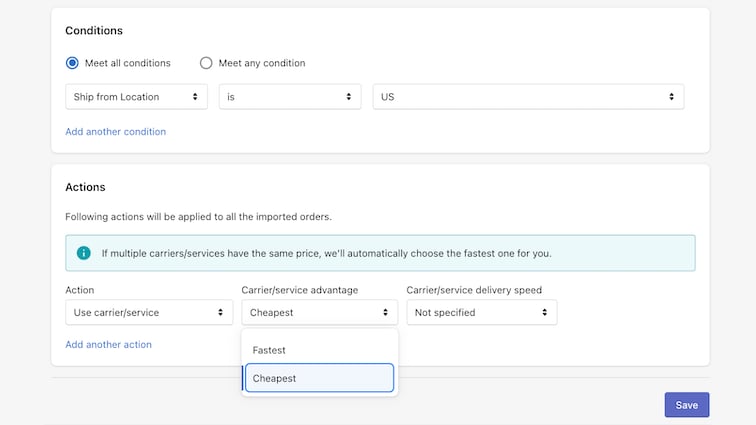
Read their story →AfterShip Shipping calculates and compares multi-carrier rates across 130+ carriers in one integration, over 87 of them for carrier-certified label creation. Rate comparison runs before the label is bought, so the carrier choice and the label come from the same place. Automation rules on the Pro and Enterprise plans apply your shipping rules at label creation.
International shipping carries commercial invoices and customs fields. Address validation runs on the same stack, and an order-management portal gives operations shipment-visibility and exception views.
AfterShip runs shipping, tracking, returns, and warranty as first-party products on one platform. For a 3PL, the branded tracking pages and returns portals handed to retail clients come from that same suite. Teams weighing the returns half of the decision will find the detail in enterprise-grade returns management.
AfterShip is not a pure TMS. It does not manage freight forwarding or warehouse-level inventory, so a freight-heavy operation will run a TMS alongside it, with a complete post-purchase solution on one platform underneath.
2. EasyPost: the API-first competitor
Who it's for: engineering teams that want to build their own shipping logic and own the result.
EasyPost publishes a documented REST API for rating and label purchase. Sold alongside it are a white-label product and a fulfillment and 3PL solution.
AfterShip publishes shipping APIs as well, so programmatic control is common ground. The question is what you want sitting on top of it.
EasyPost sells tracking and notification products alongside its API, priced per shipment. Returns are handled at the label level rather than as a shopper-facing portal.
At the label level, a return is a printable label and a tracking record. The shopper-facing steps around it, the policy rules, the approvals and the exchange options, are yours to build.
For a 3PL that has to hand a branded returns experience to each retail client, that portal is the piece you would be building and maintaining yourself, client by client.
3. ShipStation: the mid-market fulfillment platform
Who it's for: brands and smaller 3PLs centralizing orders across sales channels.
ShipStation runs rate shopping across carriers, with Rate Shopper picking by cost or speed on every order, and APIs for consolidating parcel and LTL freight orders. Its Standard tier adds a branded returns-and-exchanges portal, RMA workflows, a branded tracking page and branded notification emails.
The company is part of ShipStation Global, formerly Auctane, which merged with WWEX Group on 1 June 2026.
ShipStation supports multi-location fulfillment and rules-based automation. The question at 3PL scale is tenancy and API throughput, where the default limit is 200 requests per minute and higher limits are an enterprise negotiation.
4. Pitney Bowes: the shipping-software incumbent
Who it's for: enterprises with an existing mailing and shipping estate to consolidate.
Pitney Bowes sells the Shipping 360 platform, multicarrier shipping software, ecommerce fulfillment software and shipping APIs, alongside mailing and presort services. Package tracking, multicarrier management, shipping analytics and international shipping are among its use cases.
Pitney Bowes sold a controlling interest in its Global Ecommerce entities on 8 August 2024. DRF Logistics filed for Chapter 11 the same day and wound down, with the plan effective 9 December 2024. High-volume domestic parcel delivery is no longer part of what the company operates.
What remains is a shipping software business. The post-purchase stages after tracking are outside the current line-up, so returns and warranty sit with another vendor.
5. Descartes: the enterprise TMS & logistics suite
Who it's for: global operations with multi-modal freight and trade-compliance requirements, where parcel is one lane among several.
Trade compliance and multi-modal transportation sit at the center of the Descartes portfolio. Parcel is a neighboring line, reached through named sub-brands that include XPS Ship and OzLink.
Descartes sells parcel shipping through several products including ShipRush and Pacejet, with branded tracking available. A returns portal is not offered, which Descartes states in its own product comparison.
Capability is spread across the sub-brands, so the buyer assembles the parcel stack from several products.
Shipium competitors compared: how much of the journey each covers
Six criteria, scored on what each vendor publishes on its own pages.
| Criteria | AfterShip | EasyPost | ShipStation | Pitney Bowes | Descartes | Shipium |
|---|---|---|---|---|---|---|
| 1. Multi-carrier network and API (parcel, and LTL or freight where published) | 130+ carriers in one integration, over 87 for carrier-certified label creation. No freight forwarding. | Multi-carrier REST API for rating and label purchase, with published usage-based pricing. | Rate shopping across carriers; APIs for consolidating parcel and LTL freight orders. API default 200 requests per minute, higher limits by enterprise negotiation. | Multicarrier shipping software and shipping APIs. Parcel delivery network wound down in 2024. | Parcel through ShipRush, Pacejet, XPS Ship and OzLink; multi-modal freight across the wider portfolio. | Pre-integrated multi-carrier parcel network, with parcel and LTL rating workflows. |
| 2. Post-purchase stages shipped natively (of four: shipping, tracking, returns, and warranty) | Four of four. Shipping, tracking, returns, and warranty, all first-party AfterShip products from a single vendor, so neither the return nor the warranty claim is handed to a partner. | Two of four. Shipping and tracking; Advanced Tracking adds branded tracking and notifications, priced per shipment. Returns handled at label level. | Three of four. Shipping, tracking and returns, including a branded returns-and-exchanges portal and RMA workflows at Standard. No published warranty product. | Two of four. Shipping and tracking; the stages after tracking are not part of the current line-up. | Two of four. Shipping and tracking through sub-brands; no shopper-facing returns portal, per Descartes' own product comparison. | Two of four. Shipping and tracking, with ML delivery promise dates and analytics. Returns referred to a partner. |
| 3. Multi-warehouse and multi-tenant logic | No per-tenant Shipping configuration published. | Fulfillment and 3PL solution published. | Multi-location fulfillment across multiple warehouses and stores. | Ecommerce fulfillment software published. | Warehouse capability sits in separate portfolio products, including Peoplevox. | Tenant-specific and node-specific rules for 3PLs. |
| 4. Automation and rules depth | Automation rules on the Pro and Enterprise plans assign a carrier and service to orders that meet set conditions, selecting by price or delivery speed. | AI-assisted shipping decisions sold as Luma AI, alongside the API. | Rules-based automation; Rate Shopper selects by cost or speed on every order. | Business rules that select a shipping method by price, delivery speed or region. | ShipRush automation rules with if-then conditions and actions, including carrier rate comparison. | Universal rules engine. |
| 5. White-label and branded shopper experience | Branded tracking pages and a branded returns portal that a 3PL can hand to each retail client. | White-label product; Advanced Tracking adds branded tracking and notifications. | Branded tracking page, notification emails and returns-and-exchanges portal at Standard. | Branded tracking notifications by email and SMS, with custom colors, fonts and logos. | ShipRush publishes branded tracking pages and branded email notifications. | Shopper-facing tracking and delivery promise dates. |
| 6. Enterprise support, SLA and security certification | ISO 27001 and SOC 2 Type II. 99.9% uptime SLA carried by the Silver and Gold support plans, sold per product. | SOC 2 Type 2. | Phone support from Standard. Security certifications not publicly documented. | ISO 27001 and SOC 2. | ISO 27001 and SOC 2 Type I and II. | SOC 2 Type 2. No ISO certification or platform uptime commitment published on its trust center. |
Pitney Bowes and Descartes publish ISO 27001 and SOC 2, as AfterShip does, so certification is parity. The difference is the stage count: five of the six vendors ship two or three of the four post-purchase stages, and AfterShip ships all four.
Shipium is the deeper shipping-execution product. Zone skipping, mode optimization and parcel invoice audit are named solutions AfterShip does not publish. That depth ends at the doorstep. The return, the exchange and the warranty claim are where this buyer's cost and retention sit, and all three run as first-party AfterShip products on one data layer.
The verdict: when to choose Shipium vs. an alternative
Choose AfterShip if:
- The return journey and the warranty claim need to sit on the same platform as the label, not in a second vendor's system.
- Your shoppers should see your brand on the tracking page and in the returns portal, and your 3PL clients need to hand that to their retailers.
- You are moving off Shipium and your security review needs ISO 27001 and a published uptime SLA, neither of which Shipium's trust center publishes.
- You want shipment exceptions visible in the same order-management portal you create labels from.
Choose a shipping orchestrator or an alternative if:
- This cycle's RFP is scoped to the label layer only, and your post-purchase contract does not renew in time to consolidate.
- Your requirement is shipping-execution depth at the warehouse and carrier-cost layer rather than post-delivery coverage.
- You want to build the shipping logic yourself with no application layer to adopt, which is the shape EasyPost sells; AfterShip publishes shipping APIs as well.
- Your requirement is global multi-modal freight and trade compliance, a different category from the four stages compared here.
Frequently asked questions about shipping orchestration
What is the difference between a TMS and a multi-carrier shipping platform?
Gartner covers them in separate research: a Magic Quadrant for Transportation Management Systems, and a Market Guide for Multicarrier Parcel Management Solutions published 15 June 2026. A TMS plans and executes freight movements across modes. Multi-carrier shipping platforms for enterprise work at the level of the individual parcel: rating, label generation and carrier selection.
Does Shipium handle returns?
Shipium sells shipping, tracking, delivery promise dates and analytics. Returns sit outside its product line, and its own partner directory refers returns to a partner. For an enterprise retailer or a 3PL, that means the return leg, the RMA and any warranty claim run in a separate vendor's system. Shipium covers shipping and tracking; AfterShip also covers returns and warranty.
How does AfterShip integrate with a WMS or ERP?
The connector list differs by product, so check the one you are buying. AfterShip Shipping's published integrations are ecommerce platforms: Shopify, WooCommerce, BigCommerce and TikTok Shop. Named WMS and ERP connectors are published for the other products in the suite: NetSuite, ShipHero and Peoplevox for AfterShip Returns, and Extensiv and ShipHero for AfterShip Tracking.
What should a 3PL look for in shipping software?
Three things. Tenancy: whether rules, branding and reporting can be scoped per retail client, or whether every client shares one configuration. API throughput: the default request ceiling, and whether a higher one is an enterprise negotiation. And what you can hand each client: a branded tracking page and a branded returns portal in that client's own brand. Choosing the right 3PL turns on the same questions from the retailer's side. AfterShip gives 3PLs branded tracking pages and returns portals for their retail clients.