Opening the UK, the EU and Canada adds one question to every order: will your first customer in Germany face a customs bill at the door? Since 1 July 2026, every low-value parcel entering the EU from outside it carries a customs duty. Easyship can show duties to shoppers at checkout, and Shippo lets you pay them as the sender, billed after the parcel ships. AfterShip's shipping, tracking, returns, and warranty suite then carries the order past the label, with AI delivery estimates and international returns.
Here is the Shippo vs Easyship verdict, and the framework behind it. Shippo fits merchants whose volume suits its free Starter plan and Pro tiers priced by label volume. Easyship fits merchants who need import duties and taxes calculated or shown to shoppers at checkout. AfterShip supports the post-purchase experience across borders.
What is Shippo? Plans, Carriers and Customs
A merchant opening new markets needs three things from a shipping tool: carriers that reach those lanes, customs paperwork that clears, and a clear answer on who pays duties. We see brands at your stage weigh all three at once.
Shippo publishes these capabilities:
- A free Starter plan for up to 30 labels a month
- Pro plans priced by label volume
- 40+ carriers
- Automation rules on every plan
- DDP as a customs option, with Shippo defaulting to DDU and USPS international shipments going DDU only
- Paperless commercial invoices for FedEx, UPS and DHL Express
- Branded tracking pages and notification emails on Pro and Premier
- Return labels on every plan
Two limits on Shippo international shipping are worth knowing before launch. Duties and taxes are not included in the Shippo rate, and under DDP they are billed to the sender roughly three weeks after shipment. On Pro, a per-label charge applies beyond 10,000 labels a month.
Under the DDU default, the recipient settles duties on arrival unless a shipment is set to DDP.
Shippo pairs a free Starter plan with paid Pro tiers priced by label volume.
It fits merchants who buy labels across several carriers and handle customs paperwork in one tool. The same shipment then continues into AfterShip Tracking, where the delivery estimate and the return live.
What is Easyship? Duties, Taxes and Checkout
A shopper in Germany or Canada wants to know one thing before paying: what they will owe at the door. Whether you can answer that at checkout depends on the tool and the plan.
Easyship publishes these capabilities:
- 550+ courier services, in Easyship's own wording
- Import Tax & Duty Calculation on the Free plan
- Display Tax & Duty at Checkout on Premier and above
- DDP or DDU, selectable on eligible couriers only
- Branded tracking pages and emails
- International return labels on the Free plan
- A Global 3PL Fulfillment Network as an add-on
Easyship's support articles note that most of its courier services do not offer prepaid duties, and that couriers charge a DDP handling fee and a disbursement fee for covering import charges.
Easyship calculates import duties and taxes and can show them at checkout.
It fits merchants who want to book courier services and handle customs steps from one account. AfterShip's suite goes deeper once the parcel ships, with delivery estimates and returns drawing on one set of tracking data.
Shippo vs. Easyship: Head-to-Head Feature Comparison
If you are weighing Easyship vs Shippo for Shopify, a cross-border launch tests how you pay, what each label costs, which carriers reach your lanes, who pays duties, whether duties are calculated and shown before purchase, what shoppers see in transit, and how a return starts.
| Criteria | Shippo | Easyship |
|---|---|---|
| Pricing Model | Starter free for up to 30 labels a month; Pro from $19/month billed monthly for 1-200 labels | Free plan; Plus $29, Premier $69, Scale from $99 at 5,000 shipments a month, billed monthly; 20% less billed annually |
| Per-Label Fees | 5 cents per label on your own carrier account on Starter, free on Pro; $0.08 per label beyond 10,000 labels a month | Total cost is the subscription plus postage and insurance, per its plans FAQ |
| International Carrier Network | 40+ carriers, with discounted USPS, UPS, FedEx and DHL Express labels | 550+ courier services, in Easyship's own wording, with pre-negotiated rates |
| DDP/DDU Automation | DDP as a customs option; defaults to DDU; USPS international ships DDU only | DDP or DDU on eligible couriers; most courier services do not offer prepaid duties |
| Duty and Tax Calculation | Duties and taxes are not included in the Shippo rate; under DDP they are billed to the sender after shipment | Import Tax & Duty Calculation on the Free plan |
| Duties Shown at Checkout | Live shipping rates at checkout for domestic and international orders | Display Tax & Duty at Checkout on Premier and above |
| Branded Tracking | Branded tracking pages and notification emails on Pro and Premier | Branded tracking pages and emails |
| Returns Solution | Return labels on every plan, including Starter | International return labels on Free; pre-generated return labels on Premier |
Both columns describe what each platform publishes for the label and the customs paperwork around it. How the label, the tracking page and the return then share one set of shipment data is the question AfterShip's suite is built to answer.
The Verdict: When to Choose Shippo vs. Easyship
Choose Shippo if a free Starter plan for up to 30 labels a month, then Pro tiers priced by label volume, fits your volume. Choose Easyship if you need import duties and taxes calculated, which its free plan includes, or shown to shoppers at checkout, which starts on its Premier plan.
AfterShip Shipping also has a free plan with 10 free shipping labels, and paid plans priced by label volume. A label and its customs paperwork are one step of the shopper's experience, and the tracking page, the delivery promise and the return are where AfterShip's suite adds depth.
The Real Question: Is a Shipping Tool Enough for Global Growth?
Choosing the best shipping software for global ecommerce starts with the international shopper, who decides whether to trust your brand before the parcel ever ships. DHL's 2026 E-Commerce Trends Report, published in June 2026, found that 63% of online shoppers surveyed across 29 countries had abandoned an online purchase over unexpected customs or taxes charges.
The cost does not end at checkout. Avalara, a tax-compliance software company, released a cross-border consumer survey on 9 July 2024 in which three quarters (75%) of consumers "rethink shopping with a retailer after facing 'surprise' customs duties and taxes".
A shipping label is one touchpoint. A global customer experience runs through tracking, notifications, delivery date promises and returns. When each of those runs in a separate tool on its own data, a carrier delay seen in one does not automatically reach the promise made in another, and the where-is-my-order questions land in your support inbox.
On a shared data layer, the same shipment data informs which carrier to use, what delivery date to promise and how a return is handled, and carrier selection can act on that data before a problem reaches the shopper.
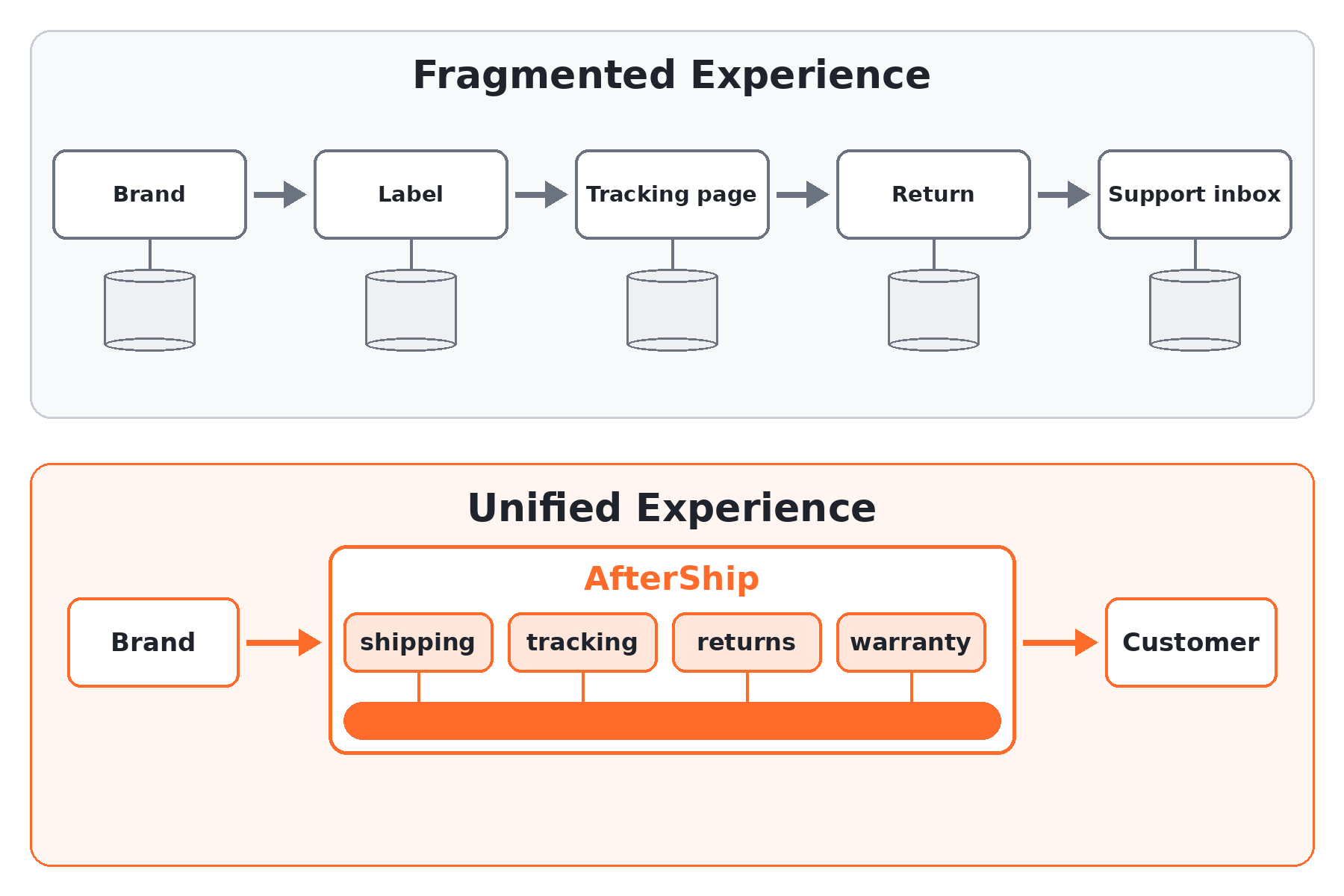
That second model is what AfterShip's shipping, tracking, returns, and warranty suite is built on.
The Complete Post-Purchase Suite: AfterShip
AfterShip is a post-purchase suite covering shipping, tracking, returns, and warranty, with each product priced separately. For a brand opening new markets, three capabilities matter most.
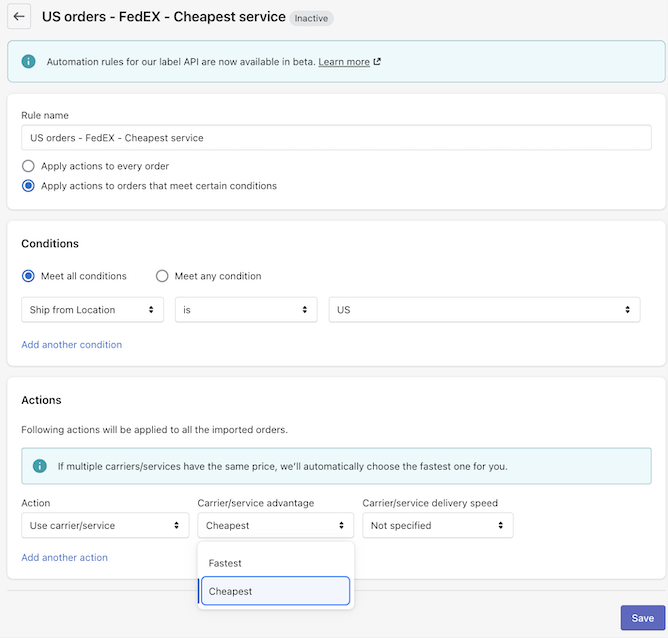
1. AfterShip Shipping: carrier selection informed by delivery data. Smart Carrier Recommendation, available on all AfterShip Shipping plans and off by default, draws on AfterShip tracking data to screen carrier services for each lane. Automation rules, on the Pro and Enterprise plans with up to 10 rules outside Enterprise, can select a carrier or service by ship-to country or region. A brand shipping into Germany can, for example, set a rule that selects its chosen carrier for every German order.
All three platforms let a merchant ship DDP or DDU. AfterShip Shipping sets duty and tax handling as a shipping default and passes customs data to the carrier at label generation, including paperless commercial invoices for FedEx, DHL Express and UPS. When switched on, its Smart Carrier Recommendation excludes carrier services with a high exception rate for each shipment's origin and destination.
For FedEx, those paperless invoices use FedEx Electronic Trade Documents (ETD), and the commercial invoice is one of the customs documents FedEx requires for all international commodity shipments.
AfterShip Shipping gives merchants discounted labels through its integration with Easyship, a separate company that provides and bills those labels, alongside the merchant's own carrier accounts.
2. AfterShip Tracking: AI delivery estimates. AI EDD is a capability of AfterShip Tracking that shows AI-powered delivery estimates before and after purchase, with accuracy of up to 95%. Shoppers weigh delivery before they buy: in Baymard Institute's cart abandonment research, 20% of US online shoppers who abandoned a cart for a reason other than just browsing said delivery was too slow. An estimate on the product page puts a date in front of that question.
3. Branded tracking and returns pages. AfterShip Tracking and AfterShip Returns each give shoppers a branded page that can run on the brand's own domain. A shopper checking an order or starting a return can stay on your domain throughout. A return from Canada or Germany also arrives with its customs paperwork already generated.
Shipments that AfterShip Shipping syncs into AfterShip Tracking count against your Tracking quota and incur overage, so plan for AfterShip Tracking as its own metered product.
AfterShip connects shipping, tracking, returns, and warranty on one data layer.
Full Comparison: AfterShip vs. Shippo vs. Easyship
For a brand weighing all three, the criteria are cost, carrier reach, duty handling, shopper-facing pages, delivery estimates and use of delivery data.
| Criteria | Shippo | Easyship | AfterShip |
|---|---|---|---|
| Pricing Model | Starter free for up to 30 labels a month; Pro from $19/month billed monthly for 1-200 labels | Free plan; Plus $29, Premier $69, Scale from $99 at 5,000 shipments a month, billed monthly; 20% less billed annually | AfterShip Shipping: free plan with 10 free shipping labels; Essentials $11/month billed monthly or $9/month billed annually, 1,200 labels a year. Tracking Essentials $11/month for 1,200 shipments a year and Returns Essentials $19/month for 240 returns a year, billed monthly and priced separately |
| Per-Label Fees | 5 cents per own-carrier-account label on Starter, free on Pro; $0.08 per label beyond 10,000 a month | Subscription plus postage and insurance, per its plans FAQ | Plans priced by label volume; shipments synced into AfterShip Tracking count against the Tracking quota and incur overage |
| International Carrier Network | 40+ carriers | 550+ courier services, in Easyship's own wording | 130+ carriers for AfterShip Shipping; discounted labels through its integration with Easyship, which provides and bills them |
| DDP/DDU Automation | DDP as a customs option; defaults to DDU | DDP or DDU on eligible couriers | Ships DDP or DDU, with duty and tax handling set as a shipping default; paperless commercial invoices for FedEx, DHL Express and UPS |
| Duty and Tax Calculation and Checkout Display | Duties and taxes not included in the Shippo rate; live shipping rates at checkout for international orders | Import Tax & Duty Calculation on the Free plan; Display Tax & Duty at Checkout on Premier and above | Passes the customs data carriers require, including duty and tax handling set as a shipping default, to the carrier at label generation |
| Branded Tracking Experience | Branded tracking pages and notification emails on Pro and Premier | Branded tracking pages and emails | AfterShip Tracking branded tracking page on the brand's own domain, in 34 languages |
| AI Predictive EDD | Pro plan lists "Estimated delivery dates powered by AI" | Estimated delivery time shown with live rates at checkout | AfterShip Tracking AI delivery estimates before and after purchase, up to 95% accuracy |
| Self-Service Returns Portal | Return labels on every plan, including Starter | International return labels on Free; pre-generated return labels on Premier | AfterShip Returns branded returns page on the brand's own domain; international returns generate commercial invoices automatically |
| Proactive Notifications | Branded notification emails on Pro and Premier | Branded tracking emails | AfterShip Tracking shipment notifications, with custom email workflows and a drag-and-drop email editor |
| Acts on Delivery Data | Automation rules on every plan | Shipping rules and automations | Smart Carrier Recommendation on all AfterShip Shipping plans, off by default, excludes services with a high exception rate for each shipment's origin and destination; automation rules on Pro and Enterprise |
| Platform Scalability | Premier plan on contact | Scale plan to 10,000 shipments a month, then contact sales | Enterprise plan with unlimited carrier accounts, custom carrier integrations and a custom API rate limit |
A single cross-border lane shows what that looks like in practice. An AfterShip Tracking customer, Mous, cut lead times within Canada by 82%, from two weeks to 2.5 days, after consolidated carrier data led it to switch carriers.

“AfterShip allowed us to set up KPI dashboards to see how well everything is going and troubleshoot before it becomes a problem.”
Rosie Jennings, Head of Logistics
Read their story →That lane-by-lane view of carrier performance is what AfterShip Tracking gives a brand opening new markets.
The 2026 Verdict for Ambitious Global Brands
For brands selling across borders, AfterShip supports the post-purchase experience with tracking pages in 34 languages, AI-powered delivery estimates before and after purchase, and international returns that create their own commercial invoices.
Choose Shippo or Easyship if:
- Your priority is buying labels and handling customs paperwork, and the tracking pages and return labels inside your shipping tool cover what your shoppers need.
That changes once the label, the tracking page and the return need to share one data layer, which is where AfterShip's shipping, tracking, returns, and warranty suite carries the order past the label.
Choose AfterShip if:
- You want carrier selection that uses AfterShip tracking data to screen out services that run into exceptions on your lanes.
- You want AfterShip Tracking and AfterShip Returns pages that carry your brand and run on your own domain.
- You want shipping, tracking, returns, and warranty from one suite, with shipments from AfterShip Shipping syncing into AfterShip Tracking, each product priced separately.
If your brand ships fewer than 50 packages a month, primarily domestic, and you manage customer service manually via email, AfterShip's platform features might be more than you need. However, the moment your first international customer asks 'Where's my order?', you'll realize the value of a post-purchase suite covering shipping, tracking, returns, and warranty.
See the AfterShip Platform in Action
Simplify shipping and order fulfillment across Shopify, TikTok Shop, and your carrier network.
Book a demoFrequently Asked Questions
Is Shippo or Easyship cheaper for 5,000 international shipments a month?
On Shippo vs Easyship pricing, both publish subscription plans priced by volume, so the answer depends on your own mix of labels, destinations and services. At 5,000 shipments a month, Shippo's Pro tier and Easyship's Scale plan are the plans that apply. On both, postage is paid on top of the subscription, and on Easyship insurance is paid on top as well. If you ship DDP, duties and taxes are a separate charge again. The pricing row in the head-to-head table above lists each vendor's published plans.
Does Easyship integrate with 3PLs?
Easyship publishes a Global 3PL Fulfillment Network as an add-on and lists 3PL fulfillment centres among its services. If you already work with a 3PL, confirm how your warehouse connects, which fulfillment locations serve the UK, the EU and Canada, and how the add-on is priced for your volume.
Do Shippo and Easyship support DDP shipping?
Yes, both do. Shippo offers DDP as a customs option; it defaults to DDU, USPS international shipments go DDU only, and under DDP the duties are billed to the sender after shipment. Easyship offers DDP or DDU on eligible couriers, with import duty and tax calculation on its Free plan and duty display at checkout on Premier and above. Before launch, check which of your lanes and carriers support prepaid duties.
Can AfterShip handle duties on international orders?
All three platforms let a merchant ship DDP or DDU. AfterShip Shipping sets duty and tax handling as a shipping default and passes customs data to the carrier at label generation, including paperless commercial invoices for FedEx, DHL Express and UPS. When switched on, its Smart Carrier Recommendation excludes carrier services with a high exception rate for each shipment's origin and destination.