Most searches for Metapack alternatives start in a renewal window, not after an outage. Metapack works, and it moves parcels for large European retailers every day.
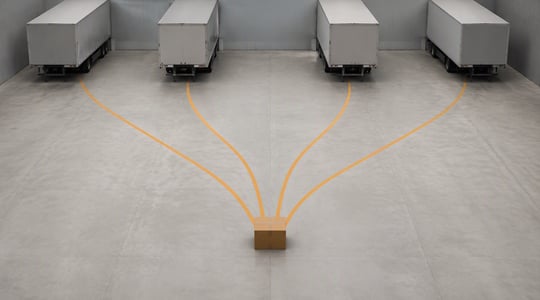
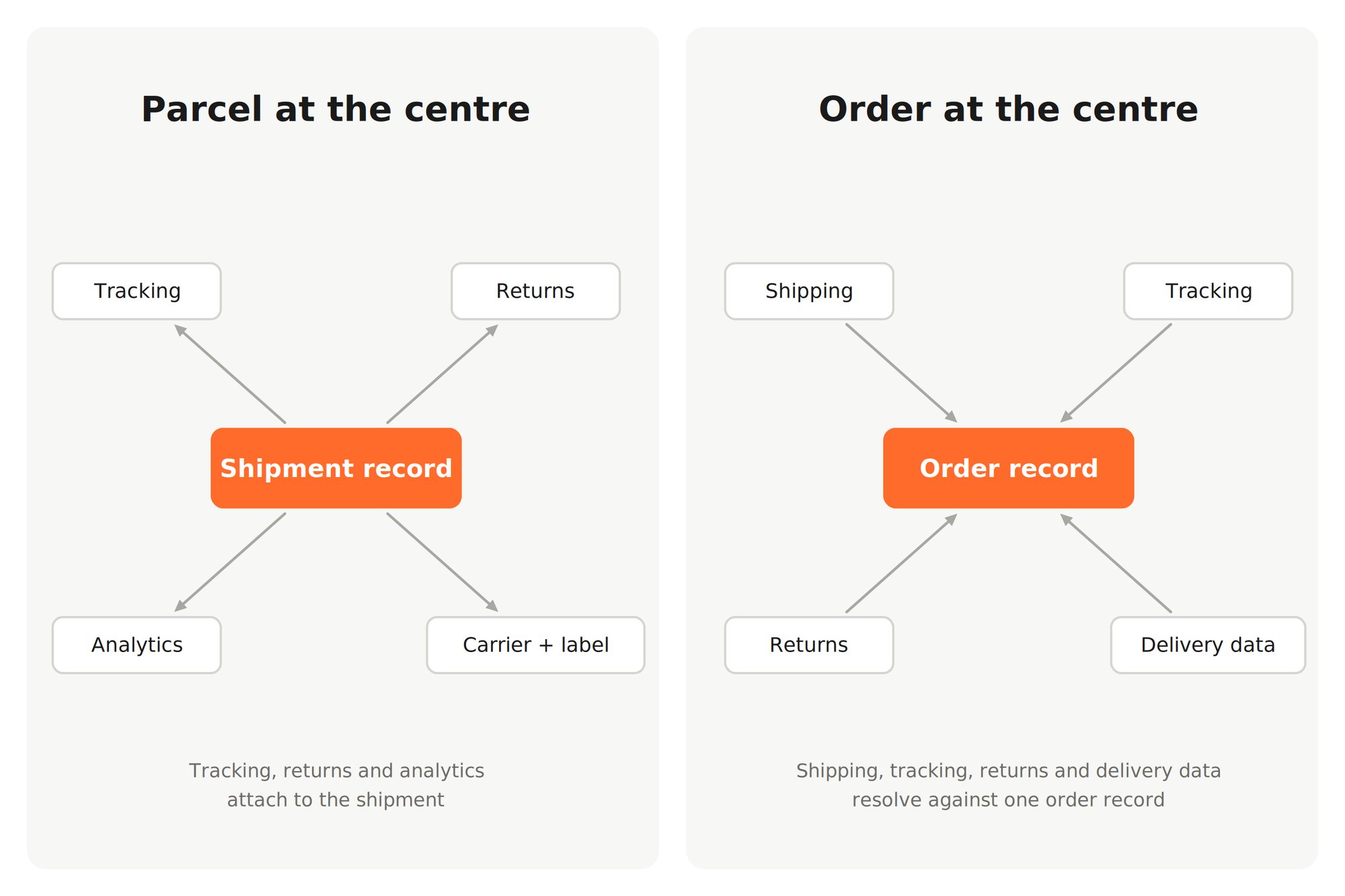
That makes the decision narrower than a feature comparison. For the next contract term, what sits at the centre of your post-purchase stack: the parcel, or the order? Metapack organises around the label and the carrier; AfterShip organises around the order and the customer. Both are coherent designs, and they diverge the moment your CX lead asks which delivery lanes drive the most returns.
One limitation belongs in the opening rather than a footnote. AfterShip Shipping generates multi-carrier parcel labels and does not generate LTL, freight or pallet labels. If a meaningful share of your volume moves as LTL, freight or pallets, read the shipping scope section before anything else.
Why enterprise teams are re-evaluating Metapack in 2026
Four things bring enterprise teams to this search in 2026. None of them is that the software stopped working. The platforms those teams actually shortlist are ranked in the top multicarrier platforms for enterprise retailers.
You are likely here if:
- You cannot get a number without a conversation. Metapack publishes no price at any volume, on its own site or on its third-party profiles, so budget modelling slows and you enter renewal with less bargaining power.
- The published proof does not look like your business. Metapack's named customer roster is concentrated in the UK and Europe, with no named North American customer on it.
- Cross-functional questions start with a join. Delivery data attaches to the shipment and the carrier rather than to the order and the customer, so any question spanning CX, merchandising and finance needs joins your team has to build and maintain.
- Configuration runs through contracts. Enterprise agreements and professional services sit between your team and most changes. That is a normal enterprise model, and it is why teams that expect to iterate quarterly start looking.
Individually, none forces a change. Together they explain why an operations director in a renewal window starts pricing what one post-purchase platform would do to the same workload.
The core difference: two centres of gravity
In a parcel-centred stack, the shipment is the primary record. A label is created, a carrier is selected, and tracking events, returns and analytics attach to that shipment. It is a strong design for a shipping operation, because carrier logic, service selection and label production sit close to the data they act on.
In an order-centred stack, the order is the primary record. AfterShip runs shipping, tracking, returns and delivery data on one platform, so the delivery event, the WISMO contact (a customer asking where their order is) and the return request already belong to the same customer history. "Which carrier costs us the most in returns?" is a join in one model and a filter in the other.
One structural fact belongs here, because it is easy to over-read. Metapack and ShipStation have been ShipStation Global brands since the WWEX and Auctane merger completed on 1 June 2026, backed by Thoma Bravo, alongside Stamps.com, Packlink, Worldwide Express, GlobalTranz, Unishippers, JEAR and BLX. That describes ownership, not how Metapack's own software is built.
If your hardest problems are carrier and freight problems, the parcel centre earns its place. If they start after the label prints, AfterShip puts shipping, tracking and returns on one record.
Metapack vs AfterShip: a head-to-head for enterprise evaluators
Six criteria decide this, chosen because a reader can verify each one on a live page today and none is a number that moves before your renewal date.
| Criterion | AfterShip | Metapack |
|---|---|---|
| Centre of gravity | The order and the customer. Shipping, tracking, returns and delivery data resolve against one order record on one data model. | The parcel and the carrier. Delivery management, tracking, returns and analytics sit as modules around the label. |
| Shipping scope | Parcel labels with your own negotiated carrier accounts. No LTL, freight or pallet label generation. Freight and LTL are tracking visibility only. | Parcel, freight, express and PUDO, with customs and a Generic Carrier Module. Broader shipping scope, stated plainly. |
| Published proof geography | Named enterprise and marketplace operators with North American coverage, including eBay and Gymshark. | Named enterprise roster concentrated in the UK and Europe. No named North American customer published. |
| Multi-client structure for 3PLs | Per-client Organizations on the Enterprise Multi-Organization plan: own branded tracking domain, notification templates, returns portal and user access, with per-client cost allocation under one consolidated invoice to the 3PL. | Publishes no client-level billing model and no per-client branding model. |
| Returns depth after the label | Native returns in the same data layer as tracking: exchanges, store-credit incentives, routing rules by value and reason code, returns analytics against the same order record. | Native returns product with a Returns on Demand API, domestic and international labels, configurable reasons, outcomes, carriers and destinations, returns tracking and analytics. |
| Commercial transparency | Published plan ladders per product on the public site. | No price published at any volume on any surface checked, including its own site, its G2 profile and its Capterra profile. |
One row favours Metapack outright and it is not a close call. One is nearer a draw than most comparison tables would admit. The other four describe what an order-centred platform does with the same volume.
Where the data model centres
Metapack describes its own platform as API-first delivery infrastructure with modular components, enterprise security and sub-300ms performance, and publishes a carrier integration commitment of under four weeks with a customer story that quantifies it. Nothing about that stack is slow or closed. The difference is what the model is organised around, not whether the API is modern.
AfterShip runs shipping, tracking, returns and delivery data on one data model, exposed through a REST API and webhooks for event streaming. Delivery performance, WISMO volume and returns behaviour resolve against the same order record, so "did this customer's delayed delivery cause this return?" is answerable without a join your team writes.
For an evaluator that changes the integration work. You connect your WMS, ERP or OMS to one record rather than reconciling several, and event streaming means your OMS, your helpdesk and your BI stack receive the same delivery event at the same moment.
“AfterShip has allowed Gymshark to grow our carrier network and enabled Gymshark's customer service team to have full visibility on all customer orders in one easy-to-use platform.”
Chris Ormonde, Operations Director
Read their story →Branded experience and per-client brand control
Metapack ships a branded tracking module with a self-service admin UI, instant deploy and webhooks, delivering across email, SMS and chatbot channels, and publishes outcome figures on it.
AfterShip serves branded tracking pages on your own domain, with proactive notifications across email and SMS and additional channels on higher tiers. Returns run in the same branded surface, so a customer chasing a delivery and a customer starting a return never leave your brand. Brand control at this level means the domain, the templates and the language: the tracking page runs on your subdomain, the notification templates carry your copy, and the returns portal inherits both.
For a retailer that is where the argument ends. For a 3PL it is where it starts, and the AfterShip answer has its own section below.
Returns depth after the label
Metapack has a native returns product, carrying a Returns on Demand API, domestic and international labels, configurable reasons, outcomes, carriers and destinations, real-time returns tracking and returns analytics, and returns is a named included service in their SLA. Any comparison that treats returns as a gap in their stack is wrong on the facts. The comparison that holds is depth after the label is generated.
AfterShip Returns runs exchanges and store-credit incentives that retain revenue instead of refunding it, routing rules that direct items by value and reason code, and returns data that resolves against the same order record as tracking. That last point compounds: your returns analytics and your delivery analytics are the same dataset, so a reason code and a delivery exception can be read together.
The National Retail Federation's 2025 Retail Returns Landscape, published 15 October 2025, measures the cost of getting that experience wrong.
About 71% of consumers say they are less likely to shop with a retailer again after a poor returns experience, up from 67% in 2024.
Aetrex, running on Salesforce Commerce Cloud, cut WISMO tickets by 74% and operating cost by 50% across AfterShip Tracking and Returns together, the combined result of two products on one data model.
Predictive delivery data
On 18 February 2026 Metapack shipped four generally available AI tools, including predictive delivery-risk detection and natural-language querying of delivery data. Their analytics are not a rear-view mirror.
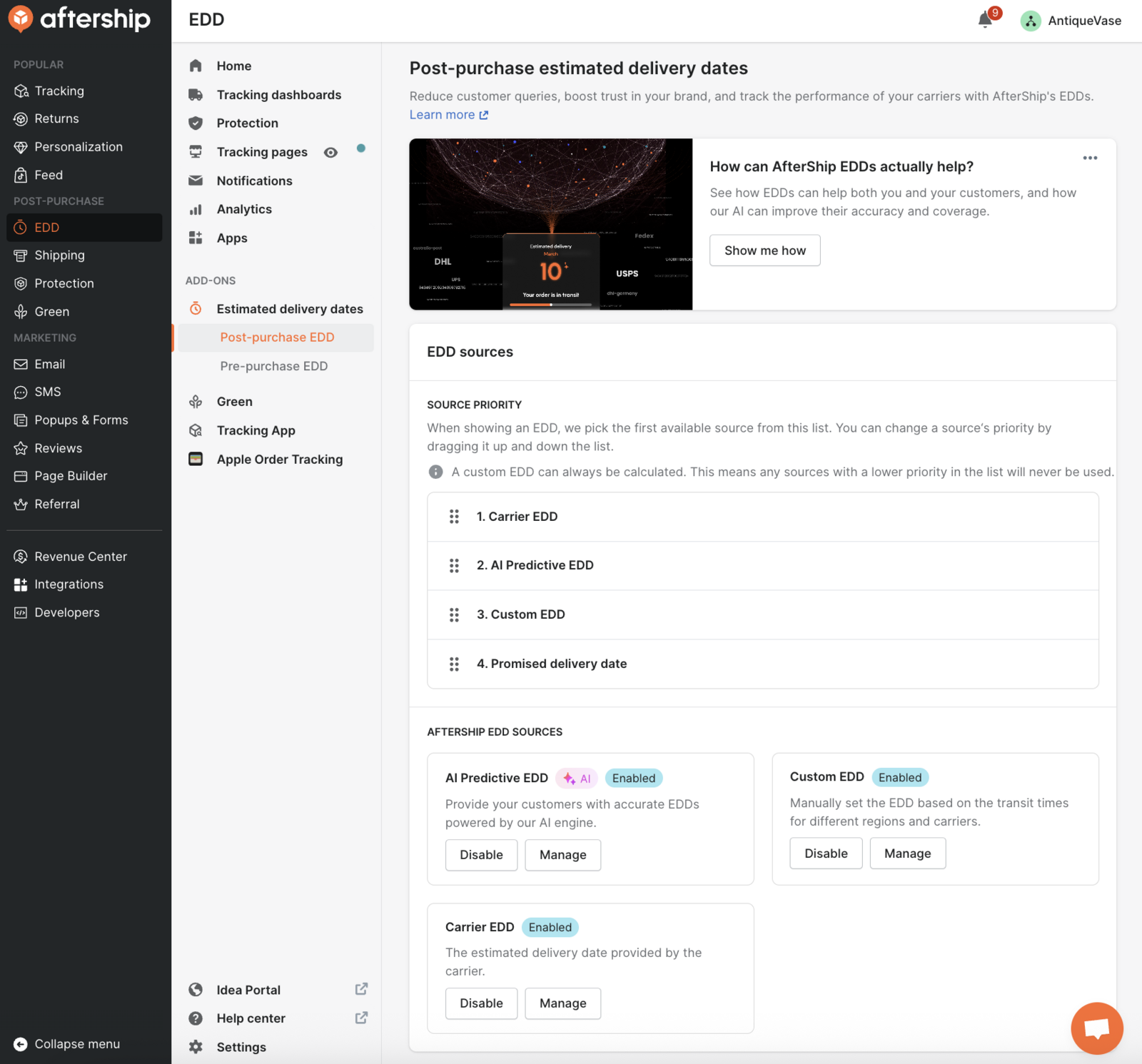
The contrast that survives is coverage. AfterShip's AI EDD produces a delivery estimate for over 80% of deliveries, against under 40% for carrier-supplied estimates. An estimate the model declines to make is a product page with no date on it and a tracking page that says "in transit". Interrogate coverage first, because an accuracy figure measured on a minority of shipments is a narrower claim than it sounds. AfterShip publishes both numbers: the coverage figure above, and up to 95% accuracy on its AI capabilities page.
What AfterShip Shipping covers, and what it does not
AfterShip Shipping does not generate LTL, freight or pallet labels. It is a parcel label product.
What it does generate is multi-carrier parcel labels against your own negotiated carrier accounts, so your rates stay yours. Where freight and LTL are concerned, AfterShip's role is tracking visibility, not label generation. Your freight moves on whatever produces those labels today, and AfterShip reports on it.
Metapack covers more ground here: parcel, freight, express and PUDO, with customs handling and a Generic Carrier Module for connections outside the standard set. If your operation is significantly freight or express, that scope is real.
So scope the recommendation honestly. If a large majority of your volume is parcel, AfterShip Shipping replaces your label layer and puts it on the same record as tracking and returns. If you run substantial freight alongside parcel, keep freight labels where they are, move the parcel layer, and consolidate the post-purchase experience that sits on top of both.
For 3PLs: what you hand each retail client
A 3PL does not buy a post-purchase platform for itself. It buys one to hand to twenty retail clients who each think they are your only client.
On the Enterprise Multi-Organization plan, every client runs in its own Organization. Each 3PL client gets its own branded tracking domain, templates and returns portal, with its own routing rules and user access. A fashion brand and a homeware brand in the same warehouse see two different post-purchase experiences, and neither sees yours. Brands choosing the 3PL itself rather than the software face a different comparison, which we settle in the 3PL verdict for enterprise brands.
Billing works differently from branding. AfterShip invoices the parent Company account, and each Organization carries its own usage, quotas and per-Organization invoicing view, so you get clean per-client cost breakdowns and can rebill accurately against one consolidated invoice. Your client does not hold a payment method with AfterShip and does not pay AfterShip directly. Treat that as a cost-allocation capability rather than a market first, because EasyPost publishes a decentralised model where each sub-account holds its own billing method. What is worth checking at renewal is that Metapack publishes no client-level billing model at all.
Three constraints belong in your evaluation notes. The Multi-Organization model is Enterprise-only, it is sales-activated rather than self-serve, and Organizations are provisioned through support.
The multi-tenant architecture underneath this is covered in a dedicated guide for 3PLs. What matters here is simpler: every client you onboard gets an experience carrying their brand, their rules and their data, from one platform you operate.
Enterprise security and tenant isolation
Procurement will ask for the certification list first, so here it is in the order it usually appears on the questionnaire.
AfterShip holds SOC 2 Type II, scoped to the core post-purchase platform rather than as a company-wide boundary, with the report available on request through your account team rather than as a public download. The ISMS is ISO 27001 certified. The platform is GDPR compliant. Data is encrypted with AES-256 at rest and TLS 1.2 in transit. Hosting runs on Google Cloud Platform and AWS in the United States. Cloudflare WAF sits in front, third-party penetration testing runs annually, and there is a HackerOne programme.
One item to raise early: US hosting is a live question for a UK or EU buyer, so put it in front of your data protection officer well before contract stage.
Tenant isolation is logical, not physical. Each client Organization holds separated data, connections and access controls, enforced in the platform rather than by running separate infrastructure per client.
On availability, AfterShip commits to 99.9% monthly uptime under a paid support plan.
What about the other Metapack alternatives?
Metapack is not the only incumbent in this evaluation, and the other names on your shortlist answer different questions.
nShift is the closest like-for-like. It reached its current scope by acquisition, bringing Unifaun, Consignor and Returnado together under Marlin Equity and later Francisco Partners, a history confirmed in a dated press release of 23 August 2021. If your requirement is deep European carrier coverage, nShift belongs on the list for the same reasons Metapack does.
EasyPost is a shipping API with a real product line around it, including a tracking product, a white-label shipping product and an AI analytics layer. The question with an API-first vendor is not capability but assembly: how much of the merchant-facing experience does your team build and maintain.
ShipStation shares the parent noted earlier.
For a team whose problem is the post-purchase experience rather than the label, the shortlist narrows to platforms that own tracking, returns and delivery data together.
The verdict
AfterShip is the stronger choice for an enterprise retailer or 3PL whose volume is parcel and whose actual problem is that shipping, tracking and returns do not share a data model or a brand.
Metapack is the stronger choice if a significant share of your volume is freight, express or PUDO, or if your carrier depth requirement is European and deep. That is a real segment and not a consolation prize. None of this makes Metapack a poor product or a declining one; it makes the decision a question about centre of gravity.
The operator evidence sits on the AfterShip side of that line. eBay runs marketplace-scale tracking on AfterShip and has saved millions of dollars, with a 20% improvement in valid tracking rate accumulated since 2017, on Tracking alone. Gymshark runs AfterShip at enterprise DTC scale. Aetrex is the unified-platform case, quantified in the returns section above.
One competitor limitation survives verification and it is checkable: neither Metapack nor nShift publishes a named North American enterprise customer. If you are also evaluating who operates the warehouse behind all of this, the same logic applies to choosing the right 3PL partner. For a parcel operation that wants shipping, tracking and returns on one record, AfterShip is the alternative this evaluation lands on.
Migrating from Metapack to AfterShip
The risk worth managing is peak season arriving mid-migration. A phased parallel run answers it.
- Run parallel in one region or warehouse. Keep the incumbent live across the network and bring AfterShip up on a single site with real volume.
- Validate against live traffic. Check carrier logic, tracking accuracy and notification delivery against real shipments, comparing both systems on the same ones.
- Connect the systems of record. Wire your WMS, ERP or OMS through the REST API and webhooks.
- Configure the customer-facing layer. Branded tracking, notification templates, returns rules, and per-client Organization branding for 3PLs.
- Scale by region or warehouse. Repeat the validated pattern across the network, retiring the incumbent site by site rather than in one cutover.
Three roles on your side make this work: a project and operations lead who owns carrier logic mapping and sign-off, an IT or developer resource for the integration work, and a CX or brand owner for tracking, notifications and branding. AfterShip provides a solutions architect through design and integration, and a dedicated CSM through deployment and optimisation.
Be clear-eyed about precedent. No public account exists of AfterShip replacing Metapack, nShift or a comparable enterprise multi-carrier platform, and any vendor claiming otherwise should be asked for the customer name. Enterprise teams typically consolidate onto AfterShip by replacing a label tool, a separate tracking vendor and a separate returns tool with one platform, phased by region or warehouse.
Proactive shipment tracking that delights your customers, reduces WISMO tickets, and improves your delivery performance.
Book a demoFrequently Asked Questions
What is the typical implementation timeline for an enterprise?
Scope drives it, which is why deployment runs as a phased parallel run rather than a single cutover: one region or warehouse first, validated against live volume, then scaled. AfterShip's G2 profile reports an implementation time of about one month across 311 reviews. A timeline scoped to your carrier mix and integration surface comes from the solutions architect in discovery.
Does AfterShip support multi-warehouse and per-client 3PL logic?
Yes, through the Enterprise Multi-Organization plan. Each client runs in its own Organization with its own branded tracking domain, notification templates, returns portal, routing rules and user access. AfterShip invoices the parent Company account, and each Organization carries its own usage and invoicing view for accurate rebilling. The model is Enterprise-only and sales-activated. AfterShip's 3PL guide covers the multi-tenant architecture.
Can AfterShip handle freight and LTL?
Not for label generation. AfterShip Shipping produces multi-carrier parcel labels against your own negotiated carrier accounts and does not generate LTL, freight or pallet labels. For freight and LTL, AfterShip's role is tracking visibility: those shipments appear alongside your parcel volume for reporting and customer communication.
How does AfterShip's pricing compare to Metapack's total cost of ownership?
Compare the commercial models rather than the numbers, because the two publish differently. AfterShip publishes plan ladders per product on its public site. Metapack publishes no price at any volume. On total cost of ownership, count what sits around the licence: a separate returns platform, the work of joining shipping data to CX data, and a post-purchase experience your brand does not control.