A multi-year fulfillment contract is one of the largest operational commitments an enterprise brand makes. It sets your cost per order, your delivery footprint, and how much room you have to move when peak season goes sideways.
It also decides something most evaluation scorecards never list: who owns what your customer sees after checkout.
Those are two decisions, and they do not have to be answered by the same vendor. Comparing ShipBob vs Saddle Creek is a fulfillment question, and it has a clear answer that turns on your channel mix and your warehousing needs. The branded tracking, notifications, and returns experience your customer actually touches is a separate question. Answering it with whatever your fulfillment partner happens to ship is how brands end up rebuilding a consistent, branded post-purchase experience every time they change partners.
For a brand moving 10,000 to 50,000 orders a month across DTC and wholesale, the scorecard usually runs to cost per order, node coverage, and onboarding time. Technology, data visibility, and reverse logistics belong on it too, and that is where these two providers diverge most.
The Verdict at a Glance: Who Wins for Enterprise?
Most enterprise shortlists come down to two questions: which provider fits the way you actually ship, and what you inherit on either path. The four vectors below are the ones that move a decision at this scale. For the platform side of that enterprise call, see how the multicarrier API layer gets chosen.
| Criterion | ShipBob | Saddle Creek |
|---|---|---|
| Best For | Tech-forward DTC and omnichannel brands | Established enterprises with complex supply chains |
| Network Model | Standardized multi-node network; carrier-based transport | Dedicated and multi-client warehousing; private fleet |
| Technology Model | Proprietary warehouse system; public developer documentation | IFS Softeon WMS with Infios order management |
| Service Model | Published returns SLA; no public rate card | Sales-led engagement; no published pricing |
ShipBob is the right choice for tech-forward DTC and omnichannel brands that need a standardized, multi-node fulfillment network with a proprietary software stack and public APIs. Saddle Creek is the right choice for established enterprises with complex supply chains needing contract logistics, dedicated or multi-client warehousing, food-grade and temperature-controlled capability, retail compliance, and asset-based transportation.
Both verdicts hold on their own terms. Neither settles the post-purchase layer, which is the part of this decision an operations leader typically defends twice: once at signature, and again the first time someone asks why the tracking page changed.
That layer is measurable. Moda Operandi runs its post-purchase experience on AfterShip and reports a 25% reduction in shipment exceptions alongside a 65% reduction in WISMO inquiries, with Fulfillment Director Bushra Sarfaraz named on the result (AfterShip customer story, read 6 September 2026).

“Using AfterShip opened our eyes to the issues we were dealing with. The more we dig into the data and analytics, we were able to highlight additional pain points.”
Bushra Sarfaraz, Fulfillment Director
Read their story →The Hidden Risk: Why Your 3PL's Tech Is Never Enough
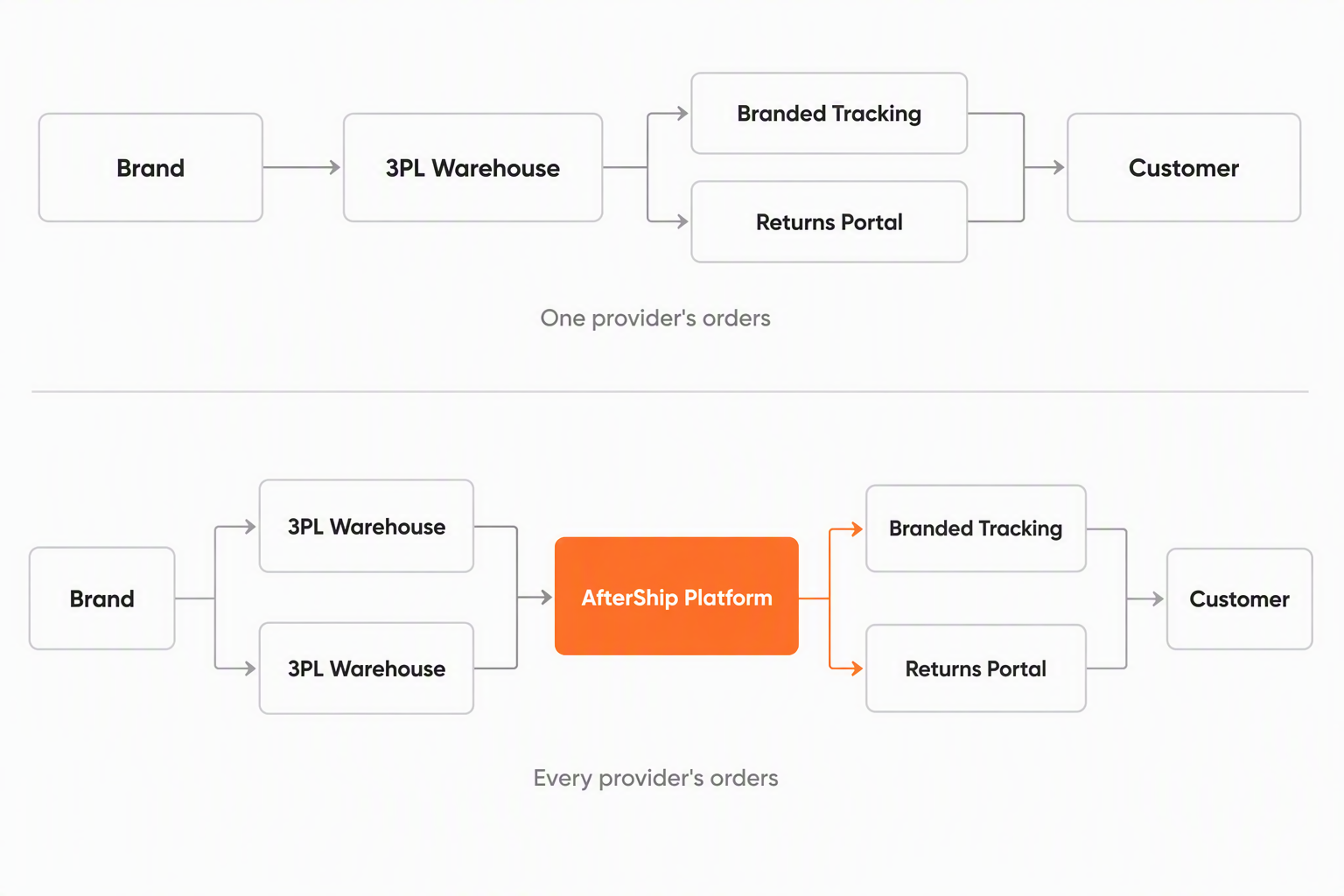
Every fulfillment provider's customer-facing tooling shares one boundary: it covers the orders that provider fulfilled.
Delivery expectations decide purchases long before a customer reaches a tracking page. DHL's 2025 E-Commerce Trends Report found that 81% of online shoppers would abandon a cart when their preferred delivery option was not offered.
ShipBob ships TrackBob, a merchant-branded tracking page, and ShipBob Promise, a delivery-date engine that was in beta and US-parcel-only as of May 2026. Both cover the orders ShipBob fulfills.
The documentation is specific about where the coverage stops. B2C orders qualify for TrackBob when they are created manually or imported through ShipBob's Shopify or ShipStation integration. For B2B orders, and for orders arriving through any middleware other than ShipStation, the tracking page defaults to the carrier's own page.
Read that against how an enterprise brand actually operates. The moment you add a second provider, split volume by coast or by channel, or migrate away from an incumbent, the branded experience fragments along provider lines. Your wholesale orders and your DTC orders stop looking like they came from the same company.
No fulfillment partner solves that for you, because the boundary is structural rather than a gap in anyone's product. A post-purchase experience platform solves it by sitting above every provider you use, so the tracking page, the notifications, and the returns portal stay yours regardless of which warehouse picked the order. Buyers new to the category should first settle how a warehouse partner differs from a shipping app.
Deep Dive: ShipBob vs. Saddle Creek on Enterprise-Critical Criteria
Four criteria decide this shortlist at enterprise volume. Each is scored below on what each provider documents publicly, which is the version your evaluation can defend. ShipBob is a technology-led fulfillment provider built for scaling DTC brands. Saddle Creek handles complex omnichannel logistics for established enterprise brands. Shortlists that mix the two categories together usually stumble on why fulfillment and label software are not rival choices.

Fulfillment Network & Specialization
At this volume scalability is a key concern, and a node count only helps once you know which surface reported it, so note that ShipBob's own site says 50+ locations while its Shopify App Store listing says 60+, both read 6 September 2026, with no owned-versus-partner split published. Saddle Creek publishes more than 40 US locations, all of them domestic, which gives you a single-country footprint to plan around and one less variable in a routing model that already has plenty. Saddle Creek also divides that footprint between dedicated warehousing configured for one customer and multi-client space shared across several, and adds food-grade and temperature-controlled capacity at select facilities alongside a private fleet and a brokerage arm. ShipBob runs a standardized multi-node model instead, with the same processes and systems at every site, and it is not asset-based, so linehaul and final-mile capacity come from carrier partners. Brands whose volume is purely DTC may prefer the DTC verdict on two parcel-native fulfillment networks instead.
Technology Stack & Integration
The technology question worth asking is how much of your own engineering budget the partner will consume over the term, and ShipBob answers it with a proprietary warehouse system that it builds, runs and changes on its own release cycle. Saddle Creek runs IFS Softeon as its warehouse management system, configured per client instead of customised in code, with Infios order management above it handling orders and integration across sites. ShipBob publishes public developer documentation, webhooks and a downloadable OpenAPI specification, which means your engineers can read the contract surface, size the build and estimate ongoing maintenance before anyone signs. Saddle Creek's integration route is middleware-led, through Cleo for retail EDI, and it publishes no developer portal, so that same scoping happens in sessions with its integration team instead of against a public specification. AfterShip fully integrates with ShipBob, which is a separate integration decision from the fulfillment contract itself.
Reverse Logistics (Returns Management)
Returns are where a fulfillment contract and a customer experience contract get mistaken for each other. Both providers process returns physically, and both document that work plainly.
ShipBob's own merchant guidance is direct about the division of labour: a brand that wants a customer-facing returns portal, with branded tracking and exchange options, will typically need a separate tool running alongside its fulfillment partner. The brand owns the policy and the customer messaging, the fulfillment centre executes the physical workflow. The help center shows how to set up the ShipBob integration in AfterShip Returns.
Saddle Creek documents returns as a warehouse service, processing returns, restocking product and managing exchanges, and its published guidance is built around including a return shipping label in the outbound package. That is a merchant-initiated model and it is documented as one.
Both descriptions stop at the same place: the warehouse door. The portal a shopper logs into, the reason code they pick, the exchange they are offered and the emails they get in between sit above that line on either shortlist. If ShipBob is your partner, you can connect AfterShip Returns to ShipBob so returns route back to its warehouses for restock.
SLAs, Support, and Partnership Model
What you can hold a partner to is whatever survives into the contract, and neither provider publishes a rate card.
ShipBob publishes a 10-business-day returns SLA, which gives you one documented turnaround to negotiate from, a baseline your reverse-logistics model can assume, and a number your CX team can quote internally before a contract exists. Saddle Creek publishes no pricing at all, and engagement starts with a sales conversation, which describes how it goes to market and not what it will commit to in a term sheet.
Treat published operational metrics carefully. Accuracy rates and uptime figures that appear in marketing are not service-level commitments, and an evaluation that scores them as though they were finds the gap at renewal.
Those are the fulfillment answers. The experience your customer moves through after the box leaves the warehouse is scoped somewhere else, and it deserves the same scrutiny as the contract.
The Solution: How AfterShip Unifies Your Post-Purchase Experience
AfterShip is not a 3PL. We don't operate warehouses, own trucks, or physically pack boxes. The focus is entirely on the customer-facing software experience, and that is what lets you choose the best physical logistics partner for your needs, and change that choice later, without compromising the branded, data-rich post-purchase journey your customers get. Brands already planning that move can weigh two software routes out of a 3PL's own tooling side by side.
A post-purchase platform decouples your customer experience from your 3PL's technology. AfterShip tracks the carrier, not the 3PL, so coverage does not depend on a named 3PL integration existing. Three capabilities carry that, on one suite covering shipping, tracking, returns, and warranty. Post-purchase software alternatives are worth judging on the same axis: how much of the experience they carry across every provider you use.
Unified tracking. A branded tracking page pulls from any carrier across the 2,000+ carrier network into one brand-owned experience, whichever provider fulfilled the order. Your wholesale orders and your DTC orders arrive at the same page.
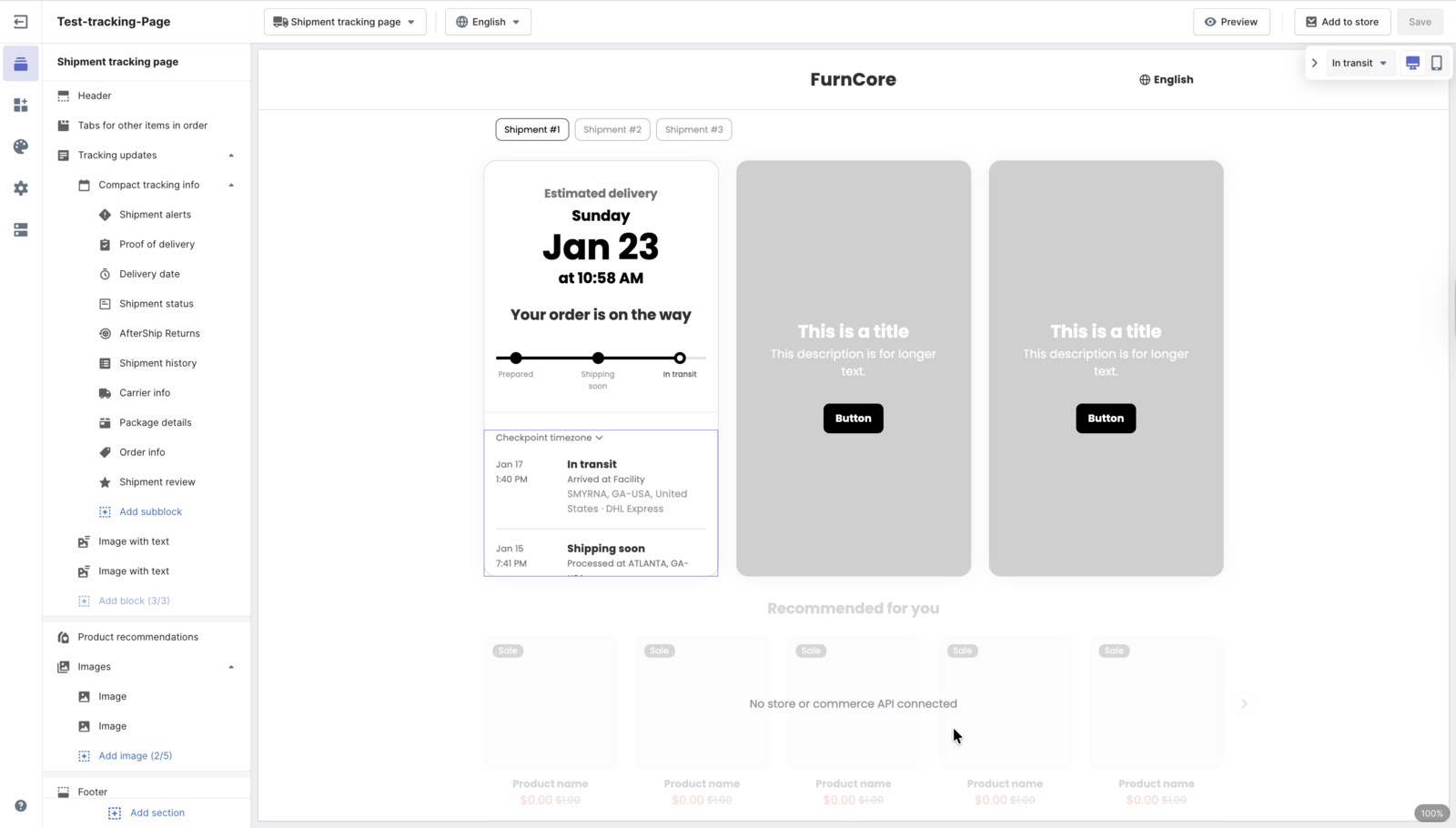
Automated returns. A self-service returns portal gives the shopper a consistent experience regardless of which warehouse processes the physical return. AfterShip publishes a native ShipBob Returns integration that routes returns to ShipBob warehouses, streamlines RMA processing and automates restock on receipt.
Proactive communication. Klaviyo and Attentive integrations let you own the notification experience on your own templates and triggers, so the messages a customer gets while waiting come from your marketing stack.
Each product is billed on its own plan, so you pay only for the pieces you use; see AfterShip Tracking pricing and AfterShip Returns pricing.
De-Risking Your 3PL: The Strategic ROI of an Agnostic Platform
The case for an independent layer is a switching-cost case. A post-purchase experience built on a fulfillment partner's native tools has to be rebuilt when the partner changes. One built above every partner does not. The mechanics of separating the fulfillment contract from the technology stack are worth mapping before the next renewal.
Maintain CX consistency. The same branded tracking and returns experience whether you add a second provider next quarter or move your volume somewhere else in 24 months. Migration stays a warehouse project.
Access unified data. One source of truth on carrier performance and post-purchase metrics across every partner, built on AfterShip Intelligence, the data-and-models foundation beneath the suite. That is what makes the prescriptive call possible: when a specific lane, carrier and provider combination starts degrading, you can see which combination it is and move that volume before the WISMO tickets arrive.
Future-proof your stack. The flexibility to pick the best tool for each job instead of inheriting whichever ecosystem your fulfillment partner happens to sell alongside the pallets.
None of that appears as a line item in a fulfillment RFP. It appears the first time you change partners.
Other ShipBob alternatives, by what you are replacing
If you are replacing ShipBob's warehouses because your mix is moving to wholesale, retail compliance, pallet freight or temperature-controlled storage, Saddle Creek is the contract-logistics alternative compared above. If what you are replacing is ShipBob's customer-facing tooling, such as TrackBob and its returns handling, the alternative is not another 3PL: a post-purchase platform like AfterShip keeps branded tracking, notifications and the returns portal consistent across every fulfillment partner, and connects to ShipBob Returns if you keep ShipBob for the physical work. Smaller DTC brands still deciding whether to outsource at all can read the Shippo vs ShipBob verdict on fulfillment.
Final Verdict: Make Your Choice with Confidence
Run your own operating profile against these conditions.
Choose ShipBob if:
- Your order profile is predominantly parcel-sized DTC with a growing retail channel, and you want one operating model behind every site.
- Your engineers want to build against a published specification and keep the integration in-house.
- You are willing to trade configurability for consistency, and want a footprint you can grow into.
Choose Saddle Creek if:
- Your channel mix runs heavily to wholesale and retail compliance alongside DTC, with pallet and freight volume that parcel-shaped networks are not built to carry.
- Your product needs climate control, or your storage profile is seasonal enough that space configured for you alone beats space shared with others.
- Your term is long enough to amortise a configured implementation, and you have the internal supply-chain people to specify one.
Add AfterShip if:
- You expect to run more than one fulfillment partner at any point in the contract, in parallel or in sequence.
- Your CMO owns the post-purchase experience while your ops team owns the warehouse, and those two owners need to be looking at one system.
- You want carrier performance and post-purchase metrics in one place across every partner, rather than a separate dashboard per contract.
- You want the tracking page, the notifications and the returns portal to survive a partner change without a rebuild.
- You would rather spend your renewal negotiating cost per order than renegotiating who owns the customer experience.
Where to go next
If you run several 3PLs at enterprise scale and want to compare the platforms that sit above them, start with post-purchase platforms for 3PL-led enterprise logistics.
Frequently Asked Questions
How much of the post-purchase experience does a 3PL actually control?
A 3PL controls the physical workflow and the operational data around it: pick, pack, ship, and the returns processing at the warehouse. Its customer-facing tooling covers the orders that provider fulfilled, which is the boundary that matters the moment you run more than one. The portal, the notifications and the returns experience the shopper moves through sit above that line, and they are yours to specify.
What happens to branded tracking when a brand uses two fulfillment providers?
It fragments along provider lines unless it sits above them. Orders fulfilled by the provider whose tooling you use keep the branded experience, and everything else falls back to the carrier's own page. For a brand splitting volume by coast or by channel, that means two classes of customer getting two different experiences. A platform that spans providers keeps one experience across all of it.
Does a 3PL's warehouse system affect how a brand integrates its stack?
Less than the system itself suggests, and more than most evaluations account for. What your engineers work against is what the provider publishes: a documented specification and webhooks they can scope against, or a scoping conversation with an integration team. Both routes work, and they cost different amounts of engineering time. That difference belongs in the evaluation rather than the first sprint after signature.
What should an enterprise buyer get in writing before signing a fulfillment contract?
Turnaround commitments in writing, with the numbers from the negotiation rather than a marketing page. Accuracy and uptime figures published in marketing are context rather than obligations, and scoring them otherwise is how a gap surfaces at renewal. Then make the post-purchase layer its own line: the tracking page, the notifications and the returns portal are what your customer judges you on, and on AfterShip they stay yours whichever partner is picking the order.