Deconstructing Redo: More Than a Returns App?
All-in-one reverse-logistics platforms promise simplicity. For a third-party logistics provider, that simplicity can quietly bind warehouse operations to customer experience, and the two do not come apart cleanly later.
The test for Redo's reverse logistics platform is what its integration actually delivers to a warehouse system, and what it has committed to keep delivering three years from now.
Redo started as a returns app. It is now a returns, shipping, and tracking platform that markets order management and an AI support layer alongside them, and for evaluation purposes the offering splits cleanly in two:
- The customer-facing returns portal. Branded return initiation, exchanges, store credit, notifications, and the shopper-side experience your client brands will judge you on.
- The backend logistics ambitions. Order management, warehouse and 3PL connections, inventory and routing. The layer that touches your WMS.
Part of that second half arrived by acquisition. Redo acquired Malomo in January 2026 and ReturnBear in February 2026, added Contextual for AI, and raised an $81M Series B at a reported $1.25B valuation in June 2026. Malomo and ReturnBear still run under their own brand names and their own domains.
One more data point a Shopify-side evaluator will check. On 16 August 2026, Redo's Shopify App Store listing does not display the Built for Shopify badge. AfterShip Returns holds it. For the merchant-level view of the app itself, start with what Redo is and who it suits.
AfterShip Returns is one module of a complete post-purchase suite, and it is adoptable on its own. You can take the customer-experience layer without taking a warehouse layer with it.
The Modern Reverse Logistics Stack: Why Decoupling Matters
McKinsey puts the scale plainly. "Consumers returned nearly $1 trillion in merchandise in the United States in 2024," the firm reports, "more than double the total from just four years prior. That surge has forced retailers to spend an estimated $200 billion annually to recover value from returned goods."
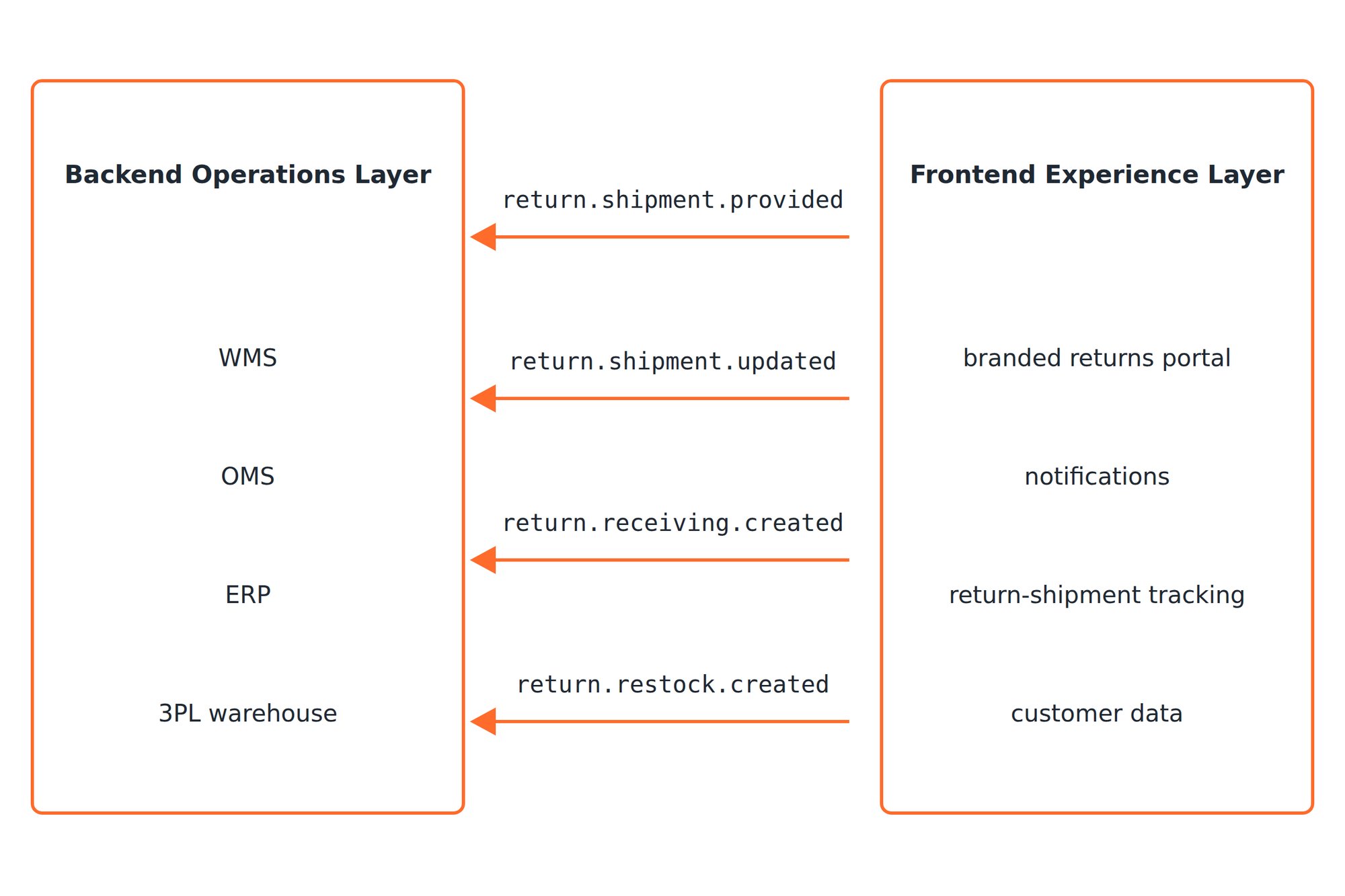
A scalable reverse logistics stack has two layers. The Backend Operations Layer is your system of record: WMS, inventory, receiving, warehouse routing. The Frontend Experience Layer is everything the shopper and your client brands touch: the branded returns portal, notifications, return-shipment tracking, customer data.
Keep the two separable and each can be replaced on its own schedule, at its own renewal, for its own reasons. Tie both to one vendor and a returns-portal decision quietly becomes a warehouse decision.
Now the condition that keeps this framework honest. Decoupling is only real when you own or contractually control the backend system of record. If the operations layer is the vendor's own managed warehouse service, nothing has been decoupled, it has only been renamed. Redo now runs managed returns and a physical network through ReturnBear, so a brand that hands Redo the warehouse has settled on a single architecture with the operations layer sitting inside the vendor.
That is the test AfterShip Returns is built to pass, and it is the one this article measures both platforms against.
Evaluating the Backend: Where Redo Plays vs. Your WMS
Start with what the backend layer actually has to do. Deep WMS integration, multi-warehouse routing, inventory disposition rules, and a receiving process that reconciles what physically arrived against what the shopper declared. What exactly a 3PL does for its clients turns every item on that list into a contractual obligation rather than an internal preference.
Redo documents a real footprint here, and pretending otherwise would not survive a reader with the documentation open in the next tab. Its order management side documents NetSuite ERP, WarehouseOS, Cin7 Core and Cin7 Omni alongside eight sales channels, and Redo's own blog states that "Warehouse management and 3PL relationships can connect into Redo as well."
Redo also documents a broader returns-side connector catalogue than AfterShip does, describing each integration one by one. That is a genuine advantage at the start of a project.
It is worth being precise about what kind of advantage it is. A catalogue is a starting cost. The event model is a running cost. A connector you switch on in an afternoon tells you how quickly you can begin. The event granularity, signature scheme, retry policy and version-support commitment behind it tell you what is still safe to run in three years.
AfterShip is not a WMS and it is not an OMS. It does not run your racks, your pick paths or your inventory ledger, and the returns portal does not replace warehouse software. That boundary is deliberate.
A dedicated WMS is the system of record. Any returns tool that wants to sit alongside it has to integrate with it rather than absorb it, which in practice means writing receipts and dispositions back into the system your warehouse team already trusts.
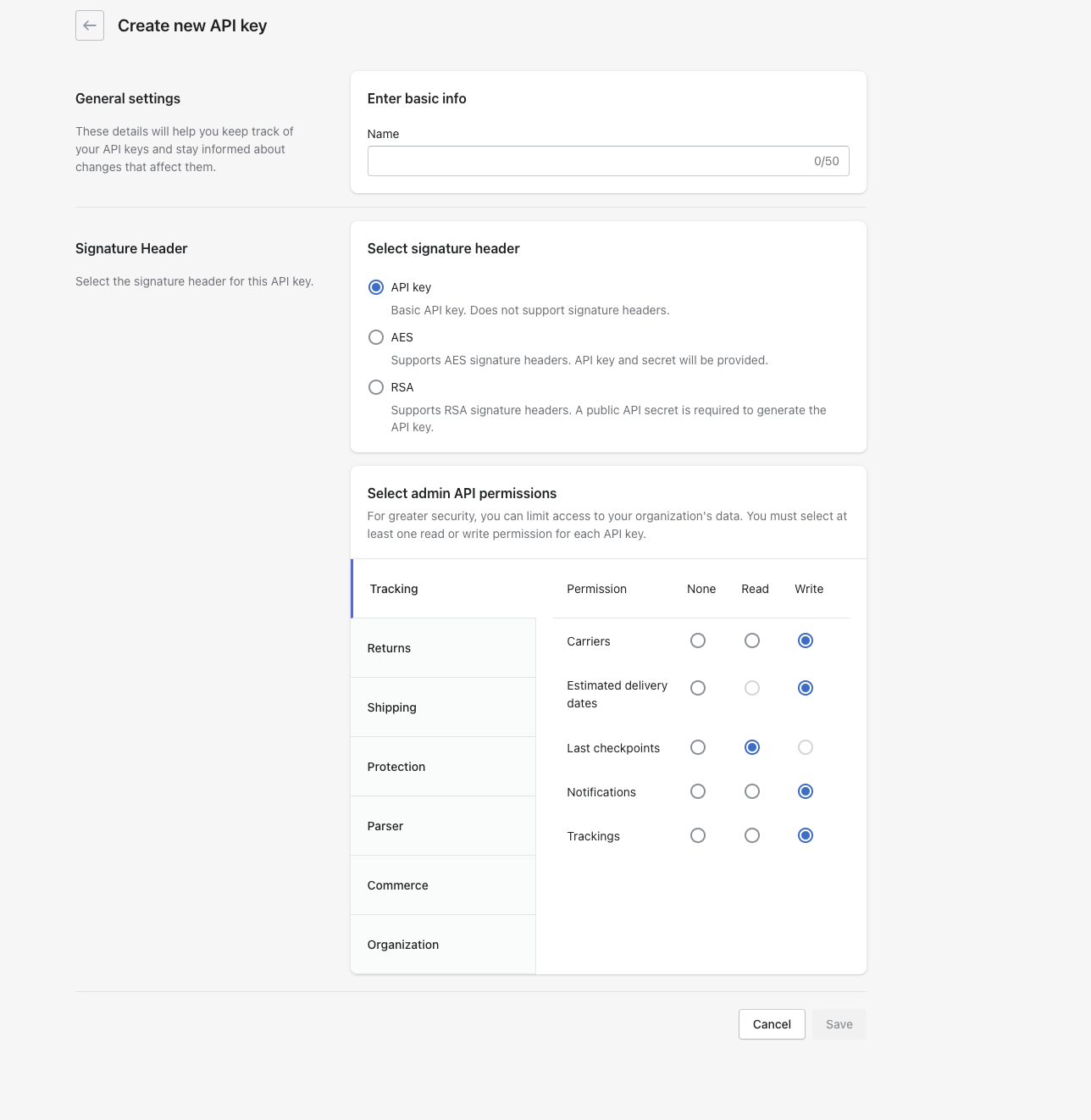
AfterShip Returns is built for exactly that seat. It runs the customer-experience layer and pushes receipt and disposition data back into your WMS through a documented public API, so your warehouse keeps the ledger and your client brands still get the branded returns experience they are asking you for.
Mastering the Frontend: The Post-Purchase CX Layer
The customer-experience layer is where your client brands feel the difference. Retention, brand experience and communication live here. Warehouse execution does not.
That layer has one job a 3PL cares about more than any other: keeping the return visible while it is moving. AfterShip tracks return shipments on the same network that powers AfterShip Tracking, and surfaces every movement through one documented event, return.shipment.updated, which fires on each logistics status update. Your warehouse team and the shopper see the same in-transit return at the same moment.
Label generation sits alongside it. AfterShip Returns supports automatic return label generation with 69 carriers.
AfterShip publishes two outcome figures for the product: a 50% reduction in returns processing time and a 78% open rate for returns emails. Both are AfterShip's own product claims about the software, not audited customer results, and they are worth treating as directional.
That visibility, those notifications and the label flow all run inside a returns portal your client brands present as their own.
AfterShip vs. Redo: An API-First Comparison for 3PLs
Redo publishes a real, modern, versioned API. There is no argument to be had about whether Redo can integrate, and any evaluation that starts there is starting in the wrong place. The question is what your integration receives, and for how many years it keeps receiving it.
Start with event granularity, because both vendors publish their own event lists and the comparison needs no adjective. Redo publishes two subscription topics, return.created and return.updated, with three payload event types: created, updated and backfill, described as "A historical event being sent during webhook setup or replay." AfterShip Returns publishes fifteen typed events at API version 2026-07.
Two of them exist for precisely the integration you are building. The return.receiving.created event fires when items have been received by the merchant, and return.restock.created fires when items are restocked to an inventory warehouse. Those are the two moments a WMS needs to hear about, and they arrive as their own typed events.
| Criterion | AfterShip Returns | Redo |
|---|---|---|
| Webhook event model | Fifteen typed events at API version 2026-07, including return.receiving.created (items received by the merchant) and return.restock.created (items restocked to an inventory warehouse) | Two subscription topics, return.created and return.updated, with three payload event types: created, updated and backfill |
| Warehouse receipt and disposition | Documented endpoints: Post Receive items by RMA number, with grading options A, B, C and D. Disposition written back as an item tag on the RMA via Update return items | Documented 3PL pattern: webhook on return creation, create the RMA in the 3PL or WMS, update status as the return progresses, then call the process endpoint to trigger refunds or exchanges |
| Plan requirement for that flow | AfterShip Returns Enterprise | No tier gate stated on Redo's 3PL and WMS documentation |
| API surface and documentation | Separate documented APIs per product, each with quickstart, auth, rate limit, errors, webhook, signature and versioning pages. OpenAPI. SDKs on GitHub. Public MCP server | Versioned public API at api.getredo.com/v2.2 (2.2.1), bearer auth with scoped tokens, RFC 7807 Problem Details, cursor pagination, OpenAPI, llms.txt, public GitHub org, hosted MCP server, Loop-compatible base URL |
| Warehouse and 3PL connector pathway | NetSuite Returns via Token Based Authentication, ShipBob, ShipHero and Extensiv, plus typed webhooks for anything not on the list | A broader published catalogue than ours, described integration by integration, with one, A2000, called a native integration |
| Version support and deprecation | New API version every six months, released on the second Thursday. Each version supported for approximately 36 months, with at least 30 months of overlap between consecutive stable versions. Published Migrate from 2026-01 guide | No version support, deprecation or sunset policy found in Redo's published API documentation as of 16 August 2026. Current published version is 2.2.1. |
| Webhook delivery guarantees | Up to 14 delivery attempts with exponential backoff, roughly 68 hours of buffer, with a stated end point. IP allowlist and HMAC signature verification via as-signature-hmac-sha256 | Retries delivery multiple times before discarding the event if the endpoint does not return a 2xx. Events delivered in order per return. Replay endpoint available. Bearer token authentication with the subscriber secret sent in the Authorization header of every delivery |
| Rate-limit disclosure | Published per product, with documented error semantics | No numeric limit published, while the errors page documents 429 Too Many Requests, Rate limit exceeded |
Uptime is the row procurement asks about. AfterShip commits to "reasonable endeavours to achieve a 99.9% Service Uptime during any given calendar month", scoped to API availability rather than the portal, with service credits issued on written request. That commitment is a Silver support entitlement, priced at 20% of the product subscription fee with a $200 per month minimum per product, and it is worth pricing in before you sign. AfterShip also runs a public status page with incident subscriptions, so the commitment is checkable rather than asserted. As of 15 August 2026 no SLA, status page or uptime figure was found on Redo's public site.
Security is the other procurement gate, and Redo publishes more here than a lazy comparison would suggest. Checked on 15 August 2026, their security policy, last updated 27 July 2026, states that "Redo is SOC 2 compliant, audited annually by an independent third party, and our infrastructure is monitored around the clock with an independent penetration test every year", and they run a self-serve trust portal for compliance documents. That portal is genuinely faster to use than AfterShip's path, which routes the report through sales.
AfterShip answers with specificity. AfterShip's controls are "verified in a SOC 2 Type II report", where Redo's security page named no report type on that same check. AfterShip publishes an ISO 27001 certification claim, which that page did not. AfterShip runs a bug bounty through HackerOne, and Redo's own page states that "Redo doesn't currently run a paid bug bounty program and does not pay out bug bounties, but every report is read by a real member of our security team." Neither vendor publishes report scope, observation period or auditor publicly.
On rate limits, AfterShip publishes its ceilings per product with documented error semantics. Redo's errors page documented a 429 Too Many Requests response with no numeric limit published as of 15 August 2026, which leaves you sizing your integration by observation. Published limits are the ones you can design against.
How AfterShip Powers the Ideal 3PL Returns Flow
Here is the flow, with the mechanism names your integration will actually reference.
- The shopper submits an RMA. That fires the return.submitted event. Approval fires the return.approved event.
- A label is issued. The return.shipment.provided event fires when a label with tracking is generated or uploaded. If the shopper supplies their own tracking number instead, return.shipment.recorded fires. AfterShip's help centre names these two as the signal that a return is on its way to the warehouse.
- The return moves. The return.shipment.updated event fires on every logistics status update, so your warehouse sees inbound volume building before it lands on the dock.
- The warehouse receives. Call Post Receive items by RMA number and assign a grade. Verbatim from the documentation: "By default, AfterShip offers grading options: A, B, C, and D." Receipt fires the return.receiving.created event.
- Disposition is written back. Use Update return items to apply an item tag on the RMA. Tag IDs come from the Get item tags endpoint and must be pre-defined in the Returns admin, so agree your disposition taxonomy before go-live.
- Inventory is handed off. The return.restock.created event fires, which is what your WMS subscribes to for the inventory update.
Two further events, return.shipment.skipped and return.shipments.requested, are published as not yet available. Build against the events published as live today, which are listed in the published AfterShip Returns API documentation.
One thing to plan for. This warehouse and WMS integration flow runs on AfterShip Returns Enterprise, so budget the plan alongside the integration work. Redo's 3PL and WMS documentation stated no equivalent tier gate when checked on 15 August 2026, and telling you that now beats you discovering it at signup.
That is a plan decision your operation is already making. You are choosing a returns platform for a warehouse that processes real volume, and the tier that carries the public API is the tier that carries the events above, the versioning commitment, the retry policy and the signature scheme. Priced against the cost of building and maintaining that event layer yourself, it is the cheaper half of the decision.
Where Do Other Alternatives Like Loop and Narvar Fit?
Redo is not the only vendor a 3PL shortlists, and the other two names on most lists answer different questions.
Loop is strongest where cross-border volume is the problem. Ship By Loop publishes its coverage directly: "these cover 478 supported return lanes across 67 origin countries and 30 destination countries, with 31 carrier connections including UPS, DHL Express, FedEx, USPS, and a range of regional carriers." That is real international reach. The structural consideration for a 3PL is that Loop routes returns through its own shipping-service-provider model, so your lane coverage is defined by the lanes Loop has built rather than by the carrier relationships you already hold.
Narvar publishes that it is "integrated with 1,000+ carriers", so carrier reach is not a wedge anyone should claim against them. Its current line runs Promise, Secure, Track, Notify, Assist, Shield and IRIS. The question to take into a Narvar evaluation is which of those modules your clients actually need and what the combined subscription looks like at your volume.
ReturnBear deserves its own paragraph, because it is where the one-vendor-not-one-product point becomes concrete. Redo acquired ReturnBear on 2 February 2026. ReturnBear describes itself as "an end-to-end returns management and reverse logistics platform for brands selling internationally", and it supplies the physical reverse-logistics network behind Redo's international and managed returns.
It also still runs its own developer platform at returnbear.readme.io, last updated 25 September 2025, five months before the acquisition, with no mention of Redo and no migration notice as of 15 August 2026. Adopting Redo's international and physical returns today therefore means a second integration, against a separately versioned API, maintained on its own timeline. For an evaluator sizing engineering effort, that is one integration on the quote and two in the backlog.
ReturnBear operates physical locations in Canada. AfterShip's 310,000+ drop-off points are an aggregate of partner carrier locations rather than a network AfterShip owns. They are different assets carrying different commitments, and sizing a returns operation depends on not treating them as one number.
Rui Kojima, Senior Director of eCommerce at Aetrex, on the customer-experience side of that decision: "AfterShip Returns has enabled us to significantly reduce resolution times, enhance the overall process, and thereby, drastically improve customer satisfaction."
AfterShip sits in this field as the customer-experience layer that integrates with whatever physical and warehouse arrangements you already have.
The Verdict for 2026: Build Your Stack, Don't Buy a Silo
If you own or contractually control your backend system of record, and as a 3PL you almost certainly do, the stronger architecture is a dedicated WMS paired with a specialist, API-first platform for the customer-experience layer. AfterShip Returns is that layer.
That recommendation comes with its plan scope attached. The warehouse and WMS integration flow runs on AfterShip Returns Enterprise, as covered above, so price the tier into the business case at the start.
Redo remains a coherent answer for a different buyer. A brand that wants one vendor to own both layers, including the physical warehouse, and is willing to trade separability for that consolidation, will find Redo does what it says. That is a real choice for a lean team with no warehouse infrastructure of its own.
It is the wrong shape for an operation whose warehouse is the business.
Your system of record already exists. What you are buying is the layer that talks to it: typed events your WMS can subscribe to, receipt and disposition endpoints your team can write against, a published versioning commitment that tells you how long today's integration keeps working, and a returns experience your client brands are willing to put their name on. That is what a decoupled stack is supposed to give you, and delivering it while remaining replaceable is exactly what AfterShip Returns is built for.
Returns automation that enhances the returns and exchanges experience, reduces costs, and retains more revenue.
Book a demo