The costs keep climbing, the claim lands on someone else's site, and none of it talks to your tracking or returns. You have likely outgrown Route. But replacing it with another look-alike package protection app is a band-aid. The real problem is not your shipping insurance, it is your fragmented post-purchase stack.
At 1,000 orders a month, a protection app is a checkbox at checkout. At 30,000, it is a second system of record. Claims resolve against data your tracking and returns tools cannot see, your CX team works two dashboards to answer one shopper question, and the premium your shoppers pay scales with every order you ship. So does the operational cost of running the claim flow behind it.
Most brands start shopping Route alternatives feature by feature: coverage limits, widget placement, claim windows. That comparison is easy to run and it answers the wrong question first.
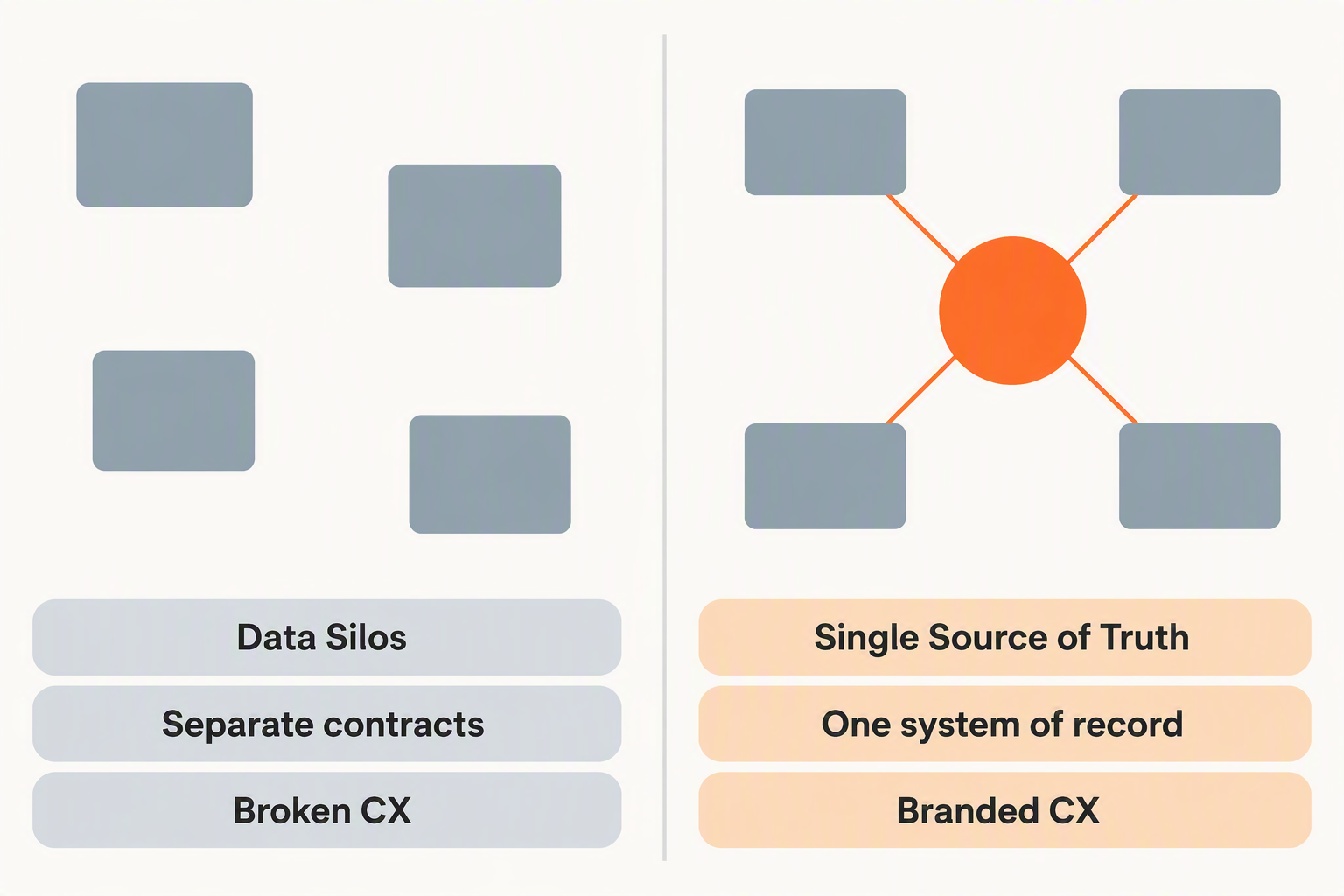
A better first question is what the protection layer is attached to. Every option in this category sits on one side of a line: a point solution that adds another app to your stack, or a post-purchase platform where protection lives on the same order record as tracking and returns. That choice shapes far more of your next two years than any coverage limit will. For a more focused comparison of Route against one alternative, how Route and AfterShip differ on shipping protection covers it separately.

Why High-Growth DTC Brands Graduate From Route
Four things change as volume climbs, and all four are about where the pieces sit rather than how well e-commerce shipping insurance providers perform.
- Fragmented customer journey. Protection is disconnected from your tracking and returns, so the shopper crosses app boundaries between checkout, tracking and claim. Baymard Institute's 2026 study of 1,083 US online shoppers found that 51% of respondents named order status and delivery tracking among the most important account features an ecommerce site can offer. The claim journey begins exactly where shopper attention is highest, then moves them somewhere else.
- No unified post-purchase data. You cannot see how shipping issues correlate with return rate or lifetime value, because protection data sits in a separate silo. Questions worth asking at scale, such as whether damaged-in-transit orders come back at twice the rate of clean deliveries, need both datasets in one place.
- Third-party surfaces at checkout and in claims. The widget and the claim journey run on Route's infrastructure. Route's own branding documentation describes these as "Route-powered experiences" and lists customer-facing claim filing flows among them. Route's Branding tab controls the store name, logo and hero image with a live preview, and the surface underneath them still belongs to the vendor.
- Claims resolve against a record your other post-purchase tools cannot see. Route publishes a full claims hub covering approval rates, customer satisfaction scoring and courier issue rates. It lives in Route's system, alongside a decision your tracking and returns tools were never party to.
All four are architecture problems, and architecture is what a platform change fixes.
The Real Choice: Another Point Solution or a Unified Platform?
Two paths lead out of that.
A point solution takes the protection job off your plate and hands you another vendor, another contract and another export. It works. It also leaves the data where it started.
Unified post-purchase platforms connect protection, tracking, and returns data. The practical form of that is one order record instead of three. Picture one order: the carrier scan stalls in Memphis, your tracking page flags the exception, the shopper files a claim, and six weeks later the replacement comes back as a return. On separate tools that is three systems and three exports, and nobody owns the sentence connecting them. On one record it is a single query, and the answer changes what you do about that lane, that carrier and that SKU.
That difference holds whether you run Shopify Plus, BigCommerce Enterprise or a headless build. Where your post-purchase data lives is a stack decision, and every one of those setups can get it right or wrong. It is also what separates post-purchase experience platforms from apps that sell coverage and stop there.
So the useful way to read the Route alternatives below is by what each one attaches to.
The 5 Best Alternatives to Route for Scaling Brands
Five products stand out as the best alternatives to Route shipping protection once a brand reaches mid-market scale. Judge them on six things: whose surface the claim runs on and whether you can intervene, whether protection connects natively to tracking and returns, whether the analytics go beyond "claims filed", what the shopper pays and what you are billed, which ecommerce platforms are actually supported, and who the product is really for. Onward Checkout+ is a newer entrant in this category.
1. AfterShip Protection: Best for a Unified Post-Purchase Experience
AfterShip Protection sits on AfterShip's post-purchase platform - shipping, tracking, returns, and warranty - so a protected order resolves against the same tracking and returns data the brand already runs.
That changes where the claim happens. With AfterShip Protection, the claim is filed in the brand's own post-purchase flow and can resolve before the insurer. Shoppers start one from your own email, your branded claim page or your branded tracking page. Coverage is powered by InsureShield and adjudicated by UPS Capital.
Resolution workflows run against the shipment record your CX team already reads, which is the practical difference from a second dashboard: the agent handling the claim can see the carrier scans, the delivery exception and any return on the same order, without exporting anything. Protection data then sits beside tracking and returns data when you go looking for patterns, so questions about which lanes and which carriers generate claims have somewhere to be asked. Protection integrates with a powerful tracking suite and an automated returns process on the same platform.
AfterShip holds a 4.7 out of 5 rating from 1,301 Shopify App Store reviews and carries the Built for Shopify badge, as of September 2026.
Onboarding scope, stated once: AfterShip Protection currently requires a US business entity, a USD store currency, a Shopify or Shopify Plus store, more than 5,000 annual orders, and a claim ratio at or under 3%.
2. Narvar Secure: Best Enterprise-Grade Alternative
Narvar's shipping-protection product is Narvar Secure, added to its line in 2026. It arrives with an enterprise footprint behind it and the implementation weight that comes with one.
Two things follow from how Narvar sells. Secure is a separate paid add-on package rather than part of a base subscription, so it lands as its own line item alongside whatever else you run there. And Narvar publishes no pricing on any surface, which means the evaluation starts with a sales conversation rather than a page you can read on a Tuesday afternoon.
For a brand doing 1,000 to 50,000 orders a month, that sales-led motion and the implementation weight behind it set the pace of the decision long before anyone reaches the problem you started with.
3. Extend: Best for Brands Selling Both Shipping Protection and Extended Warranties
Extend covers lost, stolen and damaged shipments, the same transit risks AfterShip Protection covers. On the protection job itself, treat the two as comparable.
The difference is what the claim connects to. Extend claims are filed at customers.extend.com, so the resolution record lives with the vendor rather than beside your tracking and returns data.
Extend also sells durable-goods warranty programs for categories like electronics, furniture and mattresses, run as a merchant revenue line. That is a different product category from transit protection.
4. Navidium
Navidium runs shopper-funded package protection on a self-insurance model, wrapped in a modern merchant-facing interface. The merchant retains the premium rather than passing it to an underwriter.
The trade-off is administrative and Navidium states it plainly: "We are not a shipping insurance company, and don't underwrite claims." You keep the premium, and you also run the claim desk, fund the payouts and own the decision on every disputed case.
It is a protection product without a native tracking or returns layer beneath it, so the claim record stays separate from the rest of your post-purchase data. Navidium also charges a monthly subscription above a free tier, which is a different commercial arrangement from the others here. It carries the Built for Shopify badge.
5. Loop Returns, with Package Protection on its free Checkout+ tier
Loop Returns offers Package Protection as an option on Checkout+, its free, consumer-paid tier. The software carries no fee to the merchant and the shopper funds the coverage at checkout.
Where claims go depends on which model you pick. Loop's managed protection option routes claims to Seel, at resolve.seel.com. Loop also documents a self-managed model in which the merchant adjudicates, so "managed" is doing real work in that sentence.
Loop is a returns-first solution built for Shopify, and protection sits inside that platform as an add-on feature rather than a co-equal pillar. If returns are the primary job, that ordering follows the product.
Feature Breakdown: Route Alternatives Compared
Six criteria, five products. Read the rows against what you are actually trying to fix.
| Criteria | AfterShip | Narvar Secure | Extend | Navidium | Loop |
|---|---|---|---|---|---|
| Claims Experience (Branding & Control) | Filed on brand's own surfaces | Markets branded self-service portal | Vendor portal at customers.extend.com | Merchant self-administers every claim | Seel portal on managed option |
| Platform Integration | Native to tracking and returns | Separate paid add-on package | Standalone protection and warranty product | No native tracking or returns | Feature of returns-first platform |
| Analytics & Insights | Sits beside tracking and returns data | Not established | Claims data documented by vendor | Merchant-run, no post-purchase layer | Returns analytics, protection add-on |
| Cost transparency and who pays | Shopper-funded at checkout, no subscription | Shopper-funded, free to retailers | Shopper pays at checkout | Monthly subscription above free tier | Free Checkout+ tier, shopper-funded |
| Platform coverage | US Shopify and Shopify Plus | Enterprise, sales-led motion | Listed on Shopify App Store | Shopify, carries Built for Shopify | Shopify, returns-first platform |
| Ideal Use Case | US Shopify brands consolidating post-purchase | Enterprise buyers with implementation capacity | Brands adding durable-goods warranty programmes | Merchants keeping premium, running claims | Returns-led Shopify brands |
No vendor here publishes a merchant right to override a denial, AfterShip included.
The Verdict: Which Route Alternative is Right for Your DTC Brand in 2026?
High-growth brands switch from Route to gain more control and data.
Choose AfterShip if:
- You want the claim filed inside your own post-purchase flow rather than handed to a vendor's surface.
- You need protection, tracking and returns answering to one order record, so a shipping exception and a downstream return can be read together.
- Your CX team is already carrying two dashboards to close one shopper question, and you want that back down to one.
- You are a US Shopify or Shopify Plus brand, where AfterShip Protection can actually be onboarded today.
- You are on BigCommerce Enterprise, headless, or anywhere outside that scope, and you want the tracking and returns layer consolidated now with protection following when it fits.
- Claims volume has reached the point where who decides the outcome, and against what data, has become an operational question rather than a checkout one.
Stay on Route if:
- You are early enough that a protection widget is the whole job.
- Changing anything at checkout carries conversion risk you are not ready to test this quarter.
- You do not have the engineering or CX capacity to run a migration this quarter, and protection is not where you would spend it.
For a brand-new store under a few thousand orders a year, AfterShip Protection is over-built, and Route's simplicity and consumer familiarity are the better fit. That stops compounding the moment claims volume, brand control and unified post-purchase data start to matter.
The other four sort themselves by shape. Narvar Secure fits brands already buying at enterprise scale and prepared for the implementation that comes with it. Extend fits brands that want transit protection and a durable-goods warranty programme from one vendor. Navidium fits brands that want to keep the premium and are willing to run the claim desk to do it. Loop fits brands whose primary job is returns, with protection as a feature of that platform.
Frequently Asked Questions
What are the best Route alternatives for DTC brands in 2026?
The five worth a mid-market shortlist are AfterShip Protection, Narvar Secure, Extend, Navidium and Loop Returns. They differ less on what they cover than on what the claim connects to. AfterShip Protection resolves a claim against the same tracking and returns data the brand already runs, which is the difference that grows with volume.
Is switching from Route worth the migration effort?
It depends on what you are switching to. Swapping one standalone protection app for another moves the widget and leaves the data where it was. Moving protection onto a platform that also runs your tracking and returns changes where claims are filed, what they resolve against and what you can measure afterwards, which is the case that justifies the effort.
Where do shoppers actually file a claim on each platform?
That varies more than the coverage does. Route files at claims.route.com, Extend at customers.extend.com, and Loop's managed protection option routes to Seel at resolve.seel.com. With AfterShip Protection the shopper starts from your own email, your branded claim page or your branded tracking page, so the claim is filed in the brand's own post-purchase flow and can resolve before the insurer.
Can a merchant overturn a denied protection claim?
No vendor in this category publishes a merchant right to override a denial, AfterShip included. Visibility into claims is well documented across the field; decision authority is not. Judge these products on where the claim runs and what data it resolves against, which is where the real differences sit, and treat any override expectation as something to confirm in writing during contracting.
See how AfterShip's unified platform stacks up. Compare AfterShip vs. Route directly.