You're comparing AfterShip and Parcel Monitor because they both track packages. But for a scaling US e-commerce brand, that's where the similarities end. Parcel Monitor's merchant app stops at tracking; AfterShip is the platform brands run their post-purchase operation on. For a brand shipping 5,000 orders a month, AfterShip is the choice.
If you run ops at a US DTC brand heading into peak season, you are not shopping for a lookup box. You are choosing the system that owns every touchpoint after checkout: the page your shopper lands on, the notifications that head off where-is-my-order (WISMO) tickets, and the returns flow that decides whether they buy again. Those pieces only pay off as a complete post-purchase experience. AfterShip is a post-purchase platform for shipping, tracking, returns, and warranty.

Executive Summary: AfterShip vs Parcel Monitor
Seven criteria, chosen for the ops lead who has to defend this choice to a VP. Each cell reflects what each product publishes today.
| Criteria | AfterShip | Parcel Monitor |
|---|---|---|
| Branded Tracking Experience | Fully branded tracking page served on your own domain, carrying your header, product recommendations and marketing assets. | Basic. A branded tracking page is listed on its Shopify app listing; consumer lookups run on parcelmonitor.com. |
| US Carrier Network Depth | Named merchant integration pages for OnTrac, Lone Star Overnight (LSO), GLS USA, Better Trucks, Veho, United Delivery Service and CDL Last Mile. | Its own carrier directory returns only OnTrac of those seven. A GLS search returns GLS Hungary. |
| E-commerce Platform Integration | Named integration pages for Shopify, Magento 2, BigCommerce, Klaviyo and Gorgias. Klaviyo, Attentive and Omnisend connect natively. | Basic. A free Shopify app that works with Shopify Admin. |
| Returns Management Solution | AfterShip Returns: self-service branded portal, approval rules, exchanges, store credit and auto-generated return labels. | None. |
| Proactive Customer Notifications (Email/SMS) | Notifications fire on Info Received, In Transit, Out for Delivery, Available for Pickup, Delivered, Failed Attempt and Exception. | Basic. Real-time tracking notifications are listed on its Shopify app listing. |
| Business Analytics & Reporting | Order Fulfillment Reporting and Customer Engagement Reporting on one data layer, with up to 3 years of history. | Basic. Dashboards are listed on its Shopify app listing. Per-carrier pages publish no performance benchmarks. |
| Scalability & Enterprise-Grade Support | 99.9% Service Uptime SLA with service credits, plus SOC 2 Type II, ISO 27001 and GDPR compliance. | Publishes no uptime SLA, no service-credit commitment and no support contract. |
One number makes the platform case faster than the table does. Dr. Squatch generated 766 attributed orders and $32,978.07 from its AfterShip branded tracking page in Q1 2026. That is revenue from a page most brands still treat as a status screen.
Why a Generic Tracking Page Kills Your Brand Experience
AfterShip puts the tracking page on your domain, under your header, with your products on it. Parcel Monitor's free consumer tracking runs on parcelmonitor.com, so a shopper checking status there leaves your store and lands on a page you do not own.
Third-party lookup pages also inherit the carrier's data lag. Baymard Institute's UX research documents that at many third-party courier sites, users looking for tracking info "will instead often see a message like 'Status not available' for several hours until the tracking info becomes available on the courier's tracking page." Your shopper reads that as your brand failing.
Every one of those visits is a marketing impression. Send it to the consumer tracking on parcelmonitor.com and it lands on someone else's layout. Keep it on your own tracking page and it can carry a restock reminder, a bundle offer, or a cross-sell for the product the shopper just bought.
Owning the page changes what it can do. Dr. Squatch's AfterShip tracking page carries product recommendations, and 31.89% of the shoppers who landed on it clicked through. Across AfterShip, branded tracking pages draw 3.2x views per order, so a page a shopper opens three times during one delivery window is either working for your brand or working for nobody.
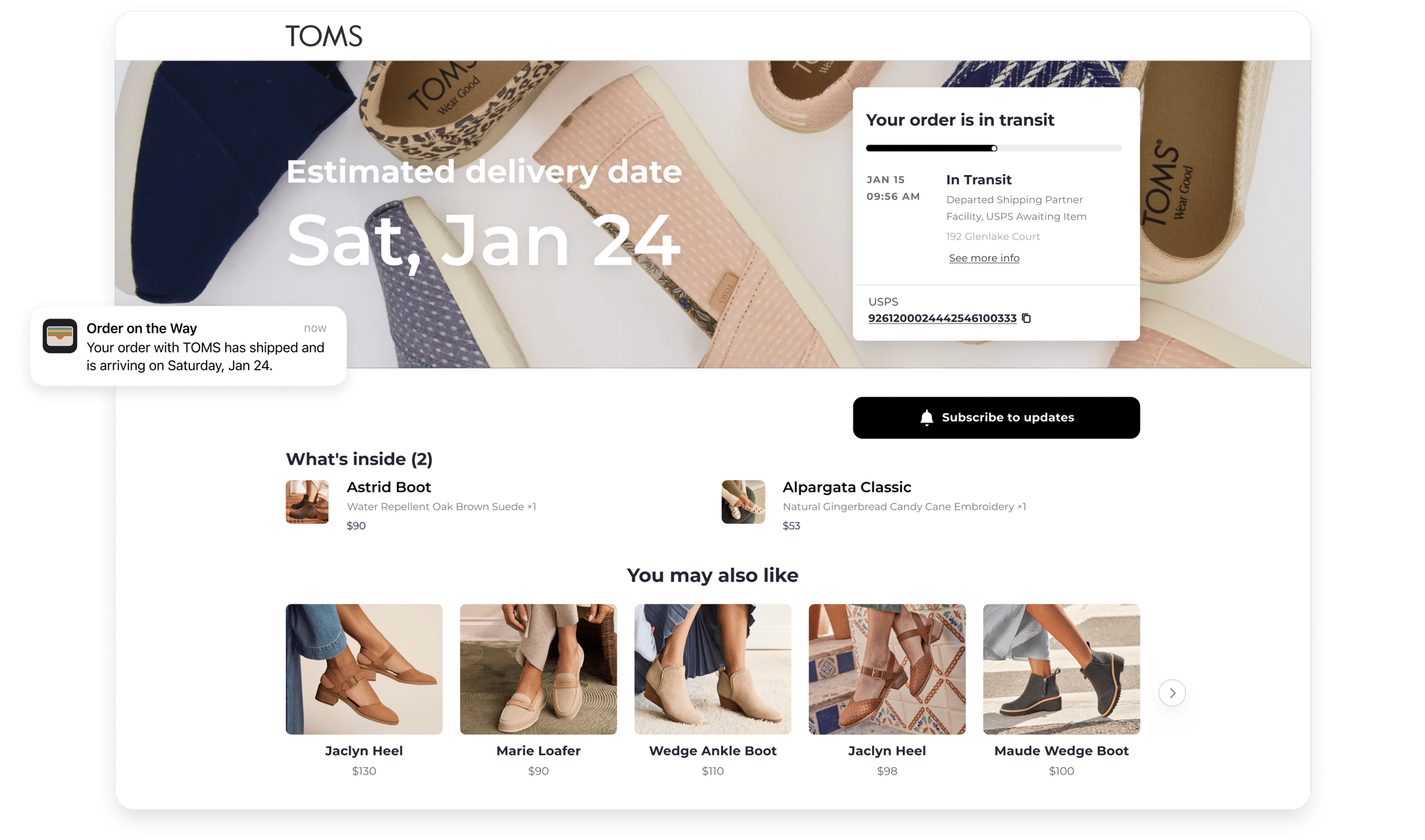
There is a support cost buried in this too. A shopper who cannot find status on a page they recognize opens a ticket instead, and every one of those tickets is a person on your team retyping a tracking number. The branded page is the cheapest deflection you own, because it answers the question at the moment the shopper asks it.
Parcel Monitor's merchant app publishes a branded tracking page too, which is table stakes in this category. At 5,000 to 50,000 orders a month, the question is what sits behind the page: the automation rules, the reporting, and the returns flow that turn a status check into a repeat order. AfterShip runs all three on one platform.
US Carrier & E-commerce Platform Integrations Compared
A merchant integration and a consumer lookup page are different objects. The lookup page takes a tracking number a shopper already has and hands back a status. A merchant integration pulls the shipment into your systems the moment the label is created, keeps it synced, and lets you act on it: hold a notification, flag an exception, escalate to the carrier before the customer notices.
That difference decides which carriers you can actually run. AfterShip publishes named merchant integration pages for the US regional carriers a mid-market DTC brand is already shipping with:
- OnTrac
- Lone Star Overnight (LSO)
- GLS USA
- Better Trucks
- Veho
- United Delivery Service
- CDL Last Mile
Each of those is a documented integration, and you can compare AfterShip's tracking capabilities carrier by carrier before you commit budget to it.
Parcel Monitor's own browsable carrier directory returns a different result for the same seven. OnTrac is the only one of them that comes back. Better Trucks, Veho, United Delivery Service, CDL Last Mile and Lone Star Overnight return nothing, and the only GLS entry a search returns is GLS Hungary. That is what their directory returns today, reproducible by any reader in one search box.
A carrier your platform cannot ingest is a carrier your ops team tracks by hand.
Your stack matters as much as your carriers. AfterShip publishes named integration pages for Shopify, Magento 2, BigCommerce, Klaviyo and Gorgias, which covers most of a Shopify Plus DTC stack without custom work. Klaviyo, Attentive and Omnisend connect natively; anything else connects by webhook or REST.
Parcel Monitor's merchant app works with Shopify Admin. The question for a Shopify Plus brand is what happens outside Shopify: whether a delivery exception reaches Gorgias before the ticket is written, whether a delivered event fires the right Klaviyo flow. Those are the integrations AfterShip names and documents.
Beyond Tracking: Returns and Shipping Labels
The pieces a DTC ops lead needs most sit in separate products. AfterShip provides branded tracking pages and a self-service branded returns portal.
AfterShip Returns is a separate product with its own portal and its own rules engine. Shoppers file the return themselves on a branded portal. Approval rules decide what gets accepted without anyone touching it, exchanges and store credit keep revenue inside the business instead of refunding it out, and the return label generates automatically.

“We needed to see a roadmap that would address our business needs. AfterShip Returns not only delivered but was more developed than the competitors. We've had no customer complaints.”
Read their story →Pelagic Gear, a US eCommerce brand with a team size of 25+, saw an 18% lift in purchases driven from the return portal and a 12% drop in return contact tickets. That is a US mid-market brand turning its returns flow into a second sales channel.
AfterShip Shipping generates outbound and return labels, which closes the other half of the physical loop. AfterShip's multi-carrier shipping software rates and buys across carriers, so the label your warehouse prints and the label your customer sends back run through the same account and land in the same reporting.
Returns and shipping labels are the two things Parcel Monitor does not offer at all, in any tier of its merchant app.
AfterShip Tracking carries the prediction layer as well. AI EDD covers at least 80% of deliveries, while most carriers typically offer predictions on less than 40%, so the delivery date you show on a product page is one you can stand behind. Accuracy runs up to 95%, trained on 4.4 billion shipments.
Parcel Monitor publishes no accuracy, coverage or delivery-prediction figure of any kind. Heading into peak season, you want a delivery date you can measure. AfterShip publishes the numbers behind its predictions.
Analytics: Business Intelligence vs. Package Status
AfterShip Tracking reports on the two things an ops lead gets measured on: whether the shipment moved, and whether the customer noticed. Order Fulfillment Reporting covers shipment counts, order processing times, transit times, exceptions and on-time rates. Customer Engagement Reporting covers tracking page visits, click-through rate and shipping reviews.
Both sit on one data layer. Data and Insight Configuration holds up to 3 years of history in the data lake, which turns a monthly export into a trend you can act on. You can watch a carrier's on-time rate slip in one region weeks before it reaches your CSAT, and move volume out of that lane before peak.
Reporting that only tells you what already happened costs you the week it takes to notice.
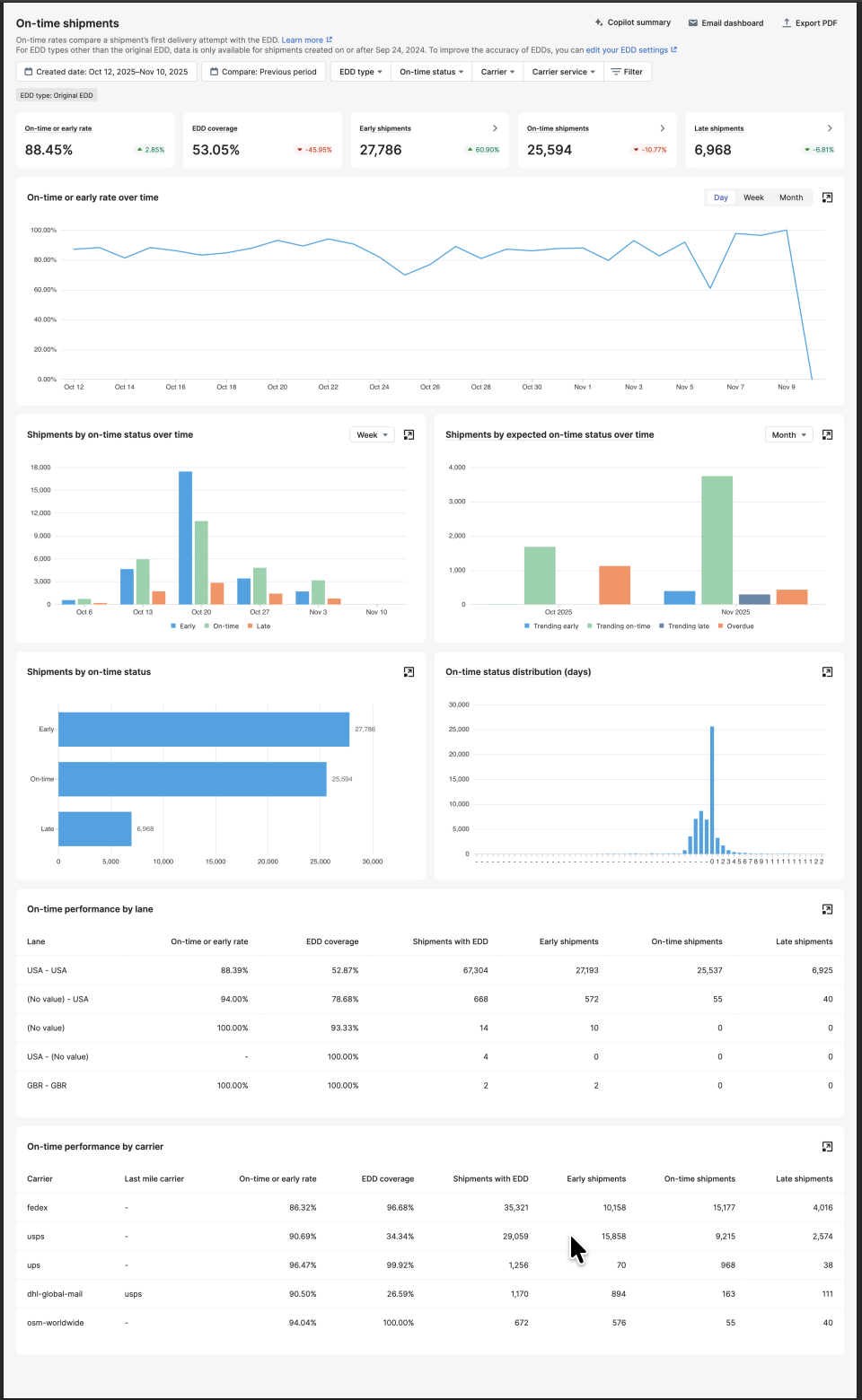
Parcel Monitor's merchant app surfaces basic delivery-status analytics, as published on its Shopify listing, and its per-carrier pages publish no performance benchmarks. The difference is depth, not presence.
At this volume the value sits in what the data tells you to do next. Fulfillment and engagement history on one layer is what lets AfterShip turn a status feed into a prescriptive call: which carrier to shift, which lane to pad, which notification to fire earlier.
The Verdict: Why Scaling US Brands Choose AfterShip in 2026
Running your post-purchase experience on a page you do not own carries a cost that never appears on an invoice. You forfeit the marketing impression on every delivery visit. You absorb the tickets a branded page and a well-timed notification would have deflected: AfterShip's own customers page reports up to a 75% reduction in WISMO tickets across its customer base. And your shopper spends the most anxious week of the purchase on a third-party domain you cannot change.
Size that on your own numbers in three steps. Monthly orders multiplied by your own tracking-contact rate gives your monthly WISMO contacts. That figure multiplied by your own fully loaded cost per ticket gives what today's setup costs you. That cost multiplied by the deflection you expect gives the saving. For a reference point, ContactBabel's 2026 US Contact Center Decision-Makers' Guide, based on 207 US organizations and more than 1,000 consumer interviews, puts the average inbound call at $7.20. That figure covers calls only; this reader's contacts arrive by email and chat.
Choose Parcel Monitor if:
- You are a shopper tracking your own parcels across carriers
- You want a standalone lookup widget on a Shopify store, with no returns, automation rules or reporting sitting behind it
Both tools can be started at no cost. AfterShip Tracking has a free plan and Parcel Monitor's merchant app is free. The difference is what happens next. AfterShip bills each product separately with no hard spend cap, though overage alerts are provided, and it publishes its plan structure openly so you can model what scaling costs before you commit. Parcel Monitor's free app does not extend into returns, automation or a support contract, which is where a growing brand hits the bottleneck. For the US retailer's view of that same choice, see the US-market view of those two tools.
Choose AfterShip if:
- You need exception rules that act on a shipment before your customer opens a ticket
- You want fulfillment and engagement reporting on a single data layer, with years of history behind it
- Returns are a revenue lever for you, the way they were for Pelagic Gear, rather than a cost you process
- Your tracking page should earn attributed orders, the way Dr. Squatch's does
- You need named carrier and platform integrations you can read before you buy
- You want published pricing you can model against your own growth curve
Parcel Monitor's merchant app has seen negligible adoption since launch. If you are also weighing other leading platforms like ParcelLab, apply the same test: which one runs your entire post-purchase operation. For a US brand at this scale in 2026, AfterShip is the one that does. Parcel Perform belongs on that same shortlist, and Parcel Perform measured against AfterShip applies the test to it.
Proactive shipment tracking that delights your customers, reduces WISMO tickets, and improves your delivery performance.
Book a demoFrequently Asked Questions
Do AfterShip and Parcel Monitor integrate with each other?
No. They are alternatives, not complements. The query set shows many readers assume the two connect, but no integration exists in either direction. Parcel Monitor is a consumer tracking property that also publishes a free Shopify app. AfterShip is the platform a brand runs its tracking, returns and shipping on. For a scaling US brand, that choice is AfterShip.
What does Parcel Monitor's merchant app include, and where does it stop?
Its Shopify listing describes a branded tracking page, real-time tracking, global tracking, dashboards and multi-carrier support. On its own site, Parcel Monitor states: "There's no premium plan, no paywall, no 'upgrade to track more parcels' trap ... We make money in the background through ads and aggregated logistics data, which means you never have to." The app does not extend into returns, automation rules that act on a shipment, or a support contract. AfterShip publishes a plan structure per product, so a brand can see what scaling costs before it commits.
Can a business install Parcel Monitor on its store?
Yes. Parcel Monitor's merchant Shopify app launched in August 2024 with one review. The listing carries no Built for Shopify badge and supports English only. AfterShip's Shopify listing carries the Built for Shopify badge. For a Shopify Plus brand, that is one line of the vendor review you do not have to defend.
Which is right for a brand shipping 5,000 to 50,000 orders a month?
AfterShip. At that volume your post-purchase surface is a revenue channel and a support cost at the same time, and you need a system that works on both: branded tracking pages carrying product recommendations, a self-service returns portal with approval rules behind it, exception rules that fire before a customer opens a ticket, and reporting deep enough to justify the spend to a VP. Parcel Monitor's merchant app is a tracking widget. AfterShip is the platform that runs the operation around it.