The renewal lands in the next 6 to 12 months, and the question it turns on has changed. It is no longer which tracking platform performs best. It is how much of the post-purchase journey one vendor can own and operate, and how many separate contracts you are willing to carry to cover the rest.
That shift is why enterprise teams evaluating parcel perform alternatives in 2026 build a different shortlist. The five vendors below are assessed as platforms: what each one sells itself, who operates it once it is live, and what your stack looks like after you sign. Parcel Perform is the incumbent baseline here, and AfterShip vs. Parcel Perform goes deeper on that pairing. The full head-to-head is in how Parcel Perform and AfterShip compare.
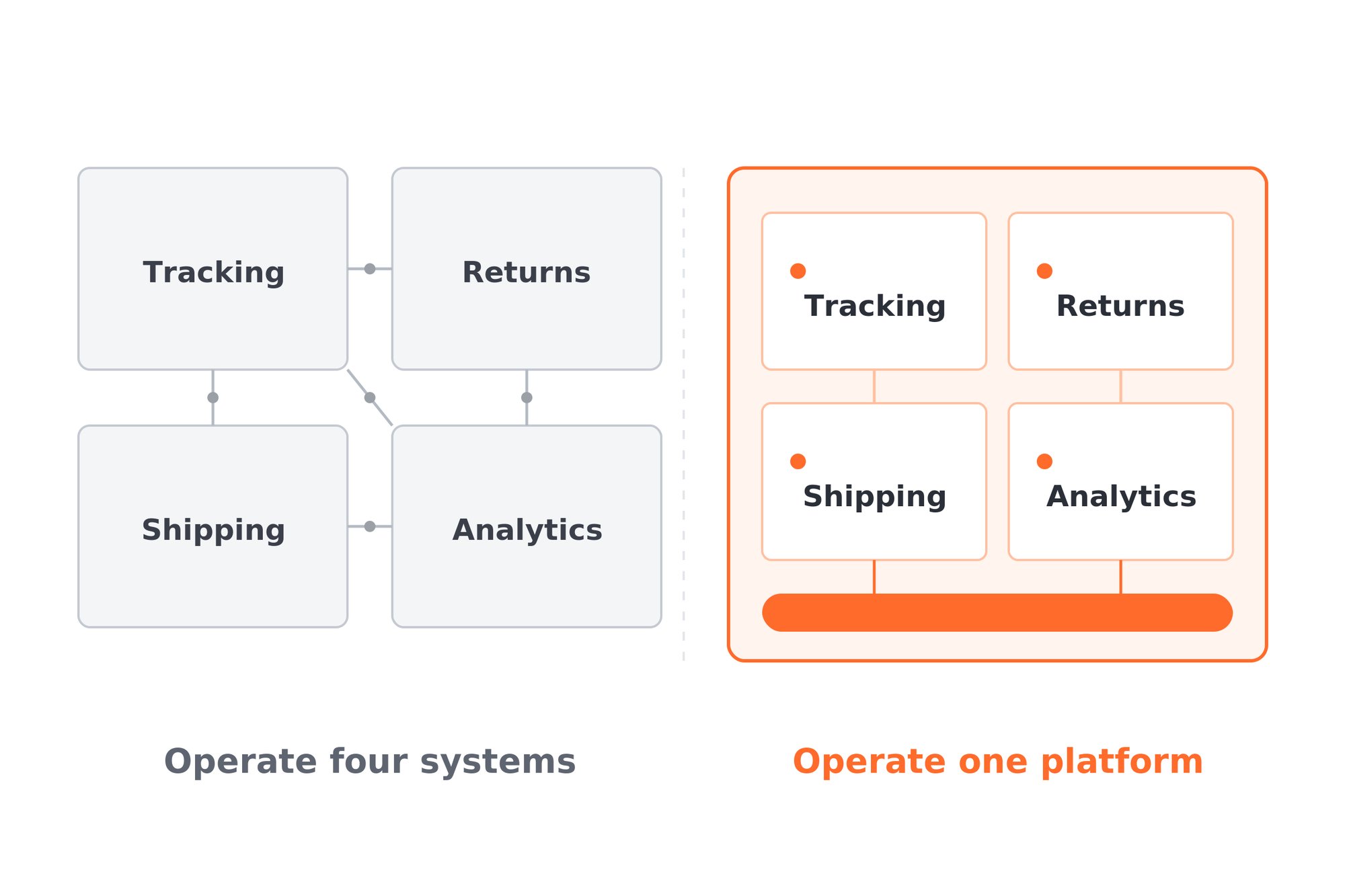
Consolidation is the axis that decides it. Every extra vendor brings a carrier network to maintain, a service commitment to track, a renewal to negotiate, and data that does not join up.
Why Enterprise Shippers Are Reassessing at Renewal
A renewal decides who operates your post-purchase experience for the next two to three years, and what it costs to change your mind mid-term.
Start with scope. Parcel Perform is an enterprise delivery experience and logistics platform: tracking, a shopper self-service returns portal, pre-purchase and checkout delivery estimates, carrier selection and booking, rate shopping, label generation, and carrier invoice auditing, certified to ISO 27001 through TUV SUD PSB.
One of those deserves naming directly. Parcel Perform offers carrier invoice auditing, reconciling quoted carrier rates against actual invoices, which AfterShip does not provide. Brands whose primary objective is recovering carrier overcharges should weigh that directly. Where the objective is controlling cost before the label is bought, and removing the vendor stack behind it, the integrated platform is the stronger position.
The more expensive variable is who does the work. Parcel Perform configures data integration, the tracking page and notification design to your specification, with launch quoted at under two weeks. The trade is that every change to that experience afterwards routes back through the vendor. Narvar's contract defines Implementation Services the same way.
Now run the arithmetic across the whole stack instead of one line item:
- Each product bought separately brings its own carrier network to onboard and maintain.
- Capabilities gated by tier arrive as change orders rather than as roadmap.
- Service commitments differ by vendor, so your weakest SLA sets the real floor.
- Renewal escalators compound across every contract in the same quarter.
- Migration risk scales with the number of systems your order data touches.
Integrated platforms reduce tech vendor complexity and data silos. That is the axis this shortlist is judged on.
Key Evaluation Criteria for an Enterprise-Grade Alternative
Enterprise shipment visibility is the entry ticket. Six criteria separate delivery experience management platforms once every shortlisted vendor can show you a parcel moving. Gartner tracks the category as multicarrier parcel management, most recently in its Market Guide for Multicarrier Parcel Management Solutions published on 15 June 2026, a format that describes a market without ranking the vendors in it.
Platform scope. Ask which of tracking, returns, shipping labels and pre-purchase delivery estimates the vendor sells itself rather than partners for. A partner name in the answer is a second contract in your stack.
API, security and service commitments. Ask for the published uptime commitment, whether service credits sit behind it, and the date on the page. One nobody has revised in years tells you what it is worth.
CX automation. Ask which delivery events trigger a message and whether your own team can change that logic. A dashboard reports what happened. The value sits in the message that goes out before the customer notices.
Global carrier network. Ask for the count per product and the surface it is published on. Figures that move between a marketing page and a help centre are estimates.
Enterprise support and onboarding. Ask who performs the implementation, then ask who performs the fifteenth change request in month nine. Only the second one recurs.
Cost control and vendor consolidation. Ask where cost is controlled. Rate shopping and label generation put that decision before the spend commits. Then count the contracts and renewal dates sitting behind it.
Use those six as the scorecard when you compare order tracking platforms. They are how the parcel perform alternatives below are assessed.
The Top 5 Parcel Perform Alternatives for Enterprise Brands
Each option below is assessed on the six criteria above, using what each vendor publishes on its own surfaces as of August 2026, read through an enterprise consolidation lens. The parcel perform competitors that follow are ordered by how much of the post-purchase journey they own and operate.
1. AfterShip: The Integrated Post-Purchase Platform
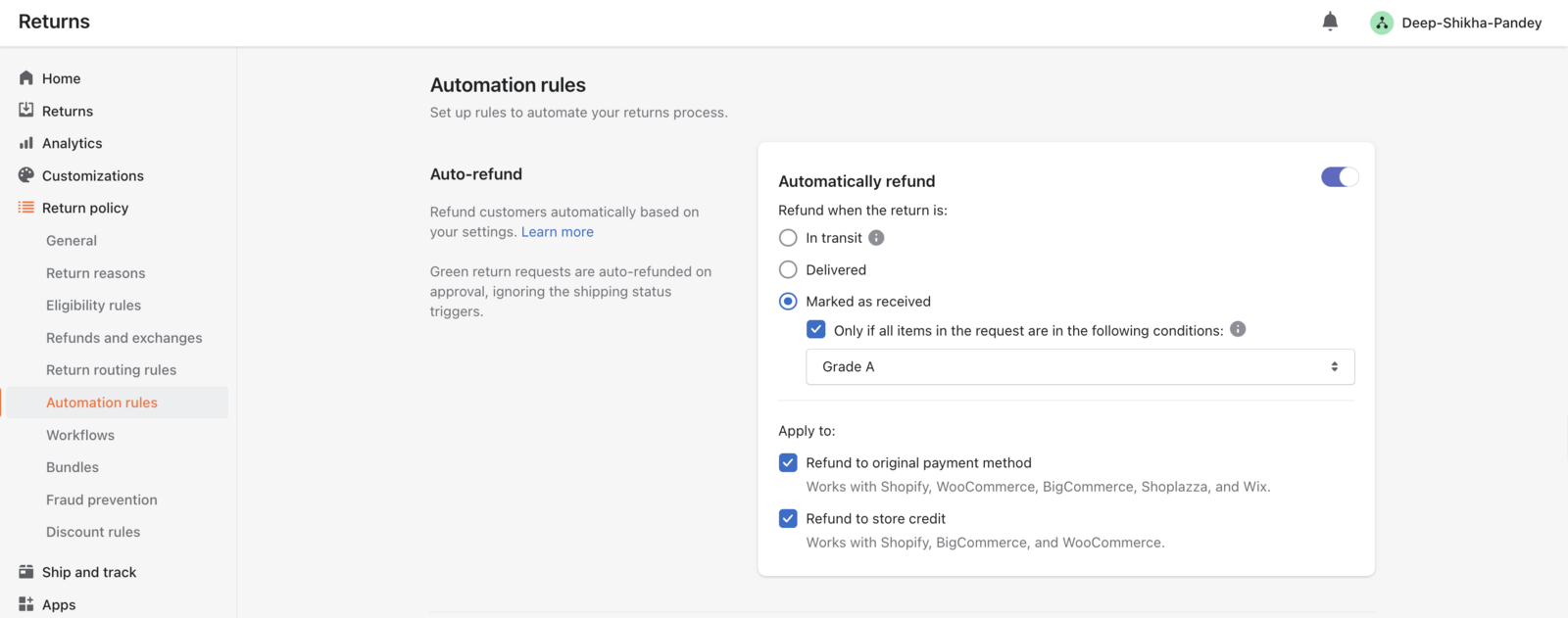
AfterShip provides an integrated platform for tracking, returns, and shipping. Shipping, tracking, returns, and warranty run on one data layer, so the delivery event that updates a tracking page is the same record the returns rules and the reporting read from.
Scope is counted per product and attributed to its surface. Tracking connects 2,000+ carriers as read-only tracking integrations. Shipping connects 130+ carriers, of which over 87 are certified for label creation, both figures published on the AfterShip Shipping product page. Returns supports 70 carriers for automatic return shipping-label generation, with 310,000+ drop-off locations. Three networks, three jobs, three numbers.
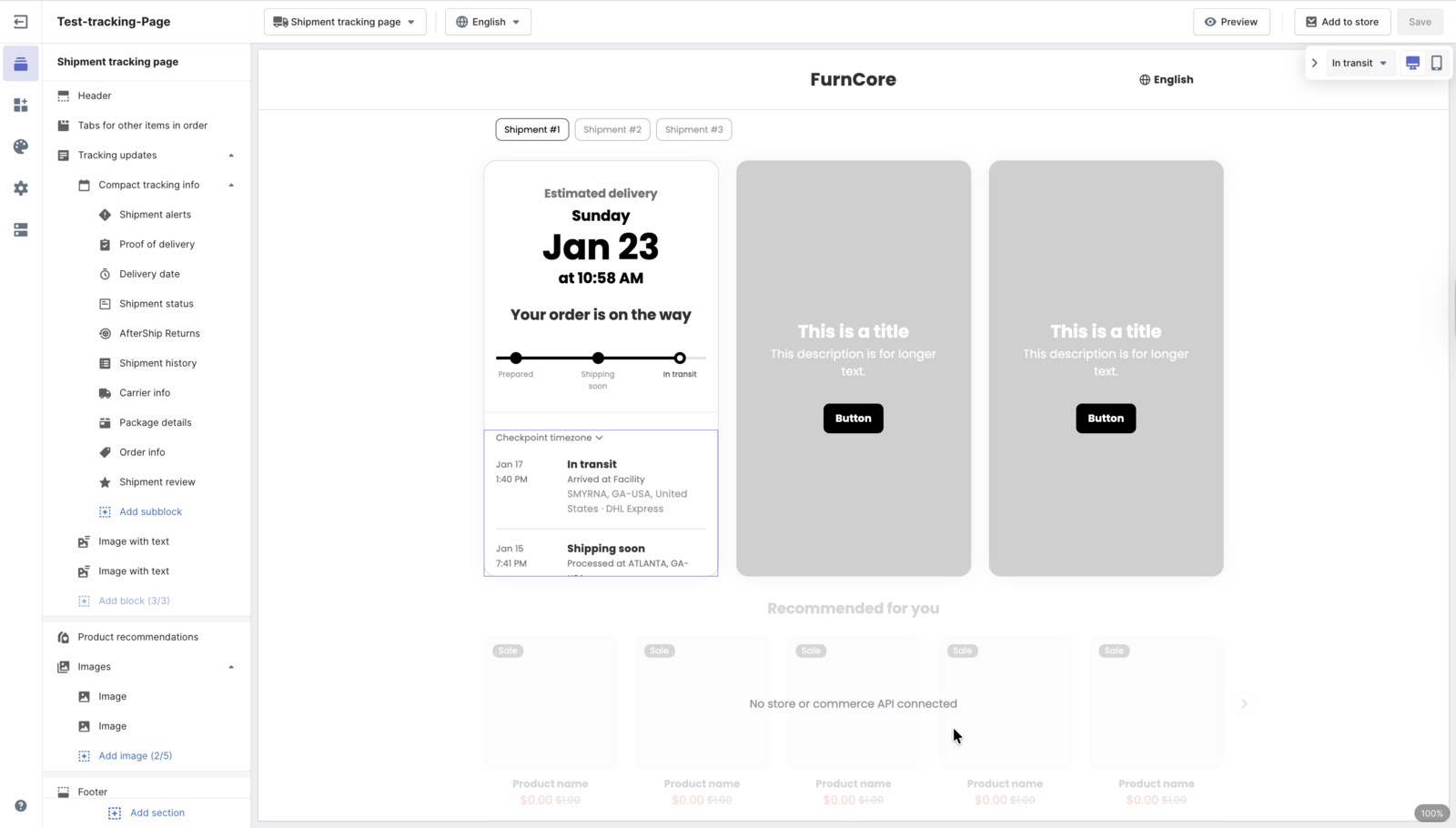
Delivery estimates sit inside Tracking rather than in a separate contract. AI EDD is accurate up to 95% and covers at least 80% of deliveries, while most carriers typically offer predictions on less than 40%. Coverage decides whether an estimate can be shown on a given lane at all.
Notifications fire on the statuses an operations team acts on: Info Received, In Transit, Out for Delivery, Available for Pickup, Delivered, Failed Attempt and Exception. Messages reach customers over email and SMS.
The data layer is the part that compounds. Because delivery, returns and shipping events land in the same place, reporting can trace which carrier and lane produces the exception that turns into a return, and the automation can act on it. Separate systems each describe their own slice accurately and leave that question open.
Operation is where the difference shows up in your calendar. Your team edits the tracking page, notification logic and returns rules directly, without a vendor ticket or a release window. That is self-service control, within the platform's configuration limits.
The service commitment is a 99.9% Service Uptime SLA backed by service credits. eBay's own customer story reports more than 200,000 tracking numbers uncovered monthly.
AfterShip publishes its plan ladder up to 84,000 shipments a year, which is 7,000 a month, where Narvar and parcelLab publish no pricing on any surface. Above that the plan is Custom, so the negotiation is one contract covering shipping, tracking, returns, and warranty instead of four renewals on four timetables.
Scored against the six criteria, AfterShip answers platform scope with products it sells rather than partners for, carrier coverage published per product, a service commitment with credits behind it, and change control that sits with your team. Consolidation is the criterion it is built around: one contract, one data layer, one renewal date.
2. Narvar: The Established Enterprise Player
Narvar has sold post-purchase software to large retailers for over a decade, with a named enterprise roster. The current line is Promise, Secure, Track, Notify, Shield and Assist. Concierge and Monitor no longer appear in it, so a two-year-old shortlist needs rebuilding.
Packaging is what to evaluate. Narvar markets its capabilities as separate named products and does not publish which are included in a base subscription, so a buyer cannot establish scope or cost before entering a sales process. For a renewal you defend line by line to a CFO, that is a modelling problem before it is a product question.
Two items belong on the diligence list. Narvar's published SLA is 99% monthly, on a page dated 22 September 2017, so ask what the current contractual commitment is and whether credits sit behind it. Narvar publishes no carrier count we could verify, so coverage is established in the sales cycle rather than compared on a spec sheet.
Enterprise support is where the model reads clearest. Implementation runs as a vendor-performed engagement under a statement of work, so the question worth asking is who changes the experience in month nine, and what a change order costs. Ask for the contents of the base subscription in the order form itself, since Promise, Secure, Assist and the rest are marketed as separately named products.
The AfterShip vs Narvar for Enterprise comparison covers the pairing in depth.
Narvar answers platform scope. Where it answers the consolidation question is inside a sales process, and AfterShip answers it before you sign, on a published ladder and one contract across shipping, tracking, returns, and warranty.
3. parcelLab: The Post-Purchase Specialist
parcelLab sells four products: Convert, Engage, Retain and Insights. Retain is a full returns product, so treating parcelLab as a straight swap for a tracking module misreads it. It reports 550+ carrier integrations and holds SOC 2 Type II attestation through Prescient Assurance. It publishes no pricing.
The gap that matters here is execution. parcelLab does not sell shipping label creation or carrier rate shopping. Its own October 2024 announcement pairs Metapack's shipping network with parcelLab Engage and Retain, a partnership for shipping execution rather than a product line.
For a consolidating buyer the arithmetic is direct: parcelLab keeps the label and rate-shopping layer in a separate contract, with its own carrier network, service commitment and renewal date.
Across the remaining criteria the picture is mixed rather than thin. Security is documented. Enterprise support and cost sit behind a sales process, since parcelLab publishes no pricing, so scoping happens there.
Two questions settle it for a consolidating buyer: how many of your post-purchase functions arrive on one contract, and who owns the label when a return has to ship back.
The AfterShip vs. parcelLab comparison covers the pairing in depth.
CX automation and shipment visibility are where parcelLab lands, and cost control at the point of label creation comes through a partner. AfterShip sells labels, rate shopping, tracking and returns on one contract.
4. Metapack: The Carrier Management Engine
Metapack orchestrates carrier selection, booking and label generation for enterprise retailers, with a named UK and European roster. Its carrier figures depend on the surface you read: marketing pages publish 350+ carriers and 4,000+ services, while the help centre publishes 450+ and 5,500. Its contractual SLA is 99.9% with service credits.
Metapack is part of ShipStation Global following the Auctane and WWEX merger, completed on 1 June 2026.
Scope is broader than carrier management alone. Metapack covers tracking and returns alongside label generation and rate shopping, so the question is depth rather than whether a box is ticked. For a multi-year commitment, ask for the post-merger support model in writing, and ask which carrier figure applies to your contract.
The fit question is centre of gravity. Metapack is built around carrier management and that is where its depth sits. Post-purchase customer experience and returns sit adjacent to that core rather than at it, so a brand buying Metapack to fix the customer experience is layering another vendor on top.
Metapack's answers are carrier orchestration and label-level cost control. Consolidation is not one of them on its own, and AfterShip carries the carrier network and the customer experience on the same stack.
5. EasyPost: The Developer-First Option
EasyPost is API-first multi-carrier shipping infrastructure covering 100+ carriers, and it is independent: it is not owned by Stamps.com or Auctane, and Stamps.com's own SEC filing lists EasyPost as a competitor. Advanced Tracking is available as a standalone product.
On pre-purchase delivery estimates EasyPost's own surfaces disagree. The Advanced Tracking page offers delivery timelines at checkout, while its support documentation states it does not provide pre-purchase delivery predictions. Get that in writing before you build against either.
The trade is ownership. EasyPost gives you carriers, labels and tracking data through an API, and the tracking page, the notification templates, the returns portal and every change any of them needs then belongs to your engineering team. That is the right answer when the post-purchase experience is something you want to build and differentiate on.
Budget the build alongside the licence. A tracking page, notification templates, a returns portal and their quarterly changes are recurring engineering work that competes with your roadmap.
For a team that wants to build, EasyPost answers the carrier and label layer. For a team consolidating instead, AfterShip ships the same infrastructure with the operating layer already built and editable by the people who own the experience.
Comparison Matrix: Parcel Perform Alternatives (2026)
Most Parcel Perform vs AfterShip comparisons stop at the tracking feature list. This one resolves the six criteria across all six platforms, with the incumbent as the baseline. Two things it does not settle: rate shopping and label generation tie at the top, and every carrier figure belongs to the surface that publishes it. The criterion that separates the six is the last column below.
| Platform | Scope | Shipping and cost control | Carrier network |
|---|---|---|---|
| Parcel Perform (baseline) | Tracking, returns, pre-purchase and checkout EDD | Carrier booking, rate shopping, label generation | 1,100+ Multi-Source Carriers on the product page; its FAQ says 1,078+ |
| AfterShip | Tracking, returns, shipping labels and pre-purchase EDD, all sold directly | Rate shopping and label creation across certified carriers | 2,000+ tracking; 130+ shipping, over 87 certified for labels; 70 return labels; 310,000+ drop-offs |
| Narvar | Tracking, returns, pre-purchase EDD; labels not documented | Not documented | No count we could verify |
| parcelLab | Tracking, returns via Retain, pre-purchase EDD | Not documented; Metapack partnership for execution, October 2024 | 550+ integrations |
| Metapack | Tracking, returns, labels, pre-purchase EDD | Carrier booking, rate shopping, label generation | From 350+ on marketing pages to 450+ in the help centre |
| EasyPost | Tracking, returns, labels; pre-purchase EDD: surfaces conflict | Rate shopping and labels through the API | 100+ carriers |
The same six platforms against the remaining three criteria:
| Platform | API, security and SLA | Support and onboarding | Consolidation and TCO |
|---|---|---|---|
| Parcel Perform (baseline) | ISO 27001 via TUV SUD PSB; 99.9% uptime | Vendor configures integration, pages and notifications; launch under two weeks | Changes route back through the vendor |
| AfterShip | 99.9% Service Uptime SLA backed by service credits | Self-service; your own team edits pages, notification logic and returns rules | One contract, one data layer across shipping, tracking, returns, and warranty; ladder to 84,000 shipments |
| Narvar | 99% monthly SLA, page dated 22 September 2017 | Vendor performs implementation under a statement of work | Separate named products; base subscription contents not published |
| parcelLab | SOC 2 Type II via Prescient Assurance | No published pricing; scoping in the sales process | Labels and rate shopping stay a separate contract |
| Metapack | Contractual 99.9% SLA with service credits | Not documented in our verified set | Part of ShipStation Global since 1 June 2026; depth in carrier management |
| EasyPost | API-first; no SLA in our verified set | Your engineering team builds and maintains the front end | Infrastructure only; the experience layer is your build |
Third-party ratings, each read from the platform's G2 profile header on 26 August 2026:
| Platform | G2 rating | Reviews |
|---|---|---|
| AfterShip | 4.7/5 | 311 |
| Parcel Perform | 4.7/5 | 41 |
| parcelLab | 4.6/5 | 281 |
| Narvar | 4.3/5 | 183 |
| Metapack | 3.8/5 | 14 |
AfterShip leads on review volume and ties Parcel Perform for the highest score.
The Verdict: Which Platform Fits Which Enterprise Problem
Six platforms, one decision, and it turns on how much you want to operate yourself.
Choose AfterShip if:
- You are consolidating shipping, tracking, returns, and warranty onto one contract and one data layer, with a single renewal to negotiate.
- Your team needs to change the tracking page, notification logic or returns rules without raising a vendor ticket.
- Delivery estimates have to appear on lanes most carriers do not predict, which is a coverage problem first.
- You want the uptime commitment and its credits in the same contract as everything else.
- You need carrier coverage you can check product by product against a published surface.
- You want to see a volume ladder before the sales conversation starts.
Choose a specialist instead if:
- Recovering carrier overcharges is the primary objective, which is the invoice-auditing case noted earlier and belongs to Parcel Perform.
- You want the longest-standing incumbent and can absorb scoping inside a sales cycle: Narvar.
- Shipping execution is already solved elsewhere and you want a post-purchase specialist to sit on top of it: parcelLab.
- Carrier orchestration across a UK and European network is the centre of the problem rather than the customer experience around it: Metapack.
- Your engineering team wants to own the front end and build on shipping APIs directly: EasyPost.
For the same decision one tier down, the post-purchase software comparison covers it at mid-market scale. At enterprise scale the question resolves to how many vendors you want to operate, and AfterShip is the answer that leaves you with one.
One tracking layer across 2,000+ carriers, with delivery estimates included and a branded page your own team edits. It improves the post-purchase experience without adding a vendor to the stack.
Book a demoFrequently Asked Questions
What is the best Parcel Perform alternative for an enterprise?
It depends on the objective. For carrier orchestration across a European network, Metapack is built around that problem. Where an engineering team intends to own and build the experience on shipping APIs, EasyPost is the infrastructure choice. For an enterprise consolidating its post-purchase stack onto one contract and one data layer, with changes made by its own team rather than a vendor, AfterShip is the strongest fit.
How does AfterShip compare to Parcel Perform?
Both sell tracking, returns, shipping labels, rate shopping and pre-purchase delivery estimates, so platform scope is close to parity. The difference is the operating model. Parcel Perform configures the tracking page, data integration and notification design for you, and changes route back through the vendor afterwards. AfterShip publishes a volume ladder, publishes carrier coverage product by product, and leaves the tracking page, notification logic and returns rules editable by your own team.
What are the limitations of a tracking-only platform?
A narrow tool inside a wider stack costs more than its licence. Each additional vendor brings its own carrier network to maintain, its own service commitment and its own renewal date, and the events it records do not join up with the ones your other systems record. The cost surfaces as reconciliation work, change requests across vendors, and renewals in different quarters. One platform across shipping, tracking, returns, and warranty removes those seams.
Is Narvar a good alternative to Parcel Perform?
Narvar is a credible enterprise option with a long track record and a named retail roster. The caveat is scoping. It markets its capabilities as separate named products and does not publish which are included in a base subscription, so both scope and cost resolve inside a sales process rather than before one. If you need to model the decision before you start that process, a published volume ladder and one contract across shipping, tracking, returns, and warranty is the more direct path.