You didn't start a brand to become a logistics expert, but here you are drowning in boxes and spending more time with packing tape than with your customers. You've heard names like Shippo and ShipBob thrown around as the answer, but they solve your problem in fundamentally different ways. One is software you run yourself; the other is a company that runs fulfillment for you. Whichever you choose, the tracking page, the delivery updates and the returns your customer sees are still yours to own.
The real decision is which fulfillment strategy fits the way you actually work, and who holds the post-purchase experience once that choice is made. Those are two different purchases, with two different commitments attached.
Shippo vs. ShipBob: The #1 Misunderstanding
The decision is whether fulfillment stays inside your own four walls or moves out to someone else. Shippo and ShipBob sit on opposite sides of that line. A standard ecommerce fulfillment comparison lines them up feature by feature, and any Shippo vs ShipBob review built that way answers the wrong question, because this is a shipping software vs 3PL decision before it is a product decision.
Category one is shipping software. Shippo is shipping software for in-house fulfillment. AfterShip Shipping belongs here too. You hold the inventory and the packing bench, and the software handles carrier rates, label generation and batch printing. Your team still does the physical work, and growth means more hands, more space, or more hours at the bench.
Category two is a fulfillment service. ShipBob is a third-party logistics (3PL) fulfillment service. You send inventory into its warehouses and it stores, picks, packs and ships your orders. The warehouse, the staff and the shelving belong to the provider, and growth means sending more inventory in. Your working day shifts from packing orders to managing a supplier.
ShipBob also licenses its warehouse software to brands running their own warehouse. The distinction that decides your choice is what you are buying: software leaves the operation with you, a service moves it out.
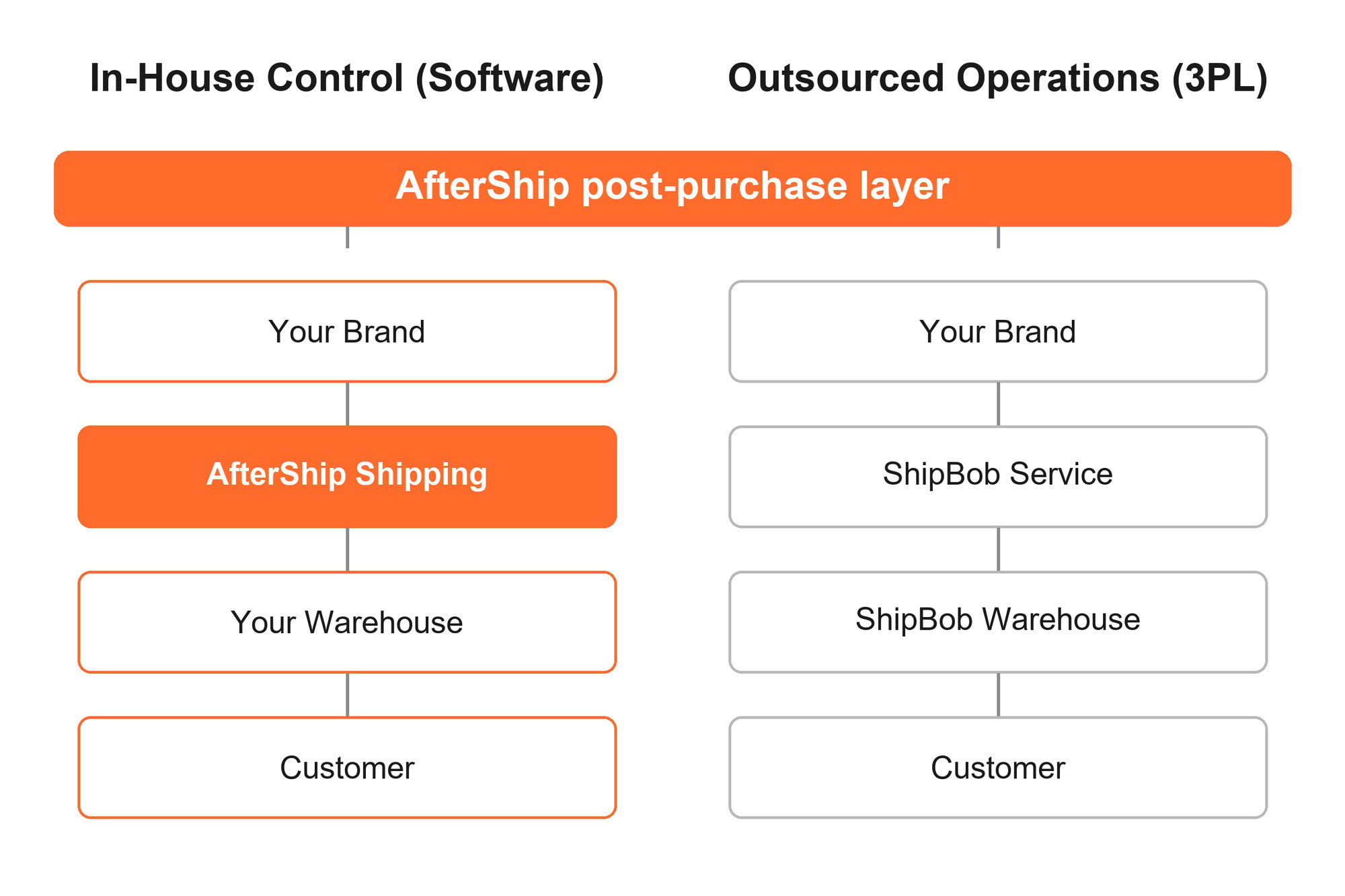
Path 1: The In-House Control Model with Shipping Software
Right now the inventory sits in your space, the orders come off your own bench, and every parcel leaves with your hands on it. Shipping software keeps that arrangement and takes the friction out of it. Call this the Brand-Builder's Path.
What you keep:
- Total control over branding and unboxing. The box, the tissue, the insert and the handwritten note are all yours to set, and you can change any of it this afternoon.
- Lower cash outlay. There is no inventory transfer and no onboarding project before the first order ships. Your spend stays a subscription plus the postage you already buy.
- A direct relationship with the customer. Nobody stands between your brand and the person waiting on the parcel.
- Flexibility. A limited drop, a bundle, a last-minute swap: you decide on Monday and it ships on Monday.
What you carry:
- The physical labour stays with you. Picking, packing and printing are still someone's afternoon, and at 500 to 2,000 orders a month that someone is usually you or a very small team.
- Space becomes the ceiling. Every new SKU and every seasonal spike needs somewhere to sit, and the room runs out before the demand does.
You accept the labour and the square footage, and you keep every touchpoint the customer sees.
Path 2: The Outsourced Model with a 3PL
The constraint arrives as two numbers: the floor space the inventory takes, and the hours a week that disappear into packing. Those hours come out of work nobody else can do. When both climb, moving the physical side out becomes a live option. A 3PL takes your inventory into its own warehouse and runs fulfillment against it.
What changes:
- Physical fulfillment becomes hands-off. Receiving, storage, picking, packing and dispatch happen at the provider's site.
- Volume scales without more hands, absorbed by the provider's staff and space.
What you take on:
- Branding becomes a service you pay a 3PL to run: ShipBob packs in plain boxes by default and uses your branded boxes, mailers and inserts if you store them there, with kitting and gift notes charged per task.
- The customer-facing layer splits: ShipBob's branded tracking page covers orders that reach it through ShipBob's own Shopify or ShipStation integration, other orders fall back to the carrier's page, and refunds and exchanges run through a separate returns platform.
- More line items to model: ShipBob publishes its storage, picking, returns and kitting fees, while the core fulfillment fee is set by a quoted pricing plan, so the per-order total is known only after a quote.
The Verdict for 2026: Why Growing Brands Must Keep Control
Both paths move the same parcel. What decides how your brand feels is everything after the parcel leaves: the page they check, the updates that reach them, and how easily they send something back. On either path, the branded tracking page, the shipment notifications and the returns experience stay with the brand when they run on AfterShip.
StackCommerce, a marketplace running AfterShip Tracking, set a goal of cutting WISMO tickets by 25% and measured the result year over year.

“AfterShip's shipment tracking is pretty amazing stuff. And I think the 71% drop in WISMO tickets is due to us providing that tracking visibility to our customers.”
Deryck Lim, Sr. Operations Manager
Read their story →That holds when the warehouse is not yours. ShipBob does not handle refunds or exchanges itself; it processes the inventory according to your return preferences and integrates with returns platforms including Loop and AfterShip. AfterShip publishes and maintains both ShipBob integrations, and they run in opposite directions.
The AfterShip Tracking integration is one way. It pulls ShipBob shipment statuses into AfterShip and triggers AfterShip Tracking's own notifications, and it is available on all AfterShip Tracking plans. The AfterShip Returns integration is two way, and it sits on AfterShip Returns' Premium and Enterprise plans.
The shopper-facing layer is portable. Move the boxes out and the tracking page, the delivery updates and the returns flow still carry your name, within those plan limits.
The Real Comparison: AfterShip Shipping vs. Shippo
With the in-house path settled, the head-to-head is AfterShip vs Shippo. Judge on what the shopper sees after checkout, how returns are handled, what the connected stack costs together, how native it feels in Shopify, and how carrier choice holds up as volume grows.
AfterShip Shipping buys rates and generates labels. AfterShip provides a full suite for post-purchase experience management. The suite is shipping, tracking, returns, and warranty, each billed separately. AfterShip Tracking and AfterShip Returns are separate subscriptions from AfterShip Shipping, so the full post-purchase layer costs more than a label tool on its own. That modularity means a brand buys only the layer it needs now and adds tracking or returns when the pain arrives, on one connected data layer rather than from a second vendor.
Run those criteria through a detailed look at AfterShip versus Shippo and they settle it quickly, and across other small business shipping solutions they keep a shortlist honest.
| Criteria | AfterShip Shipping | Shippo |
|---|---|---|
| Post-Purchase Brand Control | Branded tracking page via AfterShip Tracking, custom domain on Premium, with delivery data driving what the shopper sees next. | Branded tracking pages and notification emails on Pro. |
| Integrated Returns Management | A returns page shoppers start themselves, with eligibility rules on price, category, condition or days since purchase. | Merchant-generated return label, created with the outbound label or on request. |
| All-in-One Value | Label software that connects to tracking and returns on one data layer, each added as its own subscription. | Label, tracking page and analytics tools inside one shipping product. |
| Ease of Use for Shopify Merchants | Shopify app with order sync and label printing. | Shopify app with order sync and label printing. |
| Scalability for Growth | Carrier selection acts on AfterShip delivery data as volume rises. | Rates and label automation rules the merchant configures. |
Beyond Labels: Why a Connected Platform Beats a Point Solution
AfterShip's products share one data layer. The carrier decision made at label creation draws on AfterShip's own tracking history, and what the shopper sees afterwards comes off that same record.
Shippo publishes branded tracking pages and notification emails on Pro, return labels, automation rules and analytics dashboards.
The difference sits in what the data does next.
AfterShip Tracking. A branded tracking page with your logo and colours, proactive notifications and delivery-exception detection. The branded page is an Essentials capability; the custom domain and AI-powered delivery estimates sit on Premium. Your shopper checks a page that looks like your store.
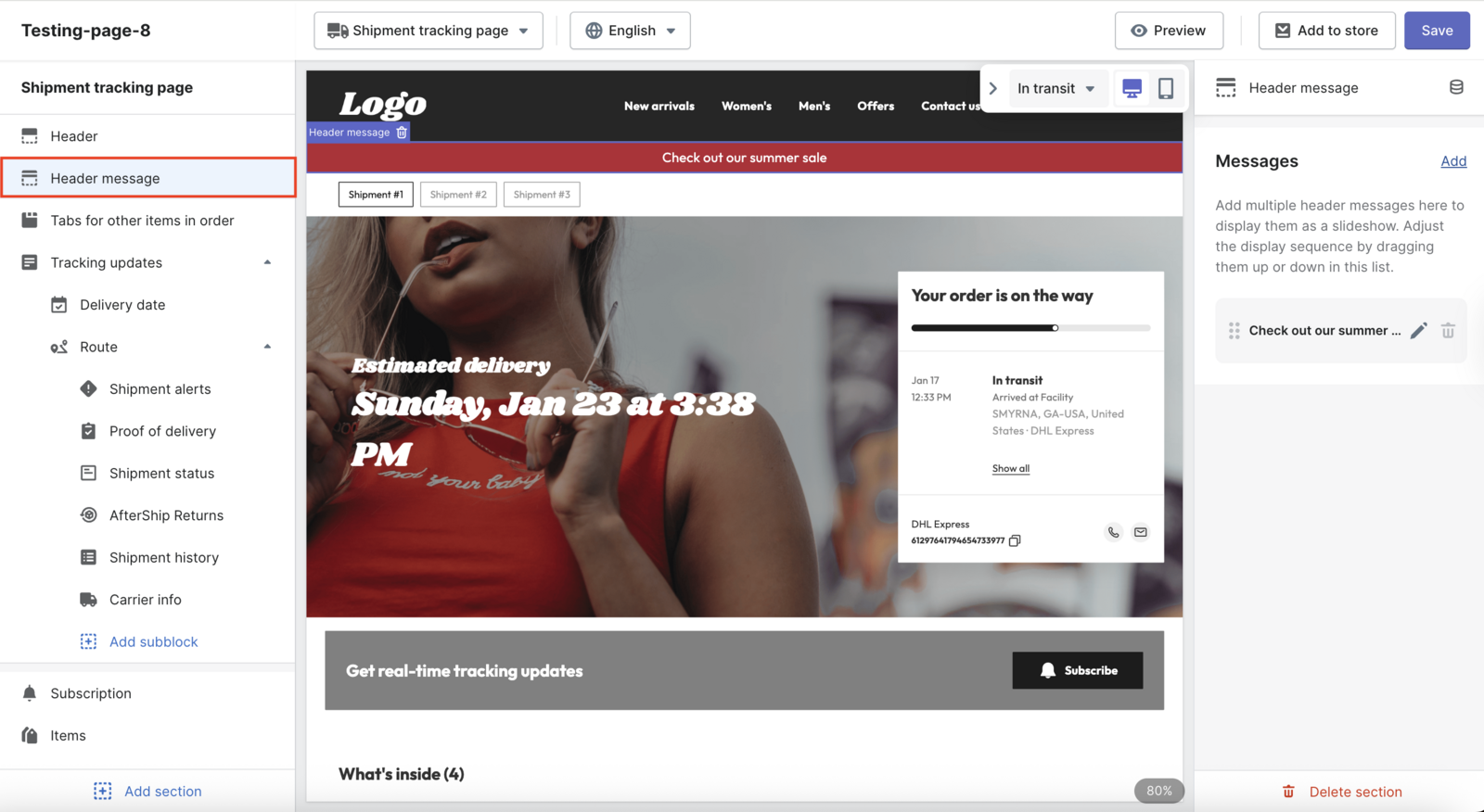
AfterShip Returns. A returns page shoppers start themselves, with eligibility rules set on price, category, condition or days since purchase, so the policy applies itself before a request reaches your inbox, and the shopper gets an answer without waiting on you.
One data layer. AfterShip tracking data informs Smart Carrier Recommendation inside AfterShip Shipping. It is available on all plans. It stays off until you switch it on, and once running it excludes carrier services with a high exception rate for a shipment's origin and destination.
The result is a best-in-class branded tracking experience on the shopper's side, and on yours a carrier choice informed by delivery history.
So, When Does a 3PL like ShipBob Actually Make Sense?
Shopify puts the starting line at five shipments a day. That is where the question opens. At 500 to 2,000 orders a month you cleared that line long ago, so volume on its own tells you nothing useful. The signals that do are operational.
Run the test on your own week:
- Storage space has become the ceiling, and next season's stock has nowhere to go.
- Packing hours are displacing the work only you can do: the buying, the product calls, the partnerships.
- SKU count or kitting complexity is growing faster than your process for handling it.
- Inventory needs to sit in more than one region to hit the delivery dates you have promised.
- Retail or B2B distribution is starting, with its own labelling, palletising and routing rules.
Two or three of those pointing the same way is when how to choose the right 3PL partner becomes a live question. Whichever answer fits your operation, the post-purchase layer stays with your brand.
Quick Verdict
Match the decision to the constraint you actually have this quarter.
Choose Shippo, ShipBob or another 3PL if:
- Storage space or packing hours are the constraint and you can work from a quoted plan.
- You want label automation rules without moving up a plan tier. Both products offer them, and Shippo's run across its plans. Its documented returns path is a merchant-generated return label rather than a page the shopper starts. At very low label volumes Shippo's entry pricing may appear cheaper upfront, though the cost of a fragmented customer experience arrives later, in WISMO tickets and a returns process built by hand.
Choose AfterShip Shipping if:
- You want the carrier chosen on delivery data, not price alone: Smart Carrier Recommendation, available on all plans.
- You want labels across 130+ carriers from one screen.
- You are staying in-house and want the post-purchase layer to stay yours as volume grows, with tracking and returns added on the same data layer as separate subscriptions rather than bought from a second vendor.
- You are outsourcing fulfillment and still want the tracking page, the notifications and the returns experience to be yours. AfterShip Tracking integrates with ShipBob on all Tracking plans, and AfterShip Returns carries a two-way integration on Premium and Enterprise.
Simplify shipping and order fulfillment across Shopify, TikTok Shop, and your carrier network.
Explore AfterShip ShippingYour Next Move: From Taping Boxes to Building an Empire
This was always a strategy choice: fulfillment stays in your building, or it moves out. Both can be right at your stage, and how to choose a fulfillment partner comes down to the operational signals, not the order count. What survives either choice is the experience your shopper meets after checkout, and that belongs to your brand.
Start with the label layer, the one you touch every day. Take a look at AfterShip Shipping and see how it fits the way you ship.
Frequently Asked Questions
Is ShipStation a 3PL?
No. ShipStation is shipping software, in the same category as Shippo and AfterShip Shipping: you run fulfillment yourself and the software handles orders, rates and labels. ShipStation is also an AfterShip partner, and one of the order sources ShipBob's branded tracking page supports, alongside ShipBob's own Shopify integration.
How much does ShipBob cost per month?
There is no flat monthly fee. ShipBob publishes fee lines for storage, per-unit picking, returns and kitting, and sets the core fulfillment fee inside a quoted pricing plan, so your per-order total is known only after a quote. Budgeting for a 3PL means modelling several line items together.
Can I use AfterShip with ShipBob?
Yes, through two separate products. AfterShip Tracking pulls ShipBob shipment statuses in and triggers AfterShip Tracking's own notifications, on all AfterShip Tracking plans, so you can use AfterShip Tracking with your 3PL and keep the branded tracking page and the delivery updates your shopper sees. AfterShip Returns adds a two-way ShipBob integration on its Premium and Enterprise plans, so the returns experience stays yours too.