Your Narvar Returns Portal Isn't a Customer Experience Engine
Your customers are telling you the returns process is broken. You suspect the portal is the cause, and you want to know what a genuinely better experience looks like in 2026.
Start with the evidence already in your own helpdesk queue. You do not need a vendor benchmark to read it.
Three symptoms tend to show up together when a returns portal stops carrying its share of the work: a "where is my refund" queue growing faster than your order volume, shoppers asking questions the portal should have answered on screen, and exchange requests that quietly turn into refunds before checkout.
Each one is a shopper who could not finish alone.
That pattern costs more than the tickets. NRF and Happy Returns found that 71% of consumers say they are less likely to shop with a retailer again after a poor experience, up from 67% in 2024. The movement matters more than the number: the same shoppers grow less forgiving each year.
Two peer-reviewed 2024 studies reach the same conclusion from outside the vendor category, one in the International Journal of Physical Distribution and Logistics Management and one in The International Review of Retail, Distribution and Consumer Research, both linking return-experience quality directly to repurchase intention.
If your contract renews within 12 months, that is the window to answer this properly, and why CX teams map Narvar alternatives early. Teams starting that mapping now should look at what else a returns team can move to beyond the obvious two vendors.
What Defines a Great Returns Experience in 2026?
Before comparing platforms, fix the standard you are comparing them against. Four things decide whether a shopper finishes a return without contacting you, and they hold whether you are weighing two vendors or taking a more complete view of the market.
- Self-service and choice of resolution. The shopper picks how the return resolves, without opening a ticket.
- Proactive communication after the parcel ships. Updates keep arriving once the box leaves their hands.
- Convenience. QR codes, boxless options and carrier choice at the point of drop-off.
- What the business can see. Whether the shopper's progress is visible while it happens, rather than after the fact.
Miss the fourth and the first three become invisible to you until a ticket arrives.
Two figures from outside the vendor category set the bar. NRF and Happy Returns reported on 5 December 2024 that 84% of consumers are more likely to shop with a retailer offering no-box, no-label returns and immediate refunds. Convenience is the 2026 baseline expectation, not a differentiator any vendor gets to claim.
The second figure is the shift underneath it. NRF and Happy Returns reported on 15 October 2025 that 82% of consumers say free returns are an important consideration when shopping online, up from 76% last year.
Read them together and the standard sharpens. Shoppers now assume convenience and judge everything that surrounds it, which leaves the quality of the experience itself to carry the relationship.
The Customer Journey Showdown: Four Steps of a Return, Walked Through
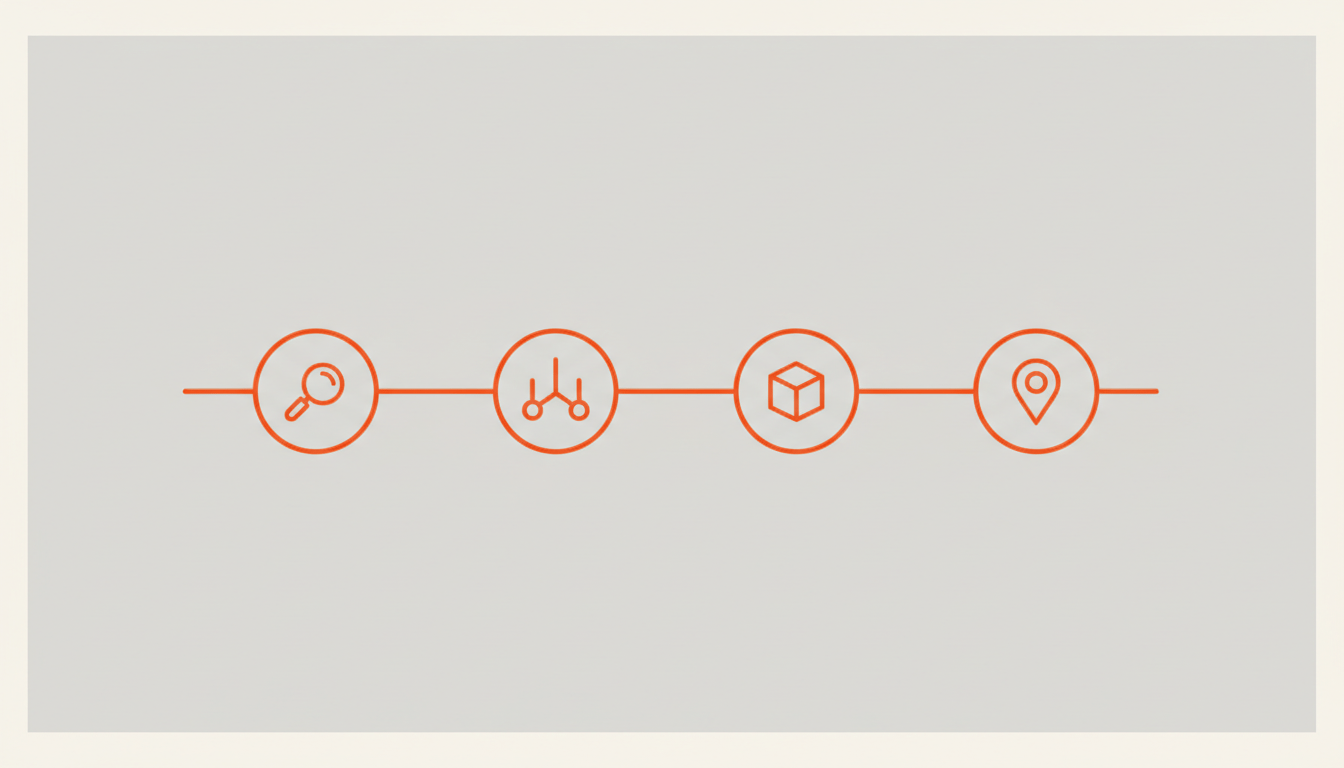
A returns experience is easy to assert and hard to hide. Walk the four steps a shopper actually takes, and the differences show up on screen, one decision at a time.
What follows is the AfterShip Returns shopper journey, step by step.
Step 1: Initiating the Return
The return starts before the shopper has decided anything. They arrive from an email or an order page, and the portal has to recognise them without a login.
AfterShip Returns identifies the order with an order number plus one of three things the shopper already has: the email address on the order, the shipping postal code, or a phone number. No account, no password reset, no ticket.
That combination matters more than it looks. A gift recipient often has the order number and the postal code but not the email address. A shopper who bought on a phone may not remember which address they used. Neither case is unusual, and neither shopper should need a support ticket to prove who they are.
Giving three ways in means fewer shoppers stall at the first screen and write to you instead. That is the first evaluation criterion in practice, applied to the door.
What matters for your evaluation is whether a shopper who has lost one detail can still get in with another, and how many of the tickets your team fields this week start at exactly that screen.
Step 2: Choosing a Resolution
This is the screen that decides whether a return costs you the sale or keeps it.
AfterShip Returns gives shoppers a self-service portal with three resolution paths. The shopper chooses between "Exchange for the same item", "Refund to original payment method", and "Refund to store credit".
Three paths presented together mean the shopper chooses. A refund becomes the path of least resistance when it is the only path.
Exchanges span differently priced variants. If a shopper swaps a size for one that costs more, the portal collects the difference through Stripe or Shopify checkout instead of sending them to your support queue to sort it out.
On Shopify, the portal can also offer an exchange for other items in the catalogue, which turns a return into a browse.
Merchants can weight the store-credit path by offering more credit than the cash refund would return. That mechanic is available on several credible platforms in this category, so it is not a reason on its own to choose one. What differs is how many paths sit on the screen at once, and how few clicks separate the shopper from the one they want. For a vendor-by-vendor view, see how Narvar's returns competitors handle exchanges.
Step 3: Generating a Label/QR Code
Convenience is the 2026 baseline, as the criteria above set out. The question worth asking is what a shopper can actually reach once they have the code.
After approval, AfterShip Returns issues a return label or a QR code the shopper carries on their phone to a drop-off point. No printer, no hunt for packing tape.
The network behind that code is the part worth checking. AfterShip Returns publishes 310,000+ returns drop-off locations, covering 95% of customers worldwide. Coverage decides whether "drop it off on your way home" is true for a shopper in a small town or only in a metro.
Carrier choice sits on the same screen. Where you have connected more than one carrier account, the shopper picks the one that suits them, which is usually the one with a location they already walk past.
One scoping note, because it affects what you can promise. Box-free drop-off through Happy Returns is not included with AfterShip Returns. It requires contacting sales and signing a separate contract with Happy Returns.
Narvar publicly advertises boxless and paperless QR returns in their own materials. Treat printerless drop-off as a category expectation to verify on both portals, then compare the reach behind it.
Step 4: Tracking the Return & Refund
The parcel leaves and the shopper starts wondering. This is where your "where is my refund" queue is won.
AfterShip Returns keeps the shopper informed through named events: return request received, return request approved, return request rejected, return reminder, return request expired, and items returned. The closing events are resolution-specific, so a shopper learns which resolution completed, whether that was store credit, their original payment method, or the exchange they chose a step earlier.
Then the part your finance team cares about. AfterShip documents three points at which a refund can fire automatically: in transit, when the carrier first accepts the parcel; delivered; and marked as received, once your warehouse confirms it.
AfterShip can start a refund when the carrier first accepts the return parcel. Narvar advertises an instant refund at first scan as well, so the useful question is which trigger you get to choose, and for which return reason.
Refunding a faulty item at first scan while holding a high-value apparel return until receipt is a policy decision. Three documented trigger points are what make that decision yours.
State this plainly in your evaluation: auto-refund automation sits on the Premium and Enterprise plans, not Essentials. On those plans, you set the timing of every refund yourself, per return reason.
The Result: How a Better CX Cuts Your Operational Costs
Every step in that journey either answers a shopper's question or forwards it to your team. That is the entire mechanism behind what returns cost you to run.
A clearer returns experience reduces the support tickets a CX team handles. Once a shopper can find their order, choose a resolution, reach a drop-off point and watch the refund land, the reasons to write in fall away one at a time.
Trace it back through the four steps. A shopper who cannot get past lookup writes in. A shopper offered a single resolution writes in when they wanted a different one. A shopper with no drop-off point within reach writes in. A shopper who cannot see where their refund sits writes in twice.
Each of those tickets was created by a design decision made long before anyone opened a case.
Aetrex put numbers against that after moving to AfterShip.
Aetrex cut WISMO tickets by 74% and reduced operating costs by 50%, across more than 120,000 packages.

Two things make that evidence stronger than an industry average when you build a business case for one of the best ecommerce returns platforms. It comes from a named brand, and the figures are published where your CFO can check them.
Where Loop and Happy Returns Fit in the Returns Journey
Two other names surface in most evaluations at this stage, and it is worth reading AfterShip vs Narvar vs Loop properly.
Loop is a returns-first solution built for Shopify. Happy Returns is a UPS company operating a physical drop-off network of 10,000 box-free locations in the US.
Each covers part of the walk. Drop-off reach is one of the four criteria, and platform fit decides where you can start, while the shopper still has to get from lookup to refund.
AfterShip Returns is built to be judged across that whole walk, and the returns-specific evidence is public: 4.7 from more than 1,390 reviews on the Shopify App Store, carrying the Built for Shopify badge. That rating belongs to the returns product itself, on a sample large enough to carry weight. Company-wide scores average across products a returns buyer will never open. Buyers wanting the longer shortlist can see how the rest of the competitor field lines up before narrowing to two names.
The Verdict: Why Mid-Market Brands Are Moving from Narvar to AfterShip in 2026
Narvar is a reliable platform with a long history in the enterprise space, and a known quantity for a functional returns system inside a complex legacy stack. What moved is the shopper. The four criteria above are where expectations landed, and your renewal turns on whether the portal you run meets them. Enterprise buyers on the same renewal clock should also read what an enterprise retailer weighs before signing with Narvar first. If your Narvar contract also covers tracking, see the tracking side of the Narvar decision.
| Criteria | AfterShip Returns | Narvar Shield |
|---|---|---|
| End-customer UX (clarity, step count) | Order lookup by order number plus email, shipping postal code or phone number. Self-service throughout, without an account or a password reset. | Shopper lookup fields are not publicly documented. |
| Resolution flexibility (exchange, store credit, refund) | Three paths on one screen: "Exchange for the same item", "Refund to original payment method", "Refund to store credit". Variant exchanges span differently priced variants, with the difference collected through Stripe or Shopify checkout. | The resolution set and the handling of exchange price differences are not publicly documented. |
| Post-return communication | Named events across the return, with resolution-specific closing events that tell the shopper which resolution completed. | Advertises multi-channel return status updates. |
| Drop-off and label options | QR codes for printerless drop-off, carrier choice across 3 or 5 connected carrier accounts by tier, and 310,000+ returns drop-off locations covering 95% of customers worldwide. | Advertises boxless and paperless QR returns, and a drop-off network of its own. |
| Refund control and timing | Three documented auto-refund trigger points: in transit at first carrier acceptance, delivered, and marked as received. Automation runs on Premium and Enterprise, where the trigger is set per return reason. | Advertises an instant refund at first carrier scan. |
| Published pricing | Published ladder across Essentials, Premium and Enterprise, priced on a returns-per-month quota. Mid-market volumes are quoted above the published tiers. | Publishes no price at any volume. Both pricing URLs return 404. |
| Operational impact | Aetrex, published: 74% fewer WISMO tickets, 50% lower operating costs. | Not publicly documented. |
Aetrex is one of the DTC brands that moved off Narvar. After switching to AfterShip, Aetrex cut return processing time by 86% and lifted returns NPS by 141 points.
For mid-market DTC brands prioritising customer experience, revenue retention and operational efficiency, AfterShip is the stronger choice for 2026, because the shopper gets more resolution paths and the business gets control over when the refund fires.
Your renewal date is the moment you get to decide which of those two experiences your customers walk through next year. It is the one date on this project you already control.
Returns automation that enhances the returns and exchanges experience, reduces costs, and retains more revenue.
Book a demoFrequently Asked Questions
How hard is it to migrate from Narvar to AfterShip?
AfterShip assigns a Solutions Architect who owns the migration. Their scope covers moving your customer data, workflows and reports across, plus configuration and testing before you go live. The question worth putting to any vendor is who is accountable when a field or a workflow fails to map cleanly. On AfterShip Returns that accountability sits with a named person who knows the product, and it is agreed before the work starts.
Can AfterShip handle international returns?
Yes. Shoppers outside your home market use the same self-service portal, the same resolution choices and the same drop-off network covered earlier in this article. Return labels are generated against the carrier accounts you connect, so routing follows the carrier relationships you already have. For brands expanding into new markets, the practical constraint is usually which carriers you have connected, and that is a setting you control.
Does AfterShip integrate with my helpdesk, such as Gorgias or Zendesk?
Yes, and every serious platform in this category does. Helpdesk integrations are table stakes in 2026, so they belong on your qualifying checklist. The deciding differences sit further along the journey: how many resolution paths the shopper gets before a ticket is ever created, and whether you can set the point at which a refund fires. Those settings change how many tickets reach your helpdesk at all.