Your order volume is climbing, and so are your 'where is my order' tickets. Returns still eat hours every week, and the tracking experience does little to bring customers back. If that sounds familiar, the tool that got you here has become the ceiling. The upgrade is a connected post-purchase stack: shipping, tracking, returns, and warranty on one AfterShip account.
If you want the head-to-head first, we published a more honest verdict on AfterShip vs ShipStation.
The 3 Signs You've Reached the ShipStation Growth Ceiling
You just came through peak season, and you can see where the seams opened. Support was buried in status questions, returns were worked by hand, and the post-purchase numbers you needed for the debrief did not exist. Three limits show up in that pattern, and each one maps to a line on ShipStation's own plan table.
- 1. The Brand Experience Gap: On ShipStation's entry plan, the branded tracking page and branded emails are switched off, and they arrive on Standard. Even branded, a tracking page that only reports status does little to earn the next order.
- 2. Operational Drag: ShipStation covers returns and exchanges. What it does not do is turn a return into retained revenue with store credit and incentives, and the returns volume still lands on your team. In research co-authored with Happy Returns, a UPS company, the National Retail Federation reports that "About 71% of consumers say they are less likely to shop with a retailer again after a poor experience, up from 67% in 2024."
- 3. The Intelligence Gap: ShipStation reports what happened across shipping and returns, and custom views and export sit on its top plan. The next step is data that tells you what to do: which lane slips, which SKU comes back, which carrier costs you the repeat order. High-volume brands hit this one first.
How to Reframe Your Search: Beyond Shipping Labels
ShipStation alternatives focus on branding, automation, and analytics. Before you shortlist anything, widen the question from what prints the label to what happens after checkout. Four things belong on that list.
Demand a branded, proactive tracking experience
Ask for a fully branded, proactive tracking experience: your logo, your colors, your domain, and email and SMS updates that land before the customer thinks to ask.
Demand a self-service returns portal that retains revenue
A return label closes a ticket. A portal that offers an exchange, or store credit with bonus credit as the incentive, keeps the money in the business. Ask what the portal offers a shopper besides a refund.
Demand post-purchase analytics that point to action
Reporting tells you what happened. Ask whether the data ends in a decision: which lane to move off a carrier, which notification to send earlier. Judge analytics product by product.
Treat rate shopping and automation rules as table stakes
Multi-carrier rate shopping and automation rules are table stakes now in shipping software for high-volume brands, so neither narrows a shortlist on its own. The sharper question is whether the carrier choice acts on delivery data or only on the rate card. Ask too how each tool reaches the rest of your stack: its API and ecosystem integrations decide how much you rebuild later.
Scored against those four criteria, most shortlists of ShipStation alternatives shrink quickly, and what survives is judged on the experience after checkout.
5 Best ShipStation Alternatives for Growing Brands in 2026
Growing brands switch from ShipStation for better CX. One decision sits under this list: how much of the post-purchase experience you want to own on one account. Here are five alternatives to ShipStation, judged on that question.
1. AfterShip
Best for: brands whose growing pain is returns, WISMO and post-purchase data, and who want those handled on one account.
AfterShip offers integrated shipping, tracking, returns, and warranty.
- AfterShip's multi-carrier shipping software prints labels across 130+ carriers in one integration, for label generation. Smart Carrier Recommendation sits on all Shipping plans, off by default; switched on, it excludes carrier services with a high exception rate for a shipment's origin and destination, based on AfterShip tracking data, and picks the best balance of cost and delivery speed.
- AfterShip Tracking gives you a branded tracking page with email and SMS notifications.
- AfterShip Returns runs a self-service portal with refund to store credit, bonus store credit and exchanges, and on the Premium plan, warranty claims are handled in the same returns portal. Return Care lets shoppers pay a small fee at checkout to unlock free returns, and AfterShip handles the labels; up to 65% of shoppers opt in, per AfterShip's Return Care page.
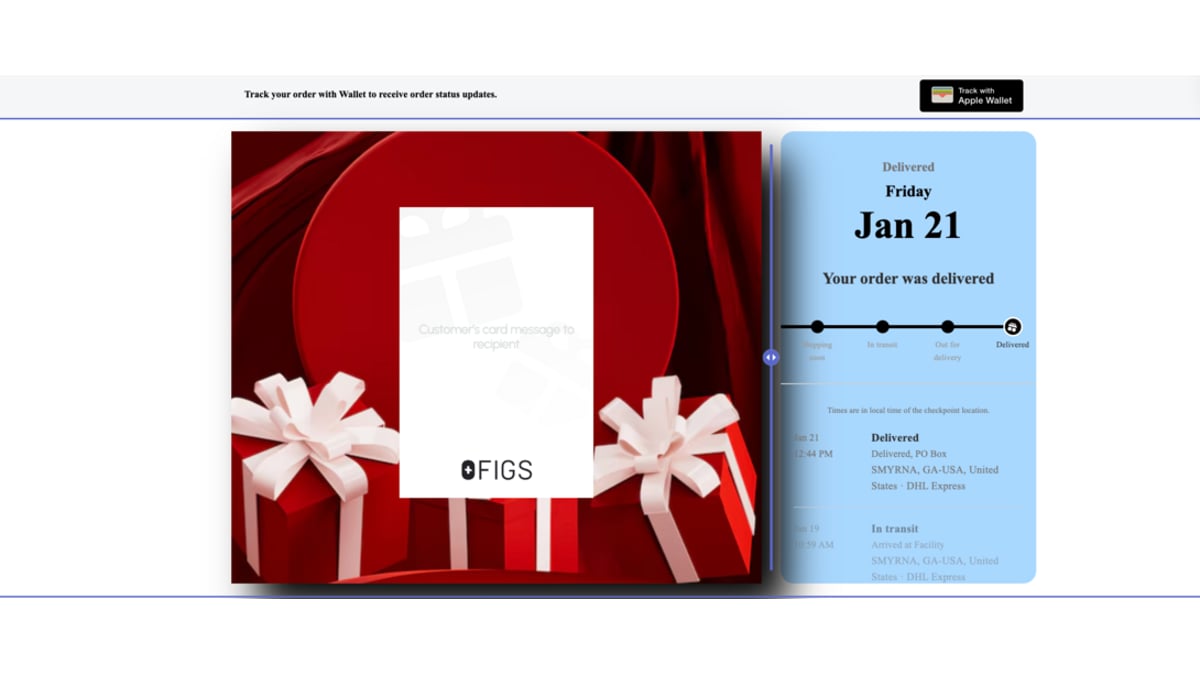
AfterShip's shipping, tracking, returns, and warranty products run on one account with one login and the same underlying order and customer records, so an order you ship, track, return, or file a warranty claim on is the same order across every product. AfterShip's tracking and returns apps hold Shopify's Built for Shopify certification.
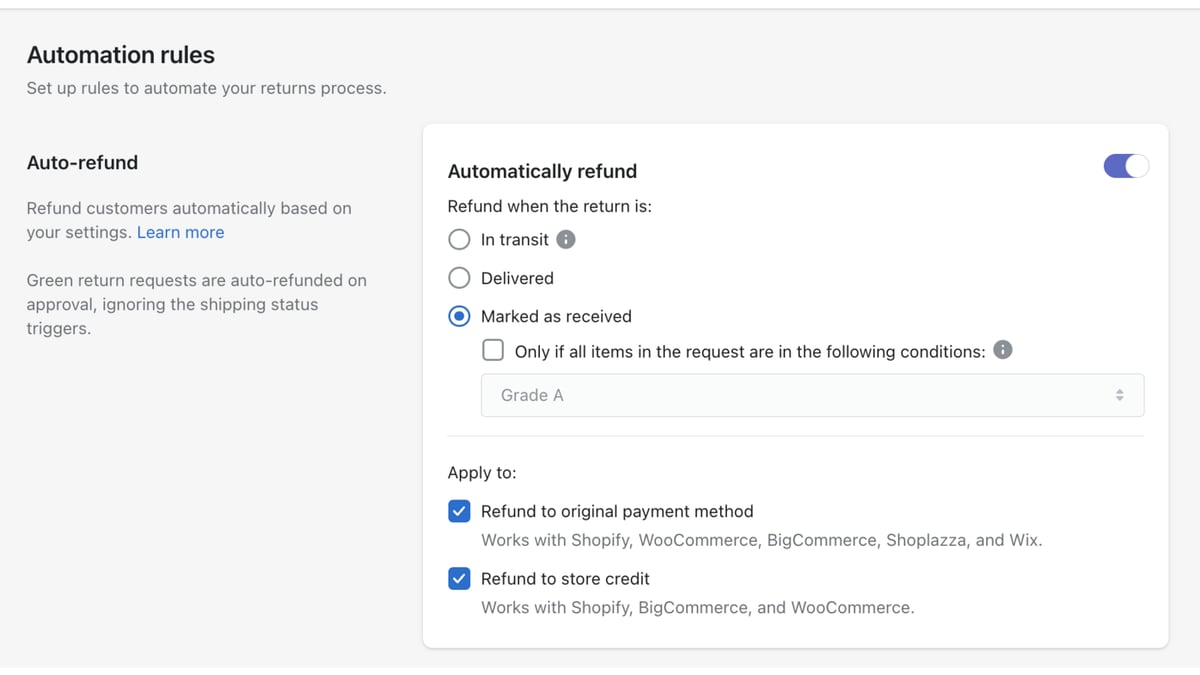
Each product is its own subscription on its own pricing page, so the full post-purchase layer costs more than a label tool alone. The flip side is that you buy the layer you need now and add the rest when the pain arrives, on the same account and the same records.
In its AfterShip customer story, Marc Nolan reports a 97% decrease in time spent on the returns process and a 2X increase in exchanges versus refunds.

“It's just so easy and effortless for me to check in on things and work with the returns portal. I don't have to worry about it anymore. There's so much time that I've saved so that I can direct my focus elsewhere.”
Nikolas Callas, Director of Operations
Read their story2. Shippo
Best for: a like-for-like switch focused on label rates.
Shippo brands the tracking page and the emails on its Pro plan. Returns stop at generating a label: no exchange flow is offered.
If you want it line by line, there is an honest comparison between AfterShip and Shippo.
3. EasyPost
Best for: brands with developers building their own stack.
EasyPost sells a branded tracking product you can switch on without developers; the rest of its stack is built for engineers.
4. Easyship
Best for: international orders where duties and taxes must be shown at checkout, which Easyship supports from its Premier plan.
Easyship also offers a branded tracking page and tracking emails on its paid plans, and return labels on every plan. On returns the depth stops there: its plans page shows no exchange or store-credit flow. Easyship also powers AfterShip Shipping's discounted label rates.
5. ShipBob
Best for: brands that want to outsource fulfillment entirely.
ShipBob is a third-party logistics provider with quoted pricing. Choosing it changes the operating model, since inventory moves into its warehouses and fulfillment becomes an outsourced service.
Comparison: ShipStation vs. The Upgrades
Four criteria decide this at your volume: whether the branded tracking experience does more than report status, whether the returns portal retains revenue, whether the analytics end in a decision, and whether the whole thing runs on one account.
| Feature | ShipStation | Shippo | AfterShip |
|---|---|---|---|
| Branded Tracking Page | Branded tracking page and branded emails on Standard and Premium; switched off on the entry plan | Branded tracking pages and notification emails on Pro | AfterShip Tracking: branded tracking page with email and SMS notifications from Essentials; custom domain, AI-powered delivery estimates and product recommendations on Premium |
| Self-Service Returns | Branded returns and exchanges portal with SKU-based exchange rules and automatic approval on Standard and Premium | Return labels on every plan; returns are label-only, no exchanges | AfterShip Returns: self-service portal, routing rules, automatic approval, refund to store credit and bonus store credit from Essentials; multi-step workflows and warranty claims in the same portal on Premium; Return Care lets shoppers fund free returns |
| Analytics & Insights | Reports what happened across shipping and returns; custom views and export on Premium | Reporting and analytics on every plan | AfterShip Tracking Premium: custom views by carrier, lane, SKU or destination; AfterShip Returns: return reasons and exchange value, with transit reports on Premium; Smart Carrier Recommendation acts on AfterShip tracking data on all Shipping plans |
| Platform Connection | Labels, tracking page, notifications, returns portal and reporting in one subscription on Standard and above | Labels and branded tracking in one app; returns stop at the label | Shipping, tracking, returns, and warranty on one account and one login, working from the same order and customer records; each product added and billed as you need it |
The Verdict: When to Switch, and Who to Switch To
The call comes down to what is costing you time this quarter.
Stay tactical: stay with ShipStation or choose another tool if...
- labels and a basic returns portal are the whole job and the post-purchase pain has not arrived yet. Staying on ShipStation, whose Standard plan adds branded tracking and a returns portal, or moving to a label tool such as Pirate Ship, is the economical call at that stage. Once returns and WISMO tickets start costing hours every week, the label price stops being the number that matters.
- Shippo, if a like-for-like label tool with branded tracking and emails is enough and returns can stay label-only.
- EasyPost, if an engineering team is building its own stack.
- Easyship, if showing duties and taxes at checkout for international orders is the core need.
- ShipBob, if outsourcing the warehouse itself is the decision.
Get strategic: choose AfterShip, the post-purchase specialist, when returns, delivery performance and post-purchase data start to matter, if...
- Returns should come back as retained revenue. AfterShip is the only one here that adds warranty claims to the same portal as returns, on its Premium plan, and it turns returns into store credit as well as exchanges, with refund to store credit and bonus store credit from AfterShip Returns Essentials.
- The carrier choice should act on delivery data. Smart Carrier Recommendation, on all Shipping plans once switched on, excludes services with a high exception rate for that route using AfterShip tracking data.
- Customers should hear from you before they ask. AfterShip Tracking pairs a branded tracking page with email and SMS notifications from Essentials, and adds AI-powered delivery estimates on Premium.
- The stack should grow with you. Shipping, tracking, returns, and warranty sit on one account and one login, working from the same order and customer records, with each product added as the pain arrives, starting with AfterShip's multi-carrier shipping software.
- Free returns without the cost. Return Care lets shoppers fund free returns at checkout, and merchants can run it on the Premium Returns plan at $0.
Simplify shipping and order fulfillment across Shopify, TikTok Shop, and your carrier network.
See plans and pricingFrequently Asked Questions About Migrating from ShipStation
Is AfterShip more expensive than ShipStation?
Every figure below is monthly billing at the stated volume, and AfterShip lets you buy only the product you need now. At about 1,000 orders a month, ShipStation Standard is $149.99 a month at 1,000 shipments. AfterShip bills each product separately: Shipping Essentials is $47 at 1,000 labels, with Pro at $89 up to 2,000 labels adding automated shipping rules; Tracking Essentials is $59 at 1,000 shipments; Returns Essentials is $119 at 200 returns a month. AfterShip Shipping also has a free plan with 10 shipping labels a month, and its paid plans include a 7-day free trial. Higher up, AfterShip Tracking moves to custom pricing at 10,000 shipments a month and AfterShip Returns above 400 returns a month, so a larger brand is priced per business through sales, covering volume, service-level (SLA) terms, onboarding and implementation support, and custom integrations or SSO; ShipStation publishes a single figure, $599.99 at 10,000 on Standard. For returns alone, AfterShip Returns can run at $0 on the Premium Returns plan through Return Care, funded by an opt-in shopper fee. Off the pricing page, the cost is WISMO tickets and manual returns handling.
How hard is it to migrate from ShipStation?
Migrating is a connect-and-import process, not a data-migration project. You connect your store and carrier accounts, AfterShip Shipping imports your orders, you rebuild your shipping rules (automated rules are on Pro and Enterprise), and fulfillment and tracking can be written back to Shopify automatically. You can run AfterShip alongside your current tool for a short period before cutting over. Onboarding and implementation help are available as paid support plans or as part of an Enterprise agreement.
Can I use AfterShip just for tracking or returns?
Yes. The products are billed separately. AfterShip Tracking connects to ShipStation directly to import shipments and send branded delivery updates, so you can keep ShipStation for labels, and AfterShip Returns generates its own return labels without an AfterShip Shipping account. Add AfterShip Shipping when you are ready to move labels too.