Your Head of Operations wants faster, cheaper shipping, and you own CSAT. Shipium models the delivery date and consolidates carrier tracking into one feed, then hands that feed to whatever customer-facing experience you already run. AfterShip is that experience layer: branded tracking, proactive notifications, and self-service returns on one data layer. That layer is where WISMO tickets and repeat purchases are actually decided.
AfterShip is a customer experience platform; Shipium is a logistics optimization tool. The two sit at different heights in the same stack, and buying one does not fill the other's job. Every surface your shopper touches after checkout sits above the shipping decision: the tracking page, the delivery updates, the return.
The Real Question: Is Post-Purchase a Logistics Problem or a Customer Experience Opportunity?
You hit every shipping-speed target last quarter and your CSAT did not move. Speed is what Operations buys; perception is what your customers rate, and the two only converge when somebody is telling the customer what is happening. The best customer delivery experience is judged on that second measure.
There are two ways to read the post-purchase window. The first treats it as a supply-chain cost center: shave a day off transit, pick a cheaper carrier, drive the delivery-cost line down. That work is real, and it belongs to Operations. The second treats the same window as the highest-intent stretch of the whole customer relationship, the days when a shopper keeps checking on an order and quietly decides whether your brand has its act together.
Those two readings buy different software. A delivery-cost program does not produce a branded tracking page, a delay notification, or a return a customer can finish without opening a ticket. Teams researching Shipium alternatives for that job are shopping for a different layer. If what you need is a comprehensive platform for mid-market brands, that is a separate decision, and it is yours to make.
The Verdict, Up Front
Judged on the five criteria that decide whether a shopper comes back, AfterShip is the clear choice. Shipium supplies delivery data and decisions; the customer-facing experience is the merchant's to build.
| Criteria | AfterShip | Shipium |
|---|---|---|
| Branded Customer Journey Control | Tracking page on your domain, with your branding, product recommendations and a highly customizable layout that matches your store | The delivery promise and tracking feed, delivered by API and webhook to the merchant's own front end |
| Proactive Communication (WISMO Reduction) | Shopper messages at each delivery moment, from Information Received to Delivered, by email and SMS, with the same events piped into Klaviyo and Attentive | Consolidated tracking events by webhook, for the merchant to turn into shopper messages |
| Self-Service Returns Management | Shopper-led returns in your own branded portal, offering a refund, store credit or exchange within the return rules you set | A Return Label API that generates the return label |
| Post-Purchase Marketing & Upsell Tools | Product recommendations on the tracking page, and exchanges and store credit encouraged inside the return flow to recapture revenue | Exact delivery dates shown on product pages and at checkout |
| CX Analytics & Insights | One data layer beneath tracking and returns, where AfterShip Agent recommends a resolution for shipment exceptions | Operational analytics on carrier performance, cost trends and on-time delivery, including predictive forecasts |
Shipium decides and executes the shipment itself. For the branded, communicated experience the shopper actually lives through (the tracking page, the notifications, the returns), AfterShip is the built layer, and it runs on top of whatever shipping engine Operations chooses.
Owning that layer shows up first in the support queue. Inspire Uplift reduced WISMO tickets by 75% with AfterShip Tracking.

“AfterShip Tracking helped Inspire Uplift greatly improve our customer experience and transparency into the entire shipment process globally across many carriers. Without a platform like AfterShip Tracking, it would be difficult for us to serve customers globally on the scale we currently do.”
Aaron Wallace, CEO
Read their story →Round 1: The Tracking Experience
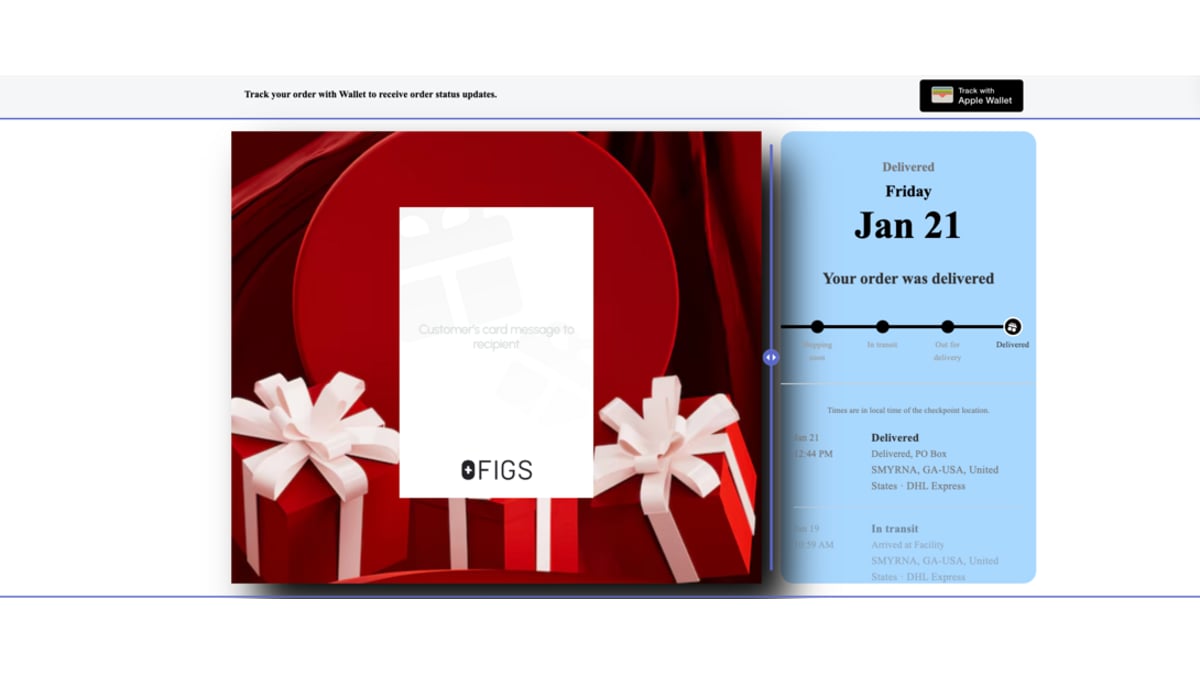
AfterShip puts the shopper who clicks "track my order" on a page you own, carrying your branding and your product recommendations under the delivery status. Pages like this are the gold standard for branded tracking: the page sits on your domain, the shopper finds the status on their own even when an order ships in several parcels, and the merchandising is yours to choose. The page is highly customizable, so it reads as part of your store.
Shipium's role sits upstream of that page. It standardizes carrier events into one feed, and it describes what happens next on its own site: the feed is delivered by webhook to whatever tracking experience you already run. The delivery promise comes back the same way, as a date via API, your front end, your design system, your experience built around it. AfterShip is that front end, already built.
AfterShip Tracking standardizes events from 1,700+ carriers, so the page holds up across whatever carrier mix your fulfillment uses. A subscription button on the page lets the shopper opt in to real-time status updates without asking you for them. Vivino saw a 30% increase in repeat sales through its branded tracking page and product recommendations.
Round 2: Customer Communication
AfterShip sends the shopper a message at each moment in a delivery when they would otherwise write to you:
- Information Received
- In Transit
- Out for Delivery
- Failed Attempt
- Available for Pickup
- Exception
- Delivered
Each one goes out by email and SMS, and the same events pipe into Klaviyo and Attentive, so the delivery message sits in the same flow as the rest of your lifecycle marketing. Email and SMS notifications and those integrations are part of AfterShip Tracking's paid plans.
A carrier status string only becomes a message once it is written in your voice and reaches the shopper when and how they can use it. AfterShip starts from default workflow templates you can personalize, schedules SMS by the buyer's timezone, and sends multilingual email notifications. Exception is the moment that decides the ticket: a shopper who hears from you that a parcel is stuck, before it occurs to them to check, has little reason to open one. Vivino recorded a 50% reduction in WISMO tickets after activating proactive and on-time delivery updates.
On Shipium vs AfterShip customer communication, the difference is who writes and sends the message. Shipium leaves the customer-facing message for the merchant to build: the events arrive on the feed, and the copy, the timing, the branding and the send are yours to assemble and maintain. AfterShip ships those messages out of the box.
Round 3: The Returns Journey
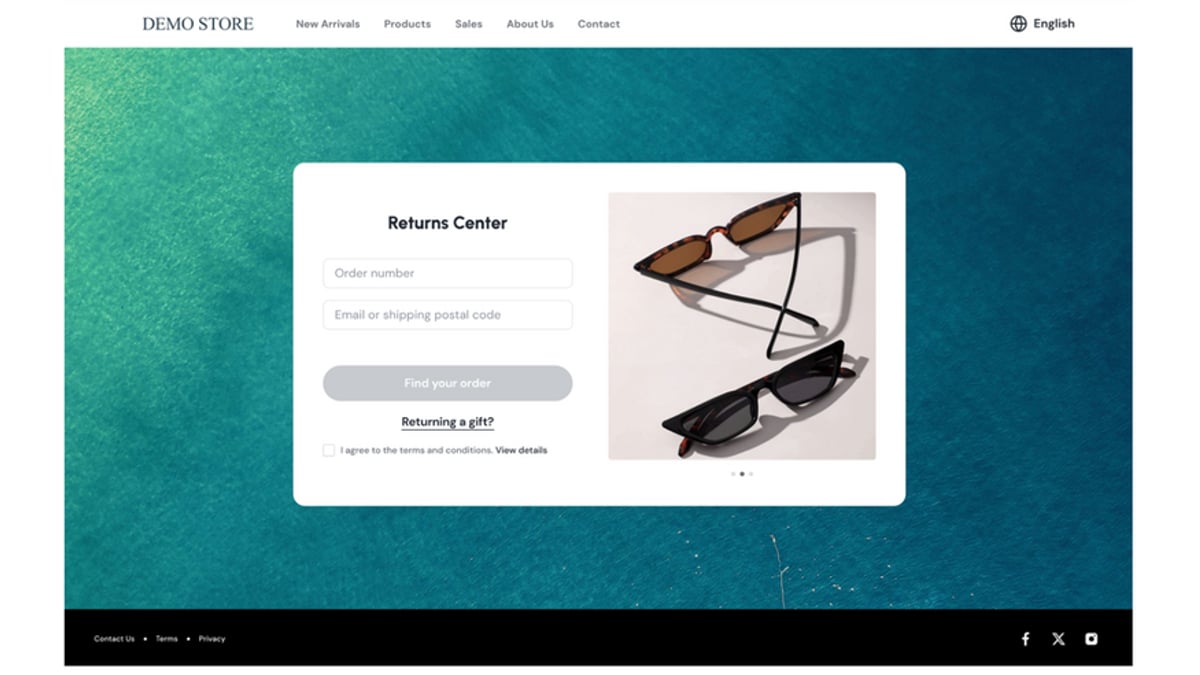
AfterShip owns the moment a customer decides whether to stay, which is the return. The shopper opens an on-brand, self-service portal and chooses a refund, a store credit or an exchange, including a swap to a different variant, within the return reasons, windows and eligibility rules you set. The shopper starts the return and gets the label without opening a ticket.
Shipium returns management runs through a Return Label API, which generates the return label. The gap between a return label and a return experience is everything around that label, and it is where the refund-or-exchange decision is made.
That decision lands on the P&L. AfterShip Returns is built to recapture revenue by encouraging exchanges, with incentives like store credit offered inside the same flow the shopper uses to start the return. Aetrex recorded an 86% reduction in return processing time with AfterShip Returns.
The same portal carries the operational side, with customizable return policy automation running on the same data layer that carried the outbound delivery, and it keeps the shopper inside your brand for the next purchase.
Round 4: The AI & Data Layer
Both platforms model a delivery date, and both put a number in front of the shopper. AfterShip's comes from AfterShip Intelligence, the AI engine for ecommerce post-purchase: the data layer and proprietary domain models powering AfterShip Agent and every intelligent feature, sitting beneath shipping, tracking, returns, and warranty. AI EDD predicts delivery dates with up to 95% accuracy, and it can be shown on the product page, at checkout, and on the tracking page. The date a shopper reads before buying is the date they are held to afterward, on the surface where they go looking for it.
The gap opens when a delivery goes wrong. AfterShip Agent pulls the full context of a shipment exception, kicks off a carrier investigation or claim, and recommends the resolution that fits your policy. The tracking feed reports that the exception happened; a layer built on the same data as the tracking page and the returns portal recommends what to do for the shopper, which is the prescriptive half of the customer experience.
Leave that half unbuilt and the shopper does the escalating for you, through the support contact. In the ACSI Retail and Consumer Shipping Study 2025, built on 41,850 completed surveys, call centers sat at the bottom end of the retail customer experience, scoring 76 to 77 out of 100.
The Final Verdict: Who Should You Choose in 2026?
AfterShip is the choice when the branded, communicated experience is what you are deciding. Shipium is the engine for the shipping decision, and the experience above it is the merchant's to build.
Both platforms rate-shop carriers and model a delivery date. Where Shipium goes further is executing complex fulfillment logic across many nodes, and for that bottleneck it is the engine built for the job. That capability sits entirely upstream of what the shopper sees, which is the layer AfterShip is built to own.
Choose AfterShip if:
- WISMO volume and CSAT are the numbers on your review
- you want product recommendations in front of shoppers while they check an order
- you want delivery updates reaching shoppers before they think to ask
- you want exchanges and store credit resolving inside your own branded portal
- you want one data layer underneath, so an exception returns a recommended resolution
Choose Shipium if:
- carrier selection and delivery cost are the decision in front of you
- you want the delivery promise and the tracking feed by API and webhook
- you have front-end engineering capacity to build the experience yourself
For brands comparing AfterShip against other experience-focused platforms like ParcelLab, or growing into the order volumes that call for an enterprise-grade solution, AfterShip carries the same branded experience layer as the business scales.
Frequently Asked Questions
What is the main difference between Shipium and AfterShip?
AfterShip provides branded tracking pages, proactive notifications, and a full returns suite. Shipium handles the shipment decision and its execution: carrier selection, the delivery promise, and the consolidated tracking feed. Shipium standardizes that data and hands it over by webhook and API, and AfterShip is the built experience a shopper meets when the data reaches them. The two can run in the same stack.
Is Shipium a full post-purchase platform?
Shipium ships a Customer Experience Suite, shipment tracking and a Return Label API, so it reaches further into the post-purchase window than carrier selection alone. By Shipium's own description, it delivers the tracking feed by webhook into the tracking experience you already have, returns the delivery promise as a date via API for your front end and your design system, and treats the customer-facing experience as the merchant's to build. That build is what AfterShip supplies ready-made.
Which platform is better for reducing WISMO tickets?
AfterShip. WISMO volume falls when the shopper is told before they ask, which means proactive notifications at each delivery moment by email and SMS, plus a branded tracking page they can reach on their own and subscribe to for status updates. Shipium's feed carries the events that would trigger those messages, and the messages themselves are the merchant's to build on top of it. With AfterShip, those messages are already built.
Can AfterShip also help with shipping rates and labels?
Yes. AfterShip Shipping rate-shops across 130+ carriers in one integration, over 87 of them for label creation, so a brand that wants rate shopping and labels from the same vendor as its post-purchase experience can have both. It is an additional capability alongside the experience layer, and it leaves the orchestration Operations is buying where it is. The reason to choose AfterShip is still the branded, communicated experience your shopper lives in.